

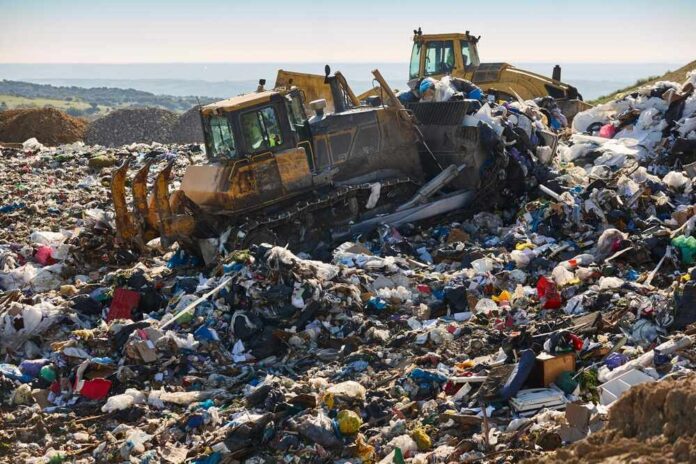
A mountain of garbage collapsed before dawn in Conakry and buried families where they slept.
Story Snapshot
- Heavy overnight rain triggered a landfill collapse that killed 30 people in Guinea’s capital.
- The waste mound crashed onto nearby tents and shacks at about 2 a.m. in Gbessia.
- Officials had slated the Dar Es Salam landfill for closure due to safety risks.
- Rescuers reported additional injuries as the prime minister led on-site response.
Rain, Collapse, and a Night of Loss
The government of Guinea reported that heavy rains overnight set off a massive slide at the Dar Es Salam landfill, the largest dump in Conakry, killing 30 people and injuring others. The collapse struck around 2 a.m. in the Gbessia commune, when a towering mound of waste gave way and surged into nearby tents and shacks.
Civil protection teams pulled survivors from the debris as dawn broke. The death toll aligns with a pattern seen in fast-growing cities when rain hits unstable garbage mountains.
Rescuers hunt for survivors after a landslide at a landfill in Guinea's capital killed 30 people. Heavy rains overnight prompted the collapse of a massive mound of waste that engulfed nearby tents and shacks https://t.co/5PaVINmF4g pic.twitter.com/z4vwxZNqZA
— Reuters (@Reuters) August 24, 2026
Officials said six people were seriously hurt and 16 suffered lighter injuries. Rescue teams worked through soaked waste and unstable ground. Prime Minister Amadou Oury Bah arrived to assess damage and direct the response, a show of urgency that matched the scale of loss.
The scene captured a hard truth: people living at the landfill edge had no margin for error. When the slope failed, the slide outran any warning and found the homes closest to the pile.
Where Warnings Met Reality
The site was not a surprise risk. Authorities had moved to close the landfill because it was unsafe, and they had ordered expulsions and safety steps around the waste mound in recent days.
The plan aimed to shift dumping outside Conakry, but the disaster struck while people still lived at the foot of the heap. That overlap—an unsafe site and families still in harm’s way—turned a routine rainstorm into a deadly night. The gap between policy intent and on-the-ground change proved fatal.
Reports from multiple outlets converge on the same core facts: heavy rain, a sudden collapse, dozens dead, and homes buried. This fits a known risk chain. Unstable waste masses absorb rain, add weight, and lose strength.
Water climbs pore spaces, increases pressure, and weak layers shear. At open dumps with steep, unmanaged faces, that can become a fast, deep slide. People living at the toe of the slope take the full force with no engineered buffer or barrier.
Not an Isolated Tragedy, a System Pattern
The collapse echoes past garbage mountain disasters across Africa and Asia. Technical guidance has warned for years that open dumps can fail after intense rain due to poor siting, weak drainage, and excessive piling.
The Japanese International Cooperation Agency documented recent fatal dump failures tied to those exact factors. United Nations Human Settlements Programme has pressed for closure of open dumps, stable slopes, and buffer zones that keep homes out of runout paths. Conakry’s loss sits squarely in that ledger.
At least 30 people have died after a landslide hit a landfill near Guinea’s capital, Conakry. Rescue teams are searching for survivors trapped under the debris, days after authorities announced plans to close the dangerous site.#Guinea #Conakry #Landslide #Africa #BreakingNews pic.twitter.com/EX0y49aECl
— FOLIN TV NEWS (@FOLINTV) August 24, 2026
Practical fixes are not exotic. Cities that end this risk do five things well. They stop vertical piling and bench landfill slopes. They grade and drain stormwater away from faces.
They cap older waste and limit fresh tipping to planned cells. They set and enforce a real buffer zone with zero settlement inside it. They provide safer, legal sites for the poorest families, so no one must choose between rent and a roof under a dump. Each step cuts slide risk fast and at modest cost.
Accountability That Starts With Basics
Officials said the closure was in motion, which shows recognition and intent. But lives depend on execution. The test here is common sense: protect people first, secure the site second, and publish clear, checkable steps.
Post the closure order. Mark the buffer on the ground. Move families with support and a date certain. Drain and regrade the slope before the next storm. None of this requires a foreign consultant or a five-year plan. It requires will, a bulldozer, and follow-through.
The casualty figures varied in early wires, which often happens in the first hours of rescue, but settled near 30 as operations continued. That number tells the moral math. Every victim lived close enough to a known hazard that one night of rain was enough to bury a home.
The city can honor them by making Dar Es Salam the last open dump in Conakry to fail, not the latest. That promise begins today, before the next cloud forms over the coast.
Sources:
reuters.com, english.ahram.org.eg, amp.dw.com, apnews.com, bbc.co.uk, instagram.com, facebook.com