

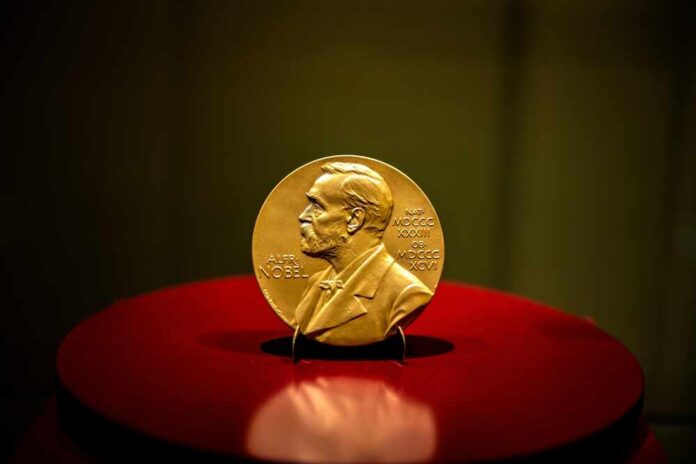
A frozen telescope at the bottom of the world just earned a Nobel for catching invisible messengers from deep space.
Story Snapshot
- Francis Halzen won the 2026 Nobel Prize in Physics for IceCube and high-energy cosmic neutrinos.
- IceCube is a cubic-kilometer detector buried in Antarctic ice that sees “ghost particles.”
- The discovery opened a new way to trace cosmic engines across the universe.
- The win spotlights a massive, long-term global team effort behind one name.
What The Nobel Committee Recognized
The Royal Swedish Academy of Sciences awarded the 2026 Nobel Prize in Physics to Francis Halzen for decisive contributions to the IceCube Neutrino Observatory and the discovery of high-energy neutrinos of astrophysical origin. The prize citation points to a simple idea with huge reach: use the clearest natural material on Earth, ancient Antarctic ice, as a three-dimensional telescope. That bet paid off with firm evidence that elusive neutrinos stream to Earth from powerful cosmic sources.
Neutrinos barely interact with matter, so almost all pass through Earth without a trace. Rarely, one smacks into ice and makes a flash of blue light. IceCube watches for those flashes with over five thousand sensors frozen more than a mile down. That is how the team separated neutrinos from random noise and traced them back to space. The committee called that decisive, because it turned a dream into a working field: neutrino astronomy.
Why Ghost Particles Mattered Enough To Win
The win rests on results that changed how we find the universe’s engines. In 2013, the IceCube team reported the first solid evidence of high-energy neutrinos from beyond the solar system, a turning point that showed cosmic accelerators were within reach. More work since then mapped neutrino signals from our own Milky Way and tied specific events to likely sources. Those steps made neutrinos a new probe that cuts through dust and magnetic fields that block light and charged particles.
Astrophysicists chase the source of the most energetic particles in nature. Light gets scattered, and cosmic rays bend in magnetic fields. Neutrinos do not. A detected neutrino points back to where it came from, like a straight arrow across the cosmos. That simple fact makes them a truth test for theories about black holes, star explosions, and jets. Rewarding that breakthrough signals support for hard-nosed, measurement-first science that delivers real guidance for future investments and national labs.
The Cold, Hard Logistics Behind The Science
Building IceCube took patience, grit, and international money. Crews drilled deep holes at the South Pole and lowered strings of light sensors into newly melted shafts before they refroze. The detector covers a cubic kilometer of ice, which gives the small neutrino interaction chance enough space to show up. The project demanded years of calibration and careful analysis to prove the events were real and came from space, not from the atmosphere or hardware glitches.
The universe's elusive ghost particle the neutrino! Francis Halzen made the impossible possible at Antarctica's IceCube Observatory, winning the 2026 Nobel Prize in Physics for detecting cosmic neutrinos. Congratulations.
#NobelPrize2026 #Physics #IceCube #Neutrino pic.twitter.com/7XgO3m8dUO— Muhammad Firoj (@MuhammadFiroj01) October 6, 2026
The scope of the team matters. IceCube’s collaboration involves hundreds of scientists across dozens of institutions and countries, publishing milestone results in 2013 and beyond. Focusing the Nobel on a single leader fits the prize’s tradition, but the record shows a long, shared lift. The best reading of the facts credits Halzen with vision and drive while also seeing the collaboration as the engine that turned theory into discovery. That aligns with common sense: big goals need big teams.
What Comes Next And Why It Counts
Neutrino astronomy is now a standing pillar next to optical, radio, X-ray, and gravitational-wave views. The field is set to grow with upgrades to IceCube and new detectors in water and ice worldwide. Each detection helps map where the universe cooks up extreme energies and how those sources evolve. That knowledge guides better models, safer bets for taxpayer research dollars, and new tech spinoffs in sensors, drilling, and data analysis. A cold telescope just warmed up an entire field.
Sources:
bbc.com, sciencedaily.com, biz.chosun.com