
The Senate just drew a bright national line through the chaos of college sports, and it was not close.
Story Snapshot
- The Senate passed the Protect College Sports Act, 77-22, with bipartisan support.
- The bill sets national rules for name, image, and likeness deals, transfers, and eligibility.
- Transfers would be limited to one free move in five years, with defined exceptions.
- The plan includes a five-year eligibility cap and limited antitrust protection for enforcement.
What Passed, Who Led It, And Why It Matters
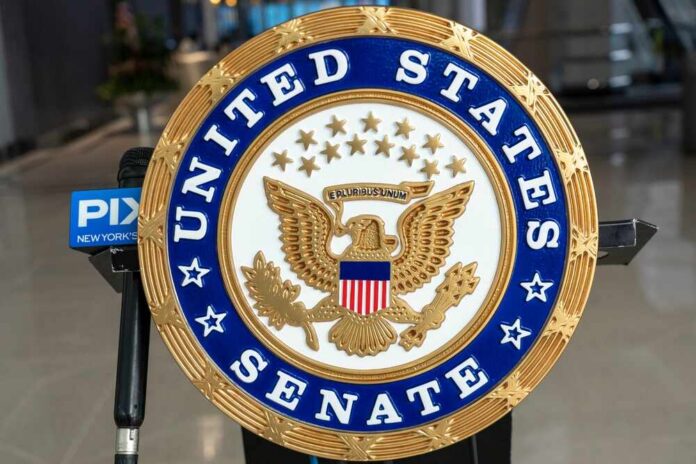
The Senate approved the Protect College Sports Act (S.4668) by a 77-22 vote, sending a clear message that the patchwork era for college sports should end.
The bill is co-led by Senator Ted Cruz of Texas and Senator Maria Cantwell of Washington, who lead the Senate Commerce Committee from opposite parties.
Their alliance signals that both parties want one national rulebook. The Commerce Committee moved the bill forward on a 19-9 vote before the floor action, building momentum for final passage.
The bill aims to set firm national standards for name, image, and likeness deals, transfers, athlete eligibility, and enforcement after years of state-by-state rules and courtroom fights.
Supporters argue that colleges have operated in confusion, with different rules in different states and schools racing to match new norms.
The legislation seeks to replace that race with clear lanes. Major leagues and two dozen conferences backed the push, as did the National Collegiate Athletic Association’s president, Charlie Baker, adding establishment heft.
Transfers And Eligibility: Guardrails Without A Hard Stop
The bill allows one transfer without penalty in a five-year window, which aims to cool the constant churn in rosters while giving athletes a fair path to move once.
Exceptions would cover real disruptions, like a sport being cut, a coaching change, graduate study, or cases tied to harassment or assault.
The eligibility clock would run for five total years, making the season count simple and uniform across sports and divisions. Coaches and fans get stability; players keep a controlled off-ramp.
U.S. Senate PASSES the Protect College Sports Act, legislation setting national standards to compensate college student-athletes for their name, image, and likeness (NIL), 77-22.
Goes now to the House. pic.twitter.com/7VpslbSJmc
— CSPAN (@cspan) September 29, 2026
Backers frame these rules as common sense. Teams need continuity to develop players and systems. Fans want to know who is on the court or field next season.
At the same time, life happens. When a school changes direction or a player earns a degree, a second chance should not slam shut. The bill threads that needle by writing exceptions into law and keeping the total window short enough to keep careers moving.
NIL Standards And Antitrust Shield: Ending The Rule-of-Law Whiplash
The law would set national standards for name, image, and likeness deals, pulling the market out of the gray zone that formed after court rulings and rapid state changes. The Senate framework seeks to protect real endorsements while discouraging disguised pay-for-play.
To make those rules stick, the bill includes limited antitrust protection so the National Collegiate Athletic Association and conferences can enforce clear lines and, where appropriate, manage media rights collectively without constant legal fire drills.
Courts have cut into the old amateurism model, from O’Bannon to the Supreme Court’s decision in NCAA v. Alston, which rejected blanket limits on education-related benefits. Congress now steps in to define what fair competition looks like in 2026’s reality, not 1986’s.
That protects athletes making honest deals and schools following one playbook. It also reduces the chance that every big policy call becomes another courtroom sequel.
Coalitions, Next Steps, And The Core Tradeoff
Twenty-four conferences and several professional leagues lined up behind the bill, while critics warn about limits on athlete mobility and pay leverage. The Senate vote total shows where the center of gravity sits right now: clarity beats drift.
The House must still act before the bill can reach President Trump’s desk. Until then, schools plan but do not implement. Senate leaders point to the strong bipartisan vote as a sign the House can move quickly.
🇺🇸 Protecting College Sports — or Protecting the System?
The Senate has voted overwhelmingly to regulate a chaos it helped create. By 77–22, senators passed the bipartisan Protect College Sports Act, sending the House what could become the most ambitious federal intervention in… pic.twitter.com/ZfzZ144AWK
— Antoine D (@AD1968F) September 29, 2026
The tradeoff is plain. A national rulebook reduces chaos but also draws firmer lines on transfers and eligibility. The market for athletes will remain strong, but the incentives will be cleaner and the standards the same everywhere.
If the House follows through, rosters stabilize, real endorsements survive, and college sports leave the courtroom and return to the field where they belong.
Sources:
commerce.senate.gov, inquirer.com, congress.gov, cnbc.com, espn.com, thehill.com