

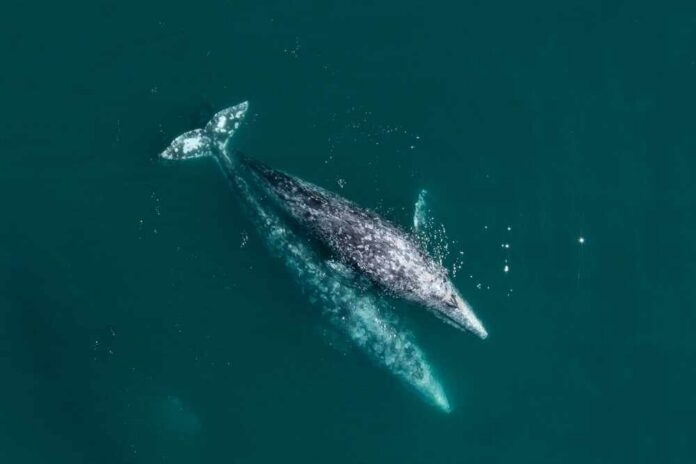
A full-grown humpback whale swam 60 miles inland from the Pacific Ocean this week, showing up in the Sacramento River near a small Delta town called Rio Vista.
Quick Take
- A humpback whale entered San Francisco Bay on September 15 and kept swimming east into the Sacramento-San Joaquin Delta.
- The Marine Mammal Center identified the animal as CRC-11620, a known whale nicknamed Rio, using photo records.
- Rio had been documented 15 times over the past 24 years along the California coast and in Mexico.
- The whale is the third known to travel this deep into the Delta, following Humphrey in 1985 and Delta and Dawn in 2007.
A Familiar Whale Turns Up Far From Home
The whale first appeared in San Francisco Bay on Tuesday, September 15, according to the Marine Mammal Center. Instead of turning back toward open water, it kept moving east through the Sacramento-San Joaquin Delta.
By Wednesday, it had reached the stretch of the Sacramento River near Rio Vista, a small town about 60 miles from the Pacific Ocean.
Fisherman Denny Glover said he saw the whale about a mile south of the Rio Vista Bridge around noon Wednesday while he was out on the water. His account, shared with ABC News, placed the animal squarely in a river channel where boaters usually watch for bass, not fifty-foot marine mammals.
A humpback whale was spotted 60 miles inland in California, deep in the Sacramento-San Joaquin Delta. Watch till the end. #Whale #California #Wildlife pic.twitter.com/HYiwUic0dy
— NTD News (@NTDNews) September 20, 2026
Scientists Confirm Identity Through Photo Records
The Marine Mammal Center matched the whale to an existing catalog entry, confirming it as CRC-11620, nicknamed Rio. The identification relied on Cascadia Research Collective’s photo-identification system, which tracks individual whales by markings on their tails and bodies over many years. That system showed this was not a new or unknown animal wandering into unfamiliar waters.
Records show Rio had been spotted 15 separate times over the last 24 years, both along the California coast and near Mexico. That history gave officials a baseline for comparison, even though it did not explain why this particular whale pushed so far into freshwater this time.
Why Officials Called It Unusual, Not Alarming
The Marine Mammal Center said it was unclear whether Rio was simply passing through or dealing with a health issue. The organization asked the public to keep a respectful distance and let the whale continue on its own terms rather than approaching by boat. That guidance mirrors standard practice for large marine mammals found outside their normal range.
By the day after the sighting, aerial searches using a news helicopter found no confirmed trace of the whale, and KCRA said it hoped it had already made its way back toward the ocean.
Fast-moving wildlife events like this one often close their observation window quickly, leaving officials to piece together the full picture from scattered sightings rather than one continuous track.
This Has Happened Before, and Ended Well
Longtime Delta residents have seen this movie twice already. In 1985, a whale named Humphrey spent weeks near Rio Vista before finding his way back through San Francisco Bay to the ocean. In 2007, a mother-calf pair known as Delta and Dawn pushed even farther upstream, spending about 20 days in the Delta before eventually turning around and swimming home.
Both of those earlier cases ended with the whales safely returning to open water, and officials have pointed to that history as reason for measured concern rather than panic.
The comparison also explains why so many people recognized what they were seeing almost instantly, even before wildlife experts confirmed the identification. For a region that has watched this happen twice before, a whale in the river is strange, but it is not without precedent.
A humpback whale was spotted in a California river, 60 miles from its Pacific Ocean home https://t.co/pCFuYd9rLU
— Private Officer (@privateofficer) September 20, 2026
Whether Rio follows the same path back to sea remains to be seen, but the pattern set by Humphrey and by Delta and Dawn gives Californians a reason to expect a happy ending rather than a tragic one.
Sources:
abcnews.com, local10.com, kcra.com, nypost.com, cbsnews.com