

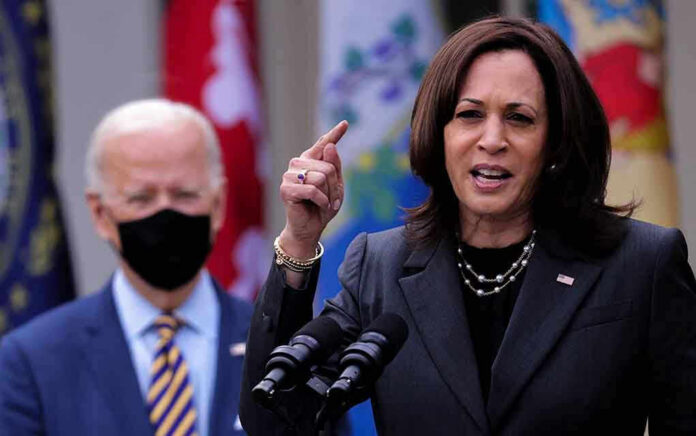
Kamala Harris’s Detroit NAACP appearance lit up the internet not for what she said, but how she said it.
Story Snapshot
- Harris spoke at a Detroit NAACP fireside chat, backing Abdul El-Sayed and pushing turnout.
- Clips of her delivery drew claims she used a new accent, sparking sharp criticism online.
- Linguists and supporters called it code-switching, not fakery, and pointed to consistent speech traits.
- The fight shifted from policy to performance, a familiar pattern in modern campaign theater.
What Happened In Detroit, And Why It Caught Fire
Kamala Harris joined a Detroit Branch NAACP fireside chat at Fellowship Chapel on September 22, 2026. She urged voters to back Abdul El-Sayed for the United States Senate and framed Michigan as central to the stakes of the cycle.
Local and national outlets documented the stop, the crowd, and her push for a turnout “too big to rig,” which set the political table for the dust-up that followed.
Former Vice President Kamala Harris faced criticism online after critics accused her of using a new accent during remarks at an NAACP event in Detroit.
Harris was speaking about Democratic turnout in the 2026 midterms when clips from the event spread on social media and drew… pic.twitter.com/QZOmFO9QrR
— Fox News Politics (@foxnewspolitics) September 23, 2026
Video clips from the event then punched through social feeds. Critics said Harris used a different accent in Detroit, and some called it put-on or fake.
The clips spread quickly, which let the charge outrun the context. The furor focused less on substance than sound, with the debate centered on a few phrases and the shape of her vowels rather than her argument or record.
The Words At Issue, And How Experts Hear Them
One repeated line became a flashpoint: “You betta thank a union member.” Listeners flagged the dropped “r” as a stylistic shift. A University of Colorado linguistics commentary described the feature as common in African American English and framed the shift as code-switching. The analysis said speakers often adjust delivery to match the audience and setting, a normal social pattern in public speech.
Kamala Harris rolled out her fake black accent for the NAACP
It’s so bad.
Does this mean she’s running?🤣follow @17QStorm6RV pic.twitter.com/MxTydBNRuz
— QThestorm RV🦅🇺🇲 (@17QStorm6RV) September 23, 2026
Other linguists reached similar views. A linguist quoted by The Grio said her accent across the compared clips was nearly the same, even if delivery changed with the room. That view turned the question from “fake” to “fit for audience.”
Supporters also argued that Harris often blends traits that mark her as Black, professional, and Californian, and that these markers appear across events, not only in Detroit.
Why The Accent Fight Lands So Hard In Politics
Campaigns amplify small cues because small cues move feelings. Code-switching has a long record in politics, churches, classrooms, and job sites. People adjust tone, rhythm, and word choice all the time. Experts describe it as shifting between speech styles to connect with the crowd at hand. That does not prove every shift is wise, but it does show that the act itself is not exotic or rare in public life.
Conservative critics argue that authenticity matters more than performance, and that forced personas breed distrust. That test is fair. Voters deserve straight talk and consistent values.
On the facts here, the code-switching explanation tracks with what specialists describe and what many public speakers do. Treating every change in cadence as deceit overreaches. Reserve the toughest charges for clear cases of lying, not common rhetorical tools.
The Stakes That Got Lost In The Noise
The Detroit event also carried plain policy stakes. Harris pressed for higher turnout, pitched El-Sayed, and cast the race as a bulwark against Trump-era policies. Supporters left with lines about unions, voting, and Michigan’s weight in the map.
Reporters on the ground quoted her attacks on the opposing administration and her call for a margin “too big to rig,” a phrase that framed the ground game more than the headline fight over sound.
Voters over forty know the drill. The internet grabs a five-second clip and turns it into a character trial. The smarter play is to check the full speech, weigh the record, and judge the goals.
If the aim is to win over working people in Detroit, sounding like you are in Detroit is not a crime. It is rhetoric. The question that matters is whether the promises match results when the microphones turn off.
Bottom Line
Harris’s Detroit delivery sparked a day of hot takes about accent. The record shows she spoke to a local crowd about unions and turnout, and the clips show a style that linguists say fits code-switching, not a costume. Voters should demand clarity, consistency, and results.
They should also avoid getting played by the outrage machine when a change in rhythm becomes the headline instead of the plan for their paychecks and schools.
Sources:
foxnews.com, detroitnews.com, thegrio.com, atlantablackstar.com, wltreport.com, pittnews.com, news.berkeley.edu