

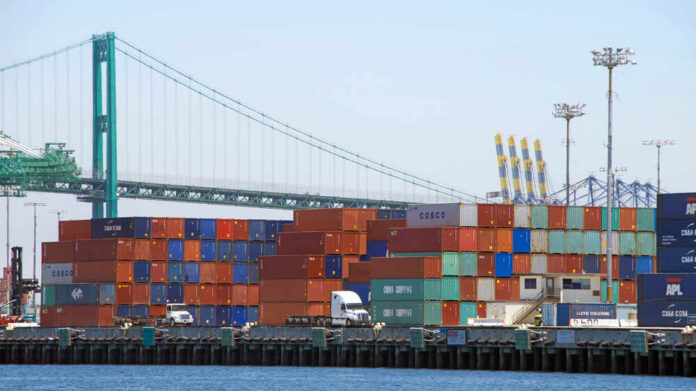
Canada switched on steep tariffs for a basket of American goods, and the bill starts now.
Story Snapshot
- Canada imposed 25 percent tariffs on an initial $30 billion of U.S. goods effective March 4, 2025.
- The official list covers items like perfumes and toilet waters, with countermeasures tied to U.S. tariffs.
- Ottawa said the tariffs stay until the United States removes its measures.
- Canada staged further action in mid-March and later expanded the product basket, including dairy and golf clubs in later reporting.
Canada’s Tariffs Start, With Clear Terms and a Hard Trigger
Canada activated 25 percent tariffs on a first wave of U.S. imports at 12:01 a.m. on March 4, 2025. The Department of Finance framed the move as part of a larger $155 billion response, beginning with about $30 billion in goods.
The government tied the start date and scope to U.S. actions, and stated the tariffs would remain until the United States removed its measures. The policy message was simple: lift your tariffs, and Canada lifts theirs.
The official list did not read like a steel-only play. It reached into consumer shelves. The annex explicitly named perfumes and toilet waters, a signal that Ottawa aimed beyond raw materials. That kind of pick hits brand names and holiday gifts, which gets attention fast.
Reuters also quoted Prime Minister Mark Carney tying the timing and durability of the response to the U.S. move, making the cause-and-effect public and direct. The first tranche established the rule of the road and the clock.
Phased Retaliation Increases Pressure Over Time
Canada set the retaliation in phases. After the March 4 start, Ottawa prepared an additional package around March 13 worth about 29.8 billion Canadian dollars, according to Reuters, reinforcing that this was not a one-and-done step.
The United States Department of Agriculture’s Foreign Agricultural Service summarized the implementation as a 25 percent tariff on an initial tranche of more than $20 billion in goods, confirming the roll-out from the U.S. side of the border. Phasing gives leverage while watching domestic impacts.
Later coverage shows the basket got sharper. CityNews Halifax reported in August 2026 that Canada applied a 50 percent tariff to dairy products like milk and cream, to beauty products including perfumes, and to golf clubs and gear.
That evolution fits how trade fights grow: start with a bang, then adjust fire where it stings. While item-by-item timing varies by tranche, the through-line stayed the same. Canada matched U.S. pressure with visible counters until the other side blinked.
Who Pays, Who Pushes Back, and What Comes Next
Shoppers feel tariffs when they buy. Canadian importers pay the tariff at the border, then pass costs on. American sellers get squeezed as their goods become pricier in Canada. That is the point of targeted picks like perfumes and golf clubs: they lean on brands with loyal buyers.
Agricultural items raise stakes for farm states fast. The logic is simple: protect your producers, but do not forget your own families who shop every week.
BREAKING REPORT: Canada IMPOSES retaliatory tariffs of up to 50% on multiple goods.
Canada's tariffs range from 15% to 50%.
American milk, perfume, video game consoles, golf clubs, fishing rods, steel, aluminum, jackets and T-shirts will face 50% tariffs.
Cheese, carpets…
— Chuck Callesto (@ChuckCallesto) September 8, 2026
Macro research echoes the kitchen-table view. Trade retaliation tends to shrink trade and raise prices, which drags on growth and confidence.
The International Monetary Fund and European analyses show that tit-for-tat rounds erase any early edge and push both sides toward lower output and higher consumer prices over time.
That does not make firm defense wrong. It does argue for speed: lock in relief or roll back pain before the damage compounds. Clear off-ramps matter as much as loud on-ramps.
Sources:
cbsnews.com, reuters.com, halifax.citynews.ca, canada.ca, ey.com, fas.usda.gov, ecb.europa.eu