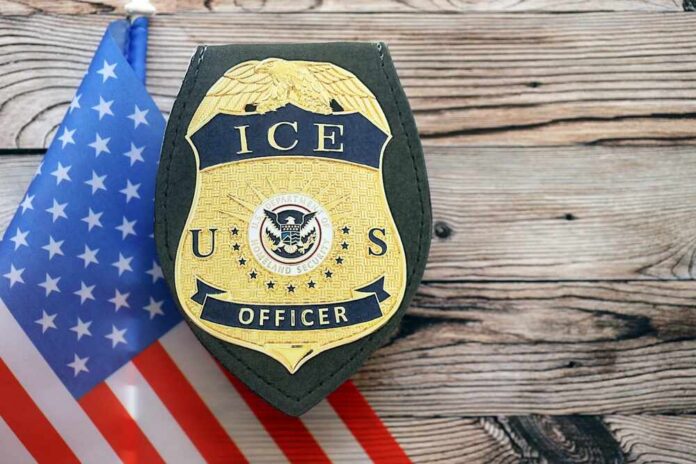
A federal grand jury says an Immigration and Customs Enforcement officer lied six times about a Minneapolis shooting, and now the clock is ticking on who the justice system believes most.
Story Snapshot
- A grand jury indicted Christian Castro on six counts of making false statements to the Federal Bureau of Investigation (FBI).
- Prosecutors say Castro misled investigators about a January 14, 2026 shooting in Minneapolis.
- Minnesota also charged Castro with assault and false reporting tied to the same incident.
- Castro pleaded not guilty to the federal charges, according to news reports.
What Prosecutors Say Happened And Why It Matters
The United States Department of Justice says Special Agent Christian Jeremiah Castro lied to FBI agents during a January 14 interview about a shooting that wounded Julio Cesar Sosa-Celis in Minneapolis.
A grand jury returned six counts under the federal false statements statute after investigators reviewed Castro’s account against other evidence.
The case sits at the heart of a simple rule with heavy teeth: if you speak to federal agents, you must tell the truth or stay silent. You do not get a third option.
An ICE agent who is accused of shooting a Venezuelan man in Minneapolis in January and then lying about the incident was charged by the Justice Department for allegedly making false statements to investigators, sources familiar with the matter said. https://t.co/WcOMI9YFkb
— ABC News (@ABC) September 6, 2026
Hennepin County prosecutors built a parallel state case months earlier. They charged Castro with four counts of second-degree assault and one count of falsely reporting a crime, alleging he fired through a door during an immigration operation and later misled local authorities about the threat he faced.
State and federal tracks now move on separate rails: one asks if force broke state law; the other asks if words to federal agents broke federal law. That split often decides careers and prison time.
The Charges, In Plain English
Federal false statement charges do not require an oath, a courtroom, or a sworn affidavit. The law makes it a crime to knowingly and willfully lie to federal investigators about a material fact.
That single sentence explains why public officials, from athletes to agents, fall not just for what they did but for what they said after.
The Justice Department cites this tool often because it protects investigations and punishes cover stories that could derail them. In this case, prosecutors say Castro’s words, not just his weapon, crossed the line.
News outlets report Castro pleaded not guilty to the federal counts. That plea preserves his rights and forces prosecutors to prove every element beyond a reasonable doubt.
A not guilty plea does not settle the facts; it sets the stage. Juries tend to trust video, physical evidence, and consistent timelines.
Defense lawyers tend to spotlight split-second chaos, officer training, and gaps in memory. The contest will hinge on which picture lines up with the record the jury sees.
Law, Order, And Honesty
Public safety depends on men and women willing to run toward danger. It also depends on bright lines that guard truth. If an agent used lawful force, the record should clear him. If an agent lied to shield a bad shot, the badge does not excuse it.
The federal false statement law exists to keep the system honest, even when the subject wears a uniform. That is not anti-police; it is pro-trust.
Americans can hold two ideas at once. First, immigration enforcement is a hard job that gets harder when politics inflame the street. Second, the rule of law only works if facts win over fear.
Minnesota authorities brought assault and false-report charges based on their review of the scene and statements. Federal prosecutors brought lying charges based on their review of Castro’s interview. A jury will sort it out. The rest of us should demand speed, clarity, and the same standard for everyone.
Sources:
apnews.com, justice.gov, nbcnews.com, fox9.com, politico.com