
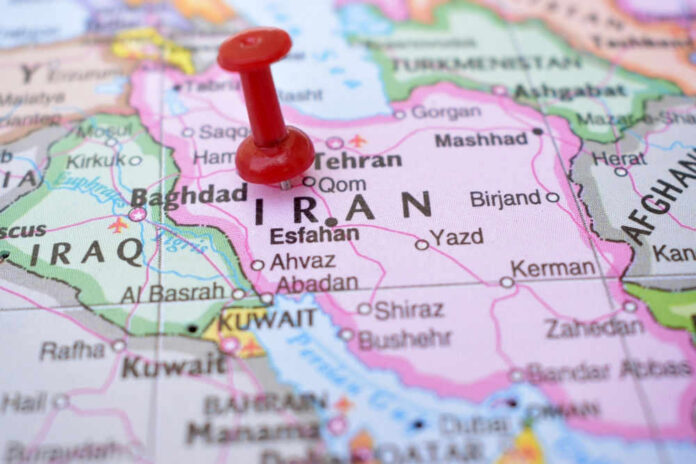
The United States just answered Iran’s attacks on three tankers in the Strait of Hormuz with a wave of “powerful strikes” that could decide whether this war stays limited or blows wide open.
Story Snapshot
- U.S. Central Command says strikes hit more than 80 Iranian military targets after tanker attacks.
- Washington calls Iran’s actions a clear ceasefire violation; Tehran calls the U.S. a treaty breaker.
- Targeted sites include missile, drone, radar, and small boat assets tied to attacks on shipping.
- Oil markets jump and Iran fires back at U.S. sites in Bahrain and Kuwait, raising regional risk.
U.S. strikes framed as a powerful response to tanker attacks
U.S. Central Command said American forces launched a “series of powerful strikes” against Iran after its forces targeted three commercial vessels in the Strait of Hormuz.
Military officials described the operation as a direct answer to the June 25 drone attack on the Singapore-flagged cargo ship M/V Ever Lovely and a June 26 strike on the tanker M/T Kiku. They labeled Iran’s actions “unwarranted, dangerous, and a clear violation of the ceasefire,” arguing they left Washington no choice but to respond.
Central Command’s public releases laid out a clear causal chain: Iranian forces hit commercial ships crewed by civilians in an international waterway, and U.S. aircraft then struck Iranian missile and drone storage sites, coastal radar, and other military infrastructure. The message was simple and blunt.
If Iran attacks ships that follow agreed routes through the strait, the United States will impose “heavy costs” on the capabilities used to threaten that commerce.
What U.S. forces actually hit inside Iran
Officials said U.S. strikes focused on specific Iranian military assets tied to maritime attacks. Targets included missile and drone storage facilities, coastal radar and surveillance systems, air defenses, anti-ship cruise missile sites, and port infrastructure supporting fast attack boats.
Central Command also said more than 60 small boats used by Iran’s Revolutionary Guard were destroyed or disabled, aiming to reduce Iran’s ability to swarm tankers or lay mines in the narrow waterway.
BREAKING: U.S. Central Command says American forces launched a new wave of strikes Tuesday, hitting more than 80 targets across Iran after Tehran’s latest attacks on commercial vessels in the Strait of Hormuz. The operation targeted Iranian air defenses, command-and-control… pic.twitter.com/cqiZ3wNsMt
— Breaking911 (@Breaking911) July 8, 2026
The scope of the latest operation was described as far larger than earlier June strikes, with one U.S. official saying it was four to five times more powerful than the previous round. Iranian state media reported explosions in the port cities of Bandar Abbas and Sirik and on Qeshm Island, confirming strikes along Iran’s southern coastline.
Central Command later released unclassified video footage of at least one strike, reinforcing the message that these were deliberate, targeted attacks on military sites rather than symbolic gestures.
Iran’s counter-narrative and retaliation across the Gulf
Iran has not publicly claimed direct responsibility for hitting all three tankers, even as U.S. officials point to its Islamic Revolutionary Guard Corps as the attacker. Iranian state television said one vessel ignored its warnings and used a route “outside the framework” of agreed arrangements, casting its actions as enforcement of control over the strait rather than aggression.
Tehran’s foreign ministry went further, accusing the United States of violating the agreement meant to end the conflict and branding Washington a “treaty-breaking regime.”
After reporting that a projectile hit the port area of Sirik, Iranian outlets claimed naval forces struck U.S. military positions in response, and later the Revolutionary Guards announced missile and drone attacks on 85 American sites in Bahrain and Kuwait. So far, details on damage to U.S. assets are limited and rely heavily on unnamed Iranian sources, making it hard to verify the full impact.
That kind of fog and spin lines up with a long pattern in this conflict, where each side calls its own actions defensive and the other side’s moves reckless.
The fragile ceasefire, oil shock, and what comes next
The June 17 understanding to reopen the Strait of Hormuz and cool fighting was already strained by earlier exchanges in May, when Iran fired missiles and drones at U.S. warships and both sides downplayed damage.
The latest attacks on Ever Lovely and other tankers, followed by U.S. strikes, pushed that ceasefire to the breaking point. President Trump publicly called Iran’s ship attacks a “foolish violation” and later declared the ceasefire “over” as he reinstated sanctions on Iranian oil.
Oil markets reacted fast. Brent crude prices jumped as traders priced in higher risk to a waterway that carries about one fifth of the world’s seaborne oil and gas.
That spike will hit consumers and raise political questions at home, but it also underlines why many Americans see tough action as common sense: if you let Iran normalize attacks on tankers, you invite chaos in energy supply and encourage more coercion.
The bigger concern is whether these “powerful strikes” reset deterrence or trigger a wider fight that drags in Bahrain, Kuwait, and other Gulf partners already under fire.
Sources:
cnbc.com, cbsnews.com, centcom.mil, reuters.com, youtube.com, bbc.com, facebook.com, abcnews.com, wsj.com, en.wikipedia.org, crisisgroup.org, axios.com, x.com, instagram.com