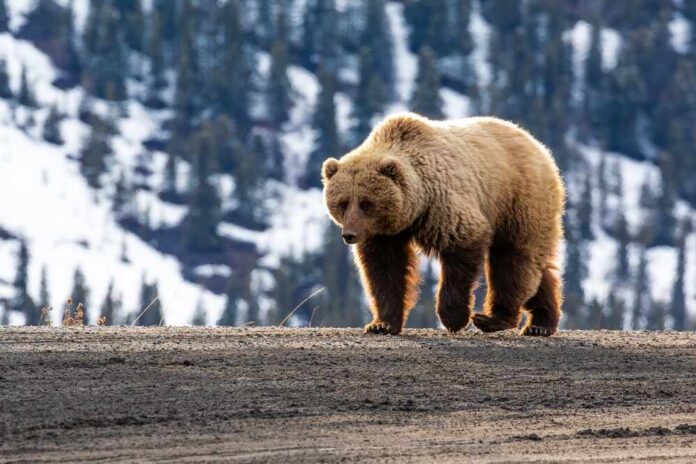
A mother grizzly with cubs bluff charged a solo runner near Numa Pass, and Parks Canada warned hikers the very next day.
Story Snapshot
- Parks Canada warned of a defensive female grizzly with cubs near Numa Pass.
- A solo hiker reported multiple bluff charges on the Rockwall Trail around 9:30 a.m..
- The hiker admitted he grabbed his phone instead of bear spray and called it his mistake.
- Most grizzly charges in family encounters are bluff and short by design.
What Happened On The Rockwall Trail
Parks Canada issued a bear warning for the Floe Lake Trail, Floe Lake Campground, and Numa Pass corridor on August 26, 2026. The advisory named a female grizzly with cubs that was showing “aggressive defensive behavior” in the area.
Local reporting placed the encounter the day before, at about 9:30 a.m., roughly 500 meters south of Numa Pass on the Rockwall Trail in Kootenay National Park. The agency confirmed that a solo hiker was bluff-charged by the adult female.
Coverage attributed the firsthand account to Alberta runner Keith Kerr. He said he ran into a mother grizzly and her cubs and faced several bluff charges in quick bursts. He also said the episode was on him, noting he reached for his phone before his bear spray.
His quote was simple and blunt: “I should have pulled out my bear spray, not my phone.” That admission lines up with the agency’s framing of a defensive encounter near cubs.
Where, When, And Why It Turned Dangerous
The setting matters. The Numa Pass and Floe Lake zone was active, with ripe berries and regular bear travel, which increased the risk of close-range encounters.
Trail reports showed Rockwall Pass open, while nearby Numa Pass and Floe Lake carried the bear warning dated August 26, 2026, which fits the timeline around the encounter.
The trigger was textbook: a person between a mother and cubs at close range. That is when a grizzly uses speed and noise to force space without contact, which is a bluff charge.
‘Thought this was going to be it for me’: Alberta hiker recounts grizzly showdown https://t.co/F192XAxTC0
— CTV News Calgary (@CTVCalgary) August 29, 2026
Reports vary on exact distances and the number of rushes, but the pattern is consistent. The mother closed ground fast and stopped short while the runner stood his ground and spoke calmly. Summaries say the standoff lasted about a minute.
The mother then gathered her cubs and moved off, which is common once a bear feels space has been restored. Parks Canada’s warning a day later matched that behavior pattern word for word.
How Bluff Charges Work And Why Most End Without Injury
Grizzlies use bluff charges to defend, not to hunt. Wildlife guidance from Parks Canada explains the signs: head up, ears forward, huffing, jaw popping, and ground slaps. The bear runs hard, then stops short or veers away to make a point: back off now.
Most of these rushes end without contact, especially with family groups or near food sources. Data and guidance note that bluff charges are more common than true attacks and are usually brief.
That does not make it safe. It means the bear wants the person to leave, fast. When a person stands firm, speaks in a steady voice, and avoids sudden moves, the bear often breaks off once the message lands. Reaching for a camera is a poor move.
Keeping bear spray ready in hand in dense cover or poor sightlines is a smart move. Kerr’s self-critique reflects that rule. He said the outcome was his responsibility, which tracks park advice.
Trail Lessons That Stick
The takeaways are clear for anyone headed into grizzly country. Travel in groups that make noise on blind corners. Keep bear spray where your hand finds it in one motion. Stop and scan before entering meadows or brushy saddles where wind can hide scent and sound.
If you spot cubs, leave the area right away. If a grizzly charges, hold your ground and prepare to deploy spray. Most charges end without contact when people give space and act with calm control.
Sources:
foxnews.com, parks.canada.ca, rmoutlook.com, globalsummitguide.com, greatdividetrail.com