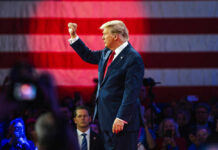


At the NATO summit, President Trump said the United States “could remove all of our soldiers out of Europe,” putting allies on notice that the free ride is over.
Story Highlights
- Trump warned allies the United States could pull all troops from Europe, sharpening pressure on burden sharing.
- Analysts describe a concrete drawdown plan that would cut Army and Air Force units in Europe by 2030.
- NATO and European leaders tout a $139 billion surge in defense spending in the last year.
- Critics claim posture is mostly unchanged, but U.S. decoupling from Europe is accelerating, reports say.
Trump’s Direct Warning to Europe
President Trump told reporters in Ankara that the United States “could remove all of our soldiers out of Europe,” during a meeting with Turkey’s President Recep Tayyip Erdogan. The statement came as leaders debated costs, Iran policy, and the war in Ukraine.
The message was clear: pay up and take responsibility, or expect fewer American forces on the continent. The warning followed years of pressure for allies to invest more in their own defense.
Trump renews Greenland threats at NATO summit, says U.S. could remove troops from Europe https://t.co/UU16k4XkS7
— CNBC (@CNBC) July 7, 2026
Reuters reported that NATO leaders, including Trump, were still set to affirm an “ironclad commitment” to collective defense in the summit text. That shows the alliance remains intact on paper, even as Washington forces tough choices on spending and missions.
The political reality is this: America remains the backbone, but expects serious partners, not passengers. Europe heard that message, and it landed at the top table in Ankara.
What A Drawdown Could Look Like
War on the Rocks outlined a specific path for a drawdown. The plan would withdraw the 2nd Cavalry Regiment from Germany, cancel an Army brigade rotation to Poland, and remove three fighter squadrons by 2030.
Those steps would shrink America’s day-to-day presence while keeping surge options if emergencies arise. The moves would save money, reduce risk to U.S. troops, and push Europe to fund and field more of its own power.
Defense Priorities noted that Trump earlier announced a 5,000-troop reduction from Germany after disagreements with Berlin over Iran policy. That announcement showed Washington’s leverage and its willingness to act when allies undercut shared goals.
Yet the same analysis argues the U.S. posture has stayed mostly the same, which critics use to question whether Europe should take the threat seriously. The gap between rhetoric and execution remains the central debate.
Europe’s Spending Spike and Washington’s Leverage
Euronews reported Europe and Canada boosted core defense spending by $139 billion in the last year, a 20 percent jump. That rise is exactly what American voters have demanded for decades: allies who pay for their own security. The timing matters.
The surge tracks with louder U.S. pressure and the real costs of Russia’s war. If Europe sustains this pace, it can carry more of the load and reduce America’s endless subsidy.
The Council on Foreign Relations said the United States appears to be pulling back from European security and that decoupling is speeding up. That does not mean America walks away from NATO.
It means priorities shift toward defending the homeland, securing the border, deterring China, and fixing debt and inflation at home. That realignment reflects strong defense, clear limits, and no blank checks for rich allies who can do more.
Pushback From Critics and Alliance Insiders
Some analysts argue Trump’s bark is bigger than the bite, noting the posture looks familiar in many areas. Others insist the alliance’s deterrence remains solid even if some U.S. units move or rotate less often.
That view claims NATO’s structure can absorb adjustments without inviting threats. Supporters of a drawdown counter that steady pressure is the only way to force lasting European capability and stop U.S. mission creep.
NATO Meets in Ankara. Trump Is Already Threatening to Walk.
NATO leaders will gather in Turkey this week with the alliance under more strain than at any point since its founding. Trump has threatened to withdraw from NATO, pulled troops from Germany, and is furious that most…
— RANE (@RANEnetwork) July 6, 2026
Summit drafts still lean into unity language. But unity without fair shares is just talk. The United States can support allies while ending policies that drained our treasury, stretched our forces thin, and ignored urgent needs at home.
A measured European drawdown, backed by firm commitments to defend treaty allies, puts the burden where it belongs: on wealthy European nations to field tanks, missiles, air defense, and ammunition at scale—and to do it now.
What Matters Next for Americans
Three tests will show if this shift is real. First, watch for formal orders on the 2nd Cavalry Regiment and the fighter squadrons. Second, track whether the canceled Poland brigade rotation sticks on the calendar.
Third, verify European deliveries, not just pledges: artillery shells produced, air defenses deployed, and combat brigades ready. Facts on the ground—not summit speeches—will prove whether Europe finally steps up while America sets responsible limits.
The Trump team’s position aligns with common sense: allies must carry their share, America must avoid forever subsidies, and U.S. forces should focus on core national interests. Europe’s $139 billion jump shows pressure works.
The alliance can stay strong without Washington footing the whole bill. If leaders follow through on targeted drawdowns and real burden sharing, the result can be a leaner, tougher NATO—and a stronger America at home.
Sources:
cnbc.com, euronews.com, warontherocks.com, defensepriorities.org, washingtonpost.com, facebook.com