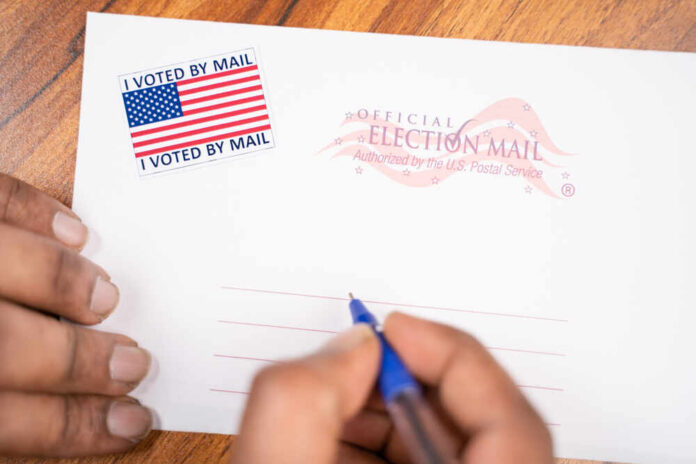
USPS wants names and barcodes before it will move millions of mail ballots, and the clock is already ticking.
Story Snapshot
- USPS proposed and then issued rules tying ballot mail to voter-name lists and unique barcodes.
- States would enroll in a federal portal and submit ballot data before USPS accepts mailings.
- USPS says barcodes help verify compliance and aid law enforcement.
- Courts may decide timing; USPS flagged an injunction as a potential pause.
What USPS Put On The Table And Why It Matters
United States Postal Service published a proposed rule in the Federal Register to reshape how ballot mail enters the system. The plan links each ballot envelope to a unique barcode and to a voter-name list that states send to USPS through a new portal.
USPS argues the data would let it check compliance with federal standards and support law enforcement when needed. The agency also says it already sets election-mail handling rules, so this extends known practices, not invents them.
The United States Postal Service has released a new rule adding verification requirements to all mail-in ballots. https://t.co/How6zwugny
— ABC News (@ABC) August 23, 2026
Reuters reported the final version landed in late August, with formal publication set and an important caveat: no action to implement unless a court lifts an injunction. That signals a live rule with a legal speed bump, not a dead letter.
The core applies to federal elections, not primaries, and centers on outbound and return envelopes that carry serialized Intelligent Mail barcodes linked to a state-submitted list.
The New Mechanics: Portals, Barcodes, And Gatekeeping Fears
ABC News summarized the workflow in plain terms. State election officials would register with a federal ballot mail portal, upload each intended mail-ballot recipient’s name and address, and link that record to a unique barcode for the outbound and return envelopes, before USPS accepts the mailing.
A multistate comment letter described USPS then using that list to verify outbound ballot mail against state submissions at acceptance. Supporters call this simple logistics; critics call it a lever that can stop ballots at the loading dock.
Representative Raja Krishnamoorthi warned the system could put USPS in a “gatekeeper” role over who receives a ballot, which he argues belongs to states and Congress, not the mail carrier. That claim draws heat because it cuts to the heart of federalism and practical control.
USPS counters that verification enhances chain of custody and makes post-election audits easier, while leaving voter eligibility decisions with state officials. On the facts, the list-and-barcode check sits at the entry point, which makes the gate metaphor hard to dismiss out of hand.
Security Gains Versus Burden, Cost, And Privacy Tradeoffs
A coalition of Republican attorneys general backed the rule, saying unique barcodes and standard envelopes reduce weak links in mail-ballot handling. The case for the rule fits expectations: visibility, traceability, and fewer gray areas in the chain of custody.
However, the public record so far does not provide empirical evidence that barcode-linked voter data detects fraud at scale beyond what current tools can, which invites questions about measurable gains relative to the added burden. That gap should be filled by a transparent audit once pilots or phased rollouts are underway.
Opponents led by Minnesota’s attorney general argue that the plan aids a broader federal push and risks blocking ballots through bureaucratic delays. They also flag privacy concerns about linking names and addresses to serialized identifiers within a federal portal.
USPS already stores exterior-envelope data for mail-processing purposes, and its election guides are public, but centralizing ballot recipient lists raises a different set of sensitivities. Privacy protections, retention limits, and access controls should be published in full to calm concerns and set clear boundaries.
What Changes Now, What To Watch Next
The most tangible change, if courts allow it, is a pre-mail acceptance check linked to state-submitted lists and barcodes for federal-election ballots.
That means states must ensure that mass-mailed ballots have clean data, timely uploads, and envelopes that meet the serialization rules before the first tray hits the dock.
States already coordinate with USPS on design and automation; the portal step adds a deadline and a binary outcome. Miss the mark, and election offices could face holdbacks or rework as voting windows approach.
The USPS Published its Mail-In-Ballot Rules For the Midterm Elections…This is HUGE.
The USPS just published a new rule implementing Trump’s executive order on mail-in ballots.
States that want the Postal Service to handle their mail-in or absentee ballots must now:
-Turn… pic.twitter.com/EuVuak4Stk
— Americaforever (@onetexgal9) August 23, 2026
Voters will not see the barcode’s guts, but they may see steadier tracking and fewer lost-in-transit claims if the system works. Election officials will feel the weight first: data hygiene, earlier cutoffs, and coordination across vendors. Courts will likely decide timing.
A smart path honors two principles at once: states decide who gets a ballot, and USPS can require the data it needs to move ballot mail with a verified chain of custody. Track the injunction, the portal documentation, and any USPS audit plan next.
Sources:
abcnews.com, app.govly.com, reuters.com, oag.ca.gov, grayhairsoftware.com, about.usps.com, washingtontimes.com, nwlc.org, nul.org, usatoday.com