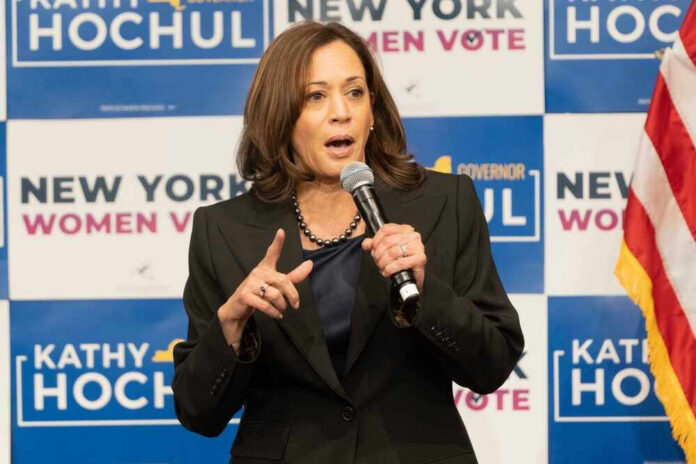
Kamala Harris plans to hit Michigan’s trail with Abdul El-Sayed, testing whether a national brand can lift a local fight while parts of her party keep her at arm’s length.
Story Snapshot
- Harris is reentering key battlegrounds to aid Democrats and raise money.
- Some Democrats in tough states say her presence hurts more than it helps.
- Harris says candidates should do what they need to win, with or without her.
- Surrogate visits can boost turnout a bit, but effects vary by place and message.
What Harris Brings To Michigan Right Now
Harris is putting her name, time, and fundraising draw behind Democrats in hot races. A report said she will campaign with Senator Jon Ossoff in Georgia and headline a Fulton County dinner, part of a wider midterm push into battlegrounds.
That signals a plan: show up, fill rooms, and convert her national profile into cash and coverage. A Michigan stop with Abdul El-Sayed would fit that pattern. It offers media oxygen and donor energy that many down-ballot candidates cannot summon alone.
Michigan Democrats want base voters and small donors awake in a cycle that can drift. Harris can light up local press, mobilize party committees, and pull national surrogates into the state calendar. That matters in a midterm map where margins live in mailboxes and church parking lots.
A visit also sets up repeat contact through texts, calls, and precinct captains. Campaign science shows that sustained contact and attention move some voters off the couch when it counts.
Former Vice President Kamala Harris will campaign with Michigan Senate candidate Abdul El-Sayed next week as Democrats battle to hold onto the seat and take control of the Senate in November. https://t.co/J8KeF3wqnj
— The Washington Times (@WashTimes) September 16, 2026
The Uneasy Math Inside Her Own Party
Several Democrats in red and purple terrain have told Harris to keep her distance. A “parade” of candidates in red states has declined her help, arguing her brand complicates the local coalitions they need to build. That pushback has turned into a talking point for Republicans and right-leaning media.
The split is less mystery and more math: a figure who excites progressives in cities can chill swing voters in farm counties. Many candidates would rather own their message than explain hers.
Harris’s answer is blunt and practical. She told reporters that Democrats should do “whatever they need to do to win,” which includes saying no to her if that helps them locally.
That stance frees her to help where invited and avoid places where her presence becomes a negative ad. It also distances her from any single campaign’s fate.
Will A Harris Stop Actually Move Votes?
Surrogate visits can help on the edges, but they rarely flip a race on their own. Research on high-intensity campaigns finds turnout can rise several points in targeted states when efforts are great and well-timed. The key is not the rally clip; it is the follow-through.
A visit that seeds volunteer shifts, fundraising lists, and repeat contacts can add a point or two where the base is dense. That is useful in Michigan’s close districts. It is wasted in places that need crossover moderate votes more than crowd shots.
Michigan with Abdul El-Sayed will test message fit. Harris has leaned into national fights that thrill progressives and alarm independents. The safer play is to tether her stop to cost-of-living, public safety, and schools, while letting El-Sayed carry hyper-local notes.
That lets Harris serve as an attention magnet and donor draw, while the local candidate speaks the language of potholes and paychecks. If the event turns into a culture-war pep rally, Republicans will thank them for the footage.
Sober Expectations And The Real Benchmark
The benchmark is not the size of the crowd. It is the growth of small-dollar donations, new volunteers, and unique voter contacts in the seven days after the visit. If those numbers jump, the stop worked. If not, it was noise.
Reports show Harris already books events that deliver money and headlines in other battlegrounds. But her mixed welcome warns against a one-size plan. Smart campaigns will use her as a force multiplier where she helps and keep the mic local where she does not.
Sources:
townhall.com, silive.com, bbc.com, nypost.com