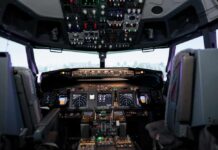


One fault buried in the air-traffic systems forced a nationwide throttle on flights and left more than a thousand journeys scrapped in hours.
Story Snapshot
- NATS blamed a technical failure, not a security breach, and slowed traffic to keep skies safe.
- Major hubs like Heathrow, Gatwick, Manchester, and Stansted saw cancellations and long delays.
- Past reviews show rare data or software glitches can jam flight plan systems, triggering manual fallback.
- Recovery takes time because crews, aircraft, and gates end up in the wrong place at once.
What Happened: A Technical Failure That Jammed the System
The United Kingdom’s air navigation provider, NATS, reported a technical issue that disrupted departing flights across major airports.
Heathrow, Gatwick, Manchester, and Stansted imposed restrictions, which led to widespread cancellations and delays as operators slowed the flow for safety.
NATS said engineers were onsite and working on the problem, while controllers managed fewer flights to ensure safe spacing.
Authorities did not report evidence of a cyber-attack or sabotage. The outage forced a rapid shift to contingency operations to protect aircraft already in the air.
1,055 Flights cancelled after UK air traffic control glitch.
"It's just an absolute nightmare down there," healthcare worker Josie Donoghue said of Gatwick after leaving the airport, having had to disembark her flight to Ireland after three hours stuck on the runway… pic.twitter.com/VSPRzTgIo2
— AFP News Agency (@AFP) September 9, 2026
Airlines and airports activated playbooks that prioritize safety over speed. Ground holds rippled outward as crews timed out, aircraft missed slots, and gates filled. Even after systems came back, the network moved like a city after a snowstorm.
Planes and crew were stranded in the wrong places at the wrong times. That mismatch triggered more late-day cancellations and next-morning knock-ons, with passengers urged to check status and rebook where possible as capacity recovered in steps.
Why It Cascaded: The Hidden Math of Air Traffic Control
Air traffic systems do not fail like a light switch; they degrade. When a flight data or radar-related function misbehaves, controllers reduce volume to widen margins. That keeps planes safe but slashes throughput, which means queues on the ground and in the sky.
In past United Kingdom incidents, NATS shifted to manual processing of flight plans when automation stumbled. That step slows everything but prevents unsafe mixes of routes and altitudes until tools stabilize. The public sees “outage,” but the system is actually in a safe, low-speed mode.
History supports the pattern. In 2023, United Kingdom regulators reviewed a major NATS disruption tied to an incoming flight plan that the system could not process, which choked automation and sent teams to manual workarounds.
Independent reviews traced the root to rare data interactions, not a hack. Earlier NATS failures, including the 2014 episode, traced to latent software defects exposed by changes, again without signs of malicious action.
These events show complex automation can stumble on edge cases while still protecting flights through slower, manual guardrails.
How Many Flights and How Long to Recover
Trade and media reports pegged the current wave at over 1,000 cancellations within hours, with more delays as the day wore on. The largest United Kingdom hubs bore the brunt because their normal throughput runs near capacity.
When operations slow, the stack of missed slots piles up fast. Even a short outage can take all day to unwind. Crews meet duty limits, aircraft miss maintenance windows, and luggage ends up separated from passengers. Airlines then trim schedules to restore regular operations by the next cycle.
Chaos continues across UK airports as airlines struggle to recover from a major air traffic control failure.
Around 2,000 flights have now been cancelled across Tuesday and Wednesday, leaving hundreds of thousands of passengers affected and aircraft and crews stranded in the…
— Naveed Khan (@i_Naveediqbal) September 9, 2026
Recovery depends on three levers: available runway slots, crew legality, and aircraft positioning. Slots come back first as NATS restores normal flow. Crews follow next as airlines reassign rested pilots and cabin staff.
Aircraft repositioning lags because jets must hop between cities to rebuild the lattice. This is why airports warn that flights may resume while cancellations still rise for a period. Clearing the backlog safely takes longer than fixing the initial fault, especially late in the day when schedules are tight.
What Authorities and Airlines Are Telling Travelers
NATS and airports advised passengers to check with their airlines before heading out. Airlines waived change fees in many cases and offered rebooking on the next available services.
Airport teams asked travelers to arrive only when their flight showed confirmed timing, to prevent crowding that strains security and customer support.
Normal operations return in steps: first departures at reduced volume, then fuller banks, then near-normal rotations as the overnight wave resets the fleet positions.
Policy voices signaled oversight. After similar disruptions, the United Kingdom Civil Aviation Authority launched independent reviews to pinpoint causes and push fixes. Prior reports urged stronger resilience, faster engineering escalation, and better passenger communication.
Those recommendations matter now: resilient systems and crisp messaging protect safety and reduce chaos. Transparent findings also align with common sense: own the failure, fix the root cause, and prove the safeguards work before the next peak travel day.
What This Means Next: Fix the Edge Cases, Harden the Fallbacks
Air traffic control cannot eliminate risk, but it can trap failures. The job now is to test systems against rare data paths, rehearse manual modes at scale, and cut time to recovery when automation blinks.
The goal is not zero faults; the goal is zero unsafe outcomes and faster normalization. NATS says engineers are at work, and airports are clearing the backlog. Travelers will forget the delay, but the system must remember the lesson and code it into tomorrow’s safeguards.
Sources:
thegatewaypundit.com, aljazeera.com, airhelp.com, bbc.com