

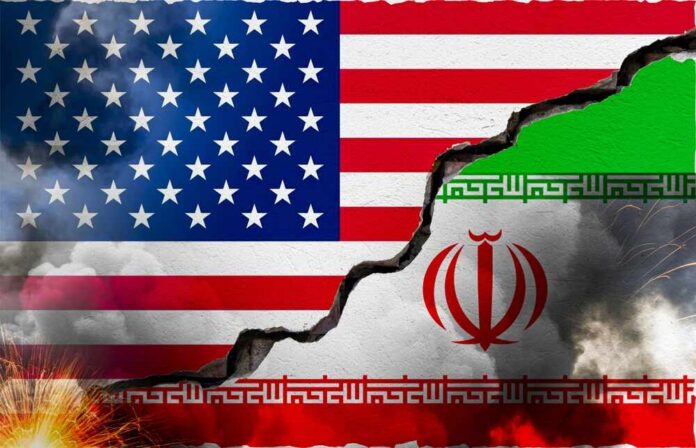
The most revealing part of the “self-defense” strikes in Iran is not what the U.S. military said they hit, but what they have not yet shown the public about the threat they claim they stopped.
Story Snapshot
- U.S. Central Command says strikes in southern Iran hit missile sites and mine-laying boats “to protect our troops.”[1][2][3][4]
- The action unfolded during a fragile ceasefire and ongoing peace talks, raising hard questions about escalation.[2][3][4]
- The public record cites no released evidence yet of actual mine-laying or an imminent attack, only official claims.[1][2][3]
- The episode shows how “self-defense” language can frame a strike long before facts are fully verified.
How the U.S. Described the Strikes and the Threat
United States Central Command publicly announced that American forces carried out what it called “self-defense” strikes in southern Iran, focused on missile launch sites and Iranian boats near the Strait of Hormuz.[1][2][3][4]
Spokesman Capt. Tim Hawkins said the goal was straightforward: protect U.S. troops from “threats posed by Iranian forces” while exercising “restraint during the ongoing ceasefire.”[1][2][3] Reports tied the action to the Bandar Abbas region, home to a key Iranian naval base and gateway to one of the world’s most important energy chokepoints.[2][3]
BREAKING: US military says it carried out ‘self-defense’ strikes in Iran
https://t.co/xCKasilZR9— FOX5 Las Vegas (@FOX5Vegas) May 26, 2026
Television and online coverage repeated that the targeted vessels were “attempting to place mines” or “allegedly preparing naval mines” off Iran’s southern coast.[2][3] Mine-laying in the Strait of Hormuz is no small matter; a handful of well-placed explosives can threaten commercial tankers, U.S. warships, and allied vessels in a shipping lane that carries a large share of global seaborne oil.[2][3] From a force-protection and energy-security perspective, any credible sign of active mine deployment becomes a serious military concern.
The Ceasefire, the Optics, and the Escalation Risk
The timing is what makes a lot of Americans sit up: these strikes came amid a fragile ceasefire and ongoing negotiations, with several outlets openly questioning whether this would rattle a tentative peace process.[1][2][3][5] Anchors described “defensive strikes in southern Iran” in almost the same breath as “attempts to reach a diplomatic solution,” underscoring the tension between battlefield moves and bargaining-table progress.[2][3] When Washington says “self-defense” during a truce, critics hear “escalation dressed up in legal language.”
From a common-sense vantage point, two instincts collide here. On one hand, no serious person wants U.S. commanders to wait until a missile leaves the rail or a mine detonates under a ship before acting. On the other hand, Americans have learned the hard way to be skeptical when officials invoke unseen intelligence to justify military action.
Reports acknowledge that Iran had not yet issued a detailed public response when these first stories ran, which left the U.S. narrative largely unchallenged in the opening news cycle.[2] That asymmetry means the label “self-defense” carries enormous weight early on, shaping public perception long before independent verification can catch up.[1][2][3]
What We Know, What We Do Not, and Why It Matters
The factual record available to the public right now is sharply limited. News pieces and broadcasts rely heavily on Central Command’s statement; they report that boats were “attempting to place mines” but do not present photos, video, intercepted radio traffic, or recovered weaponry that prove the activity beyond dispute.[1][2][3][5] No source in this set shows an after-action battle damage assessment, casualty report, or detailed timeline that would establish an imminent attack on U.S. forces as opposed to a broader preventive strike.[1][2][3]
🇺🇸 The First Order Consequence: Renewed U. S. strikes in southern Iran heightened investor concerns about regional instability, lifting oil prices and dampening near-term expectations for a durable peace, reducing the likelihood that energy-market participants price in quick… https://t.co/KBlgShVlsB
— U.S.A.I. 🇺🇸 (@researchUSAI) May 26, 2026
Some summaries even hedge, using words like “allegedly” or “thought to be planting mines,” signaling that journalists themselves are operating on secondhand assertions, not direct observation.[2][3][5]
There are also minor inconsistencies on exact timing and a few garbled captions in secondary coverage, the kind of noise that often creeps into fast-moving stories but still erodes confidence in the fine-grain details.[1][3] None of this proves the Pentagon wrong; it simply underlines how much of the case rests on classified material the public cannot see.
The Larger Pattern: Self-Defense Claims and Public Trust
This clash over framing fits a familiar U.S.–Iran pattern: Washington calls limited strikes “self-defense” and emphasizes protection of its forces, while adversaries and skeptics describe the same event as escalation or unlawful aggression.[1][2][3] The core problem is almost always the same—imminence. Was there an actual attack underway, or a clear, imminent move to strike U.S. troops or ships, or was this a decision to remove a potential threat before it fully materialized?
The Strait of Hormuz magnifies every one of these dilemmas. This narrow waterway ties together American security interests, allied economies, and global energy prices, so both sides have strong incentives to seize the narrative quickly whenever shots are fired.[2][3]
For readers who value a strong America and also distrust open-ended wars, the prudent line is straightforward: insist that the United States maintain unquestioned freedom to defend its people and ships, while also demanding that policymakers eventually show their work—intelligence, legal justification, and proportionality—once disclosure will not put current operations at risk.[1][2][3][4]
Sources:
[1] YouTube – US Strikes Iran Missile Sites & Boats Amid Shaky Ceasefire …
[2] YouTube – US launches new strikes on Iran, targeting missile sites …
[3] YouTube – US Military Strikes Iranian Boats, Missile Launch Sites
[4] Web – 2025 United States strikes on Iranian nuclear sites
[5] YouTube – Iran Revenge Blitz To Target These Sites? List Confirmed …