Six unnamed Americans, a rare Ebola strain, and a government that will not give straight answers have collided into one of the most quietly unsettling health stories of the year.
Story Snapshot
- Reports say at least six Americans in Congo were exposed to Ebola, including three high-risk contacts and one symptomatic person [1].
- Officials confirm the outbreak but refuse to say whether Americans are among the exposed.
- The outbreak uses a rare Bundibugyo strain with no approved vaccine, raising stakes for any exposure [3].
- Risk to the United States is described as “low,” but key facts remain hidden from the public [1][4].
Americans, Ebola, And The Story No One Wants To Say Out Loud
News organizations reported that at least six Americans in the Democratic Republic of the Congo were exposed to Ebola during the latest outbreak, with three classified as high-risk contacts and one reportedly symptomatic at the time sources spoke to reporters [1].
These were not tourists on safari; they were almost certainly aid workers, medical staff, or contractors embedded near the outbreak’s epicenter. Yet the public still does not know who they are, where they went, or what ultimately happened to them.
The reports emerged just as the World Health Organization declared the outbreak in Congo and neighboring Uganda a “public health emergency of international concern,” a legal phrase that basically means: this is serious, and it could spread if governments fumble the ball [1][3][4].
The Democratic Republic of the Congo had already logged hundreds of suspected cases and dozens of deaths, including health workers on the front lines [1][3]. That is the backdrop against which the American exposures supposedly occurred.
What “Exposure” Really Means When The Virus Is Ebola
Exposure in Ebola response is a technical term, not a panic headline. It ranges from being in the same room with a protected patient to having ungloved contact with blood or vomit.
Reports to major outlets said three of the Americans had high-risk exposure and at least one had developed symptoms consistent with Ebola, such as fever, weakness, and possibly other early signs [1][3].
No one has publicly confirmed a positive test result because the results were not available at the time of early reporting [3].
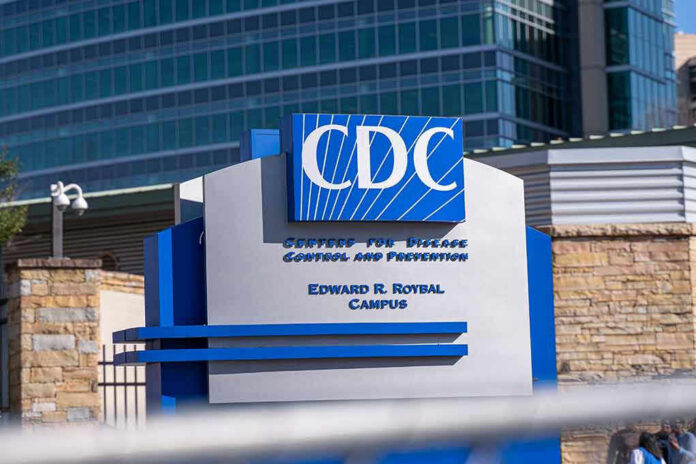
Officials at the United States Centers for Disease Control and Prevention acknowledged the outbreak, activated their emergency operations center, and detailed plans to send more experts to Congo and Uganda for laboratory testing, surveillance, and contact tracing [3]. They repeatedly stressed that the risk to the American public remained low [1][4].
That reassurance aligns with reality: a handful of suspected exposures in a controlled setting abroad does not automatically pose a threat to Main Street. But it does not answer the narrower question: did six Americans actually get exposed, and where are they now?
Silence, Spin, And A Government That Will Not Say Yes Or No
During a hastily arranged Sunday briefing, reporters directly asked whether Americans in the Democratic Republic of the Congo had been exposed to or infected with Ebola, citing rumors of six individuals, three high-risk exposures, and one symptomatic person.
Senior officials from the Centers for Disease Control and Prevention refused to confirm or deny the reports, calling it a “highly dynamic situation” and emphasizing only that the agency was “assessing the needs on the ground”.
That type of non-answer tends to fuel suspicion rather than calm it, especially among Americans already skeptical of health bureaucracy candor after the last few years.
The U.S. Embassy in Kinshasa issued a formal Health Alert acknowledging the World Health Organization emergency declaration, describing the outbreak, and advising Americans in country about precautions and symptoms to watch for [4].
Yet the alert did not mention the reported exposed Americans, medevac plans, or quarantine locations. From a limited-government perspective, this dynamic raises an obvious concern: Washington asks for trust, but withholds basic factual information that would let citizens judge the risk themselves.
Bundibugyo Ebola, No Vaccine, And Why The Details Matter
This outbreak involves the Bundibugyo species of Ebola, detected only a few times in recorded history, with no approved vaccine or targeted treatment [3].
For other Ebola variants, such as Zaire ebolavirus, responders can draw on vaccines and experimental therapeutics that at least tilt the odds in their favor. With Bundibugyo, infected patients rely mostly on supportive care: fluids, oxygen, and close monitoring by staff wearing suffocating layers of protective gear. The reported American exposures therefore occurred in one of the least forgiving viral contexts modern medicine knows.
🚨 POTENTIAL EBOLA EXPOSURE IN DRC 🇨🇩
At least six US CITIZENS have reportedly been exposed to EBOLA in the DEMOCRATIC REPUBLIC OF CONGO with one person currently showing SYMPTOMS. Authorities are likely tracking movements to contain any further spread of the virus. …
— OSN – Observer Security Network (@OSN_Reports) May 18, 2026
Media outlets described a possible plan to move the exposed Americans out of Congo for quarantine and observation, potentially even to an American military base in Europe. However, none of those details have been officially confirmed [3].
If that happened, there would be flight manifests, base entry logs, and hospital isolation records. So far, none have surfaced in public.
Instead, the story sits in limbo: significant enough for major news, but apparently not important enough for transparent follow-up. That leaves citizens to guess whether anonymous sources or tight-lipped agencies are closer to the truth.
Why This Quiet Episode Deserves Loud Questions
The most plausible reading of the available evidence is straightforward: in the chaos of a growing Ebola outbreak, several Americans had credible exposures, governments scrambled to track and possibly evacuate them, and communications teams chose caution over clarity [1][3][4]. That choice may make operational sense in the moment.
But it clashes with a basic instinct that government should treat citizens as adults who can handle hard facts, not as crowds to be managed. When officials dance around simple yes-or-no questions, they should not be surprised when public trust erodes a little more.
Sources:
[1] Web – At least 6 Americans in Congo were exposed to Ebola virus, sources …
[3] Web – Ebola outbreak: Americans in Congo believed to have had exposure …
[4] Web – Health Alert: U.S. Embassy Kinshasa – May 18, 2026