

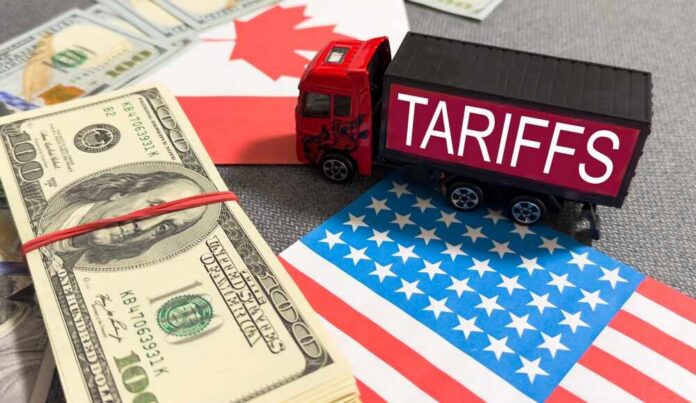
Canada answered Washington’s tariff volley with a blunt promise: dollar-for-dollar retaliation, starting after Labor Day.
Story Snapshot
- Prime Minister Mark Carney said Canada will match U.S. tariffs “dollar for dollar.”
- Counter-tariffs target steel, dairy, appliances, farm equipment, pulp and paper, and electronics.
- Measures take effect Sept. 8, following Canada’s rejection of a U.S. offer.
- The White House says U.S. tariffs respond to discrimination against American products.
Canada’s Response: Clear, Fast, and Aimed at Pressure Points
Prime Minister Mark Carney set the tone with a simple pledge: match U.S. tariffs dollar for dollar to protect Canadian workers and businesses. He named the sectors in the crosshairs and put a date on the calendar.
Canada says the tariffs will hit steel, dairy, appliances, agricultural equipment, pulp and paper, and electronics. This design mirrors past playbooks that aim to leverage economic interests and rattle political nerves on the other side of the border.
Ottawa tied its move directly to the latest U.S. duties. The Canadian government said talks had failed and rejected Washington’s offer. Negotiators were told to return to Ottawa.
That sequence shows a policy decision, not trial balloon rhetoric. The timeline is tight by intent: announce in late August, implement after Labor Day, and let buyers, sellers, and lawmakers feel the new math as fall orders stack up and farm harvests move.
What Triggered the Retaliation
The White House laid the groundwork in July. President Trump imposed additional tariffs of up to 50 percent on certain Canadian goods. The fact sheet framed the move as a response to Canada’s unfair treatment of American products.
That claim matters because it shapes the legal and political case for the action in Washington, and it gives Ottawa a clear target to answer in kind while rallying support at home.
Canada hit back with retaliatory tariffs on about $20 billion worth of US annual imports and rolled out aid for businesses and workers, matching Washington's latest duties dollar-for-dollar https://t.co/D3omUwWked pic.twitter.com/kY9Ok9ayqp
— Reuters (@Reuters) August 26, 2026
Carney’s office and major outlets kept to the same line on scope and timing. Reports from business and national media named the same sectors and the same start date of Sept. 8, or “after Labor Day.”
That harmony cuts through market noise. It tells companies which shipments face a tariff wall and when. It also puts lawmakers and lobbyists on the clock. When the tariff hits a key district’s factory or farm, phones light up fast.
Why These Sectors, and What Comes Next
Steel sits on every trade fight’s front line because it touches autos, energy, and defense. Dairy matters in Canada for regional politics and supply chains. Appliances and electronics reach big-box floors and online carts, where voters feel price hikes.
Agricultural equipment ties to heartland jobs and dealer networks. Pulp and paper hit printers, packaging, and media. These choices raise attention in both capitals while keeping the administrative burden manageable for customs agencies.
History suggests the real game is leverage, not revenue. Canada responded to U.S. steel and aluminum tariffs in 2018 with its own list, and the main effects were price pain and a bargaining reset, not a clear winner.
Research on that episode found higher prices and welfare costs inside Canada, which is the usual trade-off in retaliation. Policymakers count on pressure to force talks back to the table before the pain becomes the story.
Fair Rules, Strong Borders, Real Costs
Washington says it is enforcing fairness against discrimination. That aligns with a core principle: play by the rules or pay a price. Canada’s reply follows another principle: sovereign nations do not take punches without responding. Both points can be true at once.
The risk is that families and small firms, not bureaucrats, pay first. Tariffs act like a tax on buyers. They can protect jobs in one zip code while raising bills in many others.
The path forward is simple to state and hard to execute. Each side can either widen the list, raise the rates, or reopen talks. The clock favors talks once inventories thin and contracts renew. The calendar also matters. Fall brings factory retooling, holiday orders, and farm shipments.
That is when price spikes sting and phone calls to Congress and Parliament grow sharper. Expect targeted carve-outs or managed pauses before anyone declares victory.
Sources:
youtube.com, cnbc.com, reuters.com, finance.yahoo.com, theglobeandmail.com, en.wikipedia.org, ctvnews.ca, mlex.com