

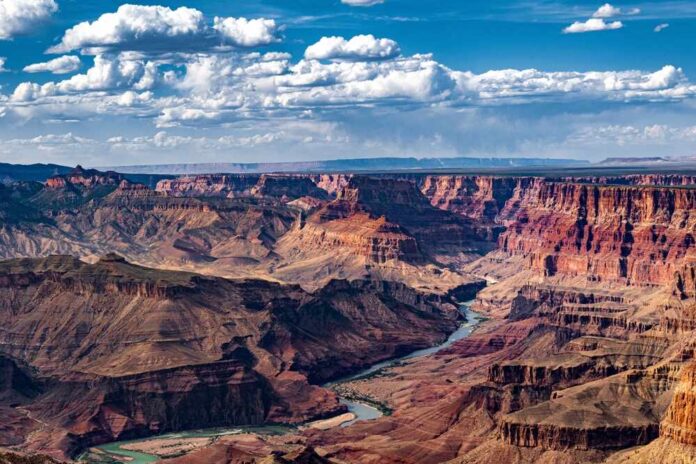
Rangers found human remains in the Grand Canyon near Crystal Rapid while teams were still searching for missing hiker Timothy Allen Smith.
Story Snapshot
- National Park Service recovered human remains near Crystal Rapid on September 14
- Search teams were still looking for Timothy Allen Smith when the remains were found
- Smith went missing after an August 29 flash flood in Bright Angel Canyon
- Two of Smith’s hiking companions had already been found dead, officials said
Remains Found As Teams Kept Searching The River Corridor
National Park Service rangers responded to a report of human remains near Crystal Rapid on the Colorado River on Monday, September 14. Staff recovered the remains and transferred them to the Coconino County Medical Examiner for identification.
The discovery came as search crews continued to look for Timothy Allen Smith, who had been missing since a late August flash flood. Officials had not declared the effort a recovery mission before the remains were found.
Authorities had said Smith remained the only person still unaccounted for in the incident. Crews kept working the canyon and the river as they tried to find him.
The search area stretched from the Bright Angel Creek confluence downstream, where high water and debris can move a body far from the last known point.
The park did not release details about the condition of the remains or any personal items found with them. The medical examiner will make the formal identification.
Human remains found in Grand Canyon during search for Timothy Allen Smith, hiker who vanished in flash flood weeks ago https://t.co/ZCJYAsyV49 pic.twitter.com/fNtpLpxp5p
— New York Post (@nypost) September 15, 2026
Flash Flood Hit Bright Angel Canyon And Phantom Ranch
The flood struck on August 29 after heavy rain in the high country sent a surge down Bright Angel Canyon. Water and debris swept through the Phantom Ranch area, damaging bridges and making trails impassable. Rangers and helicopter crews launched rescues and damage checks while tracking missing people.
Two members of Smith’s three-person hiking party, identified as John Giusti and Brent Rosenkranz, were found dead after the flood, while Smith remained missing. The park expanded closures as conditions shifted and hazards remained.
Search leaders faced a canyon that looked different by the hour. Fresh debris clogged channels, and cut banks collapsed. High, muddy flows can carry a person miles downstream and into powerful features like Crystal Rapid, one of the most forceful rapids in Grand Canyon.
That hydrology explains why remains can appear far from the point of loss. It also makes timing and location poor clues on their own, which is why investigators turn to science and records to name the deceased.
How Identification Works After A Disaster
Coroners and medical examiners confirm identity using primary methods such as DNA, dental records, or fingerprints. They may also use medical implants, scars, or tattoos as secondary clues. This process can take time, especially when remains are damaged by water, rocks, or distance traveled.
Emergency management guidance calls for careful recovery, secure transfer, and lab analysis before any public naming of the deceased. That caution protects families and the integrity of the record.
Human remains found in Grand Canyon during search for Timothy Allen Smith, hiker who vanished in flash flood weeks ago https://t.co/ZCJYAsyV49 pic.twitter.com/fNtpLpxp5p
— New York Post (@nypost) September 15, 2026
The Grand Canyon case follows that path. Rangers located and recovered remains near Crystal Rapid. The Coconino County Medical Examiner will compare evidence with records linked to those missing in the flood, including Smith. Officials will release an identity only after they are sure.
Sources:
nypost.com, abcnews.com, wbznewsradio.iheart.com, people.com, cowboystatedaily.com, washingtonpost.com, facebook.com