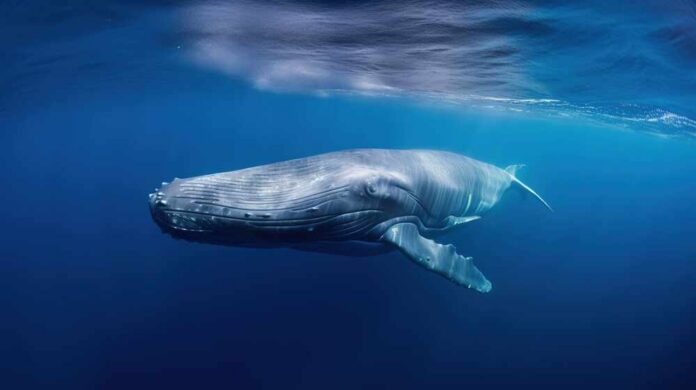
Rescuers in Germany have abandoned all hope for a massive humpback whale trapped in the shallow Baltic Sea, shifting to a hands-off approach that lets nature run its course.
Story Snapshot
- A 12-15 meter humpback whale has stranded three times along Germany’s Baltic coast, now too weak to survive in a Poel island inlet.
- Experts led by Burkard Baschek declare the animal’s death imminent due to irregular breathing, falling water levels, and exhaustion.
- After excavators, drones, and boats failed, the strategy changed to “maximum rest and respect for nature,” ending human interventions.
- Rare Baltic appearance highlights navigation risks in low-salinity waters unsuitable for humpbacks, captivating the German public.
Whale’s Repeated Strandings Exhaust Rescue Teams
The humpback whale, measuring 12-15 meters, first stranded March 25-27 at Timmendorfer Strand in Schleswig-Holstein. Rescuers deployed an excavator to dig an escape channel after attempts to clear the waves generated by the boat failed.
The whale freed itself early Friday, March 27. It traveled about 50 km east before stranding again Saturday, March 28, near Wismar Bay in Mecklenburg-Vorpommern, confirmed by Greenpeace. On Tuesday, March 31, it entered a shallow inlet on Poel island near Wismar port and stranded once more.
Experts Shift from Intervention to Letting Nature Decide
By Wednesday, April 1, drone surveillance and boat checks revealed irregular breathing, minimal activity, and sediment-covered inactivity. Burkard Baschek, scientific director at Ocean Museum Germany and rescue coordinator, stated rescuers firmly believe the whale will die there.
The team observed weak responses to approaches, prompting a strategy of maximum rest and respect for nature. No further interventions are planned as the whale weakens amid dropping water levels.
Rarity of Humpback in Baltic Underscores Natural Challenges
Humpback whales rarely enter the brackish Baltic Sea due to low salinity, scarce prey, and the complex navigation required to return to the Atlantic through hundreds of kilometers of German and Danish waters.
Experts note possible causes, such as chasing herring shoals or errors in male migration. The whale shows signs of skin disease and nutritional deficits, compounding its plight in this unsuitable environment. Repeated strandings over 50 km highlight the animal’s resilience, turning to decline.
A young humpback whale, named Timmy by rescuers, was struggling to find its way out of shallow bays off the Baltic coast of Germany after a week-long ordeal that has put its survival in doubt pic.twitter.com/rmrkcAPLwY
— Reuters (@Reuters) March 29, 2026
Local authorities from Mecklenburg-Vorpommern’s environment ministry, coast guard, and fire department supported efforts, balancing feasibility with welfare.
Public fascination grew through live media updates, though experts prioritize ecological respect over prolonged high-tech rescues like excavators and drones.
Implications for Marine Awareness and Future Protocols
In the short term, the whale’s likely imminent death frees resources after intensive operations. In the long term, the incident spotlights migration risks in the Baltic, potentially linked to climate-driven prey shifts.
German coastal communities near Timmendorfer Strand, Wismar, and Poel experienced media boosts and disruptions. This case may shape future rescue protocols, weighing intervention against natural outcomes. Consensus among experts affirms the ethical withdrawal given the whale’s condition.
Sources:
Rescuers lose hope for the humpback whale stranded in the Baltic Sea
Rescuers give up hope for humpback stranded in Baltic Sea
Rescuers lose hope for the humpback whale stranded in the Baltic Sea
Humpback whale freed by rescuers in Baltic Sea has become stranded again