

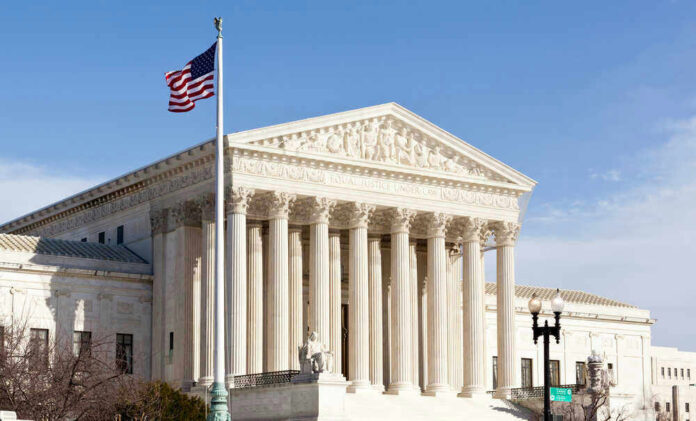
Challenging the very foundations of agency independence, the Supreme Court’s latest decision has sent shockwaves through the regulatory world populated overwhelmingly by leftists.
Specifically, the Court has allowed President Donald Trump to dismiss three Democrat members of the Consumer Product Safety Commission.
At a Glance
- The Supreme Court allows Trump to remove three Democrat members of the CPSC.
- The decision shifts power balance towards executive control over agencies.
- The ruling may set a precedent affecting other independent regulatory bodies.
- Concerns rise over the future of unbiased consumer protection.
Supreme Court’s Ruling: A Game Changer
The Supreme Court’s decision yesterday has cleared the way for President Trump to remove three Democrat commissioners from the Consumer Product Safety Commission (CPSC). This move alters the landscape of U.S. regulatory oversight.
The dismissed commissioners, all appointed during the Biden administration, found themselves abruptly ousted, leaving the CPSC under the control of its two remaining Republican members.
This decision marks a significant shift, aligning with the Trump administration’s broader push to assert executive authority over independent agencies.
This ruling is a continuation of the trend established by the Supreme Court’s earlier decisions, such as the landmark *Seila Law LLC v. CFPB* case, which eroded protections for agency independence.
By allowing the president to remove commissioners at will, the Court has empowered the executive branch at the expense of congressional oversight, setting a new precedent for how independent agencies operate.
Reactions and Concerns
The reactions to this decision have been swift and varied. Ultra-liberal Justice Elena Kagan, writing for the other liberal justices, criticized the majority for inflating executive power and diminishing legislative authority.
The decision has sparked concern among congressional Democrats and consumer safety advocates, who fear that the CPSC’s ability to protect the public from hazardous products may be compromised. With the agency now operating with a reduced quorum, ongoing regulatory projects could face delays or shifts in priority, potentially putting consumers at risk.
Implications for the Future
The implications of this ruling extend far beyond the immediate changes at the CPSC. By setting a precedent for increased presidential authority over independent agencies, the Supreme Court’s decision could have long-term implications for the structure and functioning of other regulatory bodies.
Agencies like the Federal Trade Commission and Securities and Exchange Commission, which have historically enjoyed a degree of independence from political pressures, may find themselves vulnerable to similar executive power.
Industry experts warn that this shift could lead to a more politicized regulatory environment, where policy directions swing dramatically with each change in administration.
This instability may undermine the long-term planning efforts of both industries and regulatory bodies, posing challenges for maintaining consistent consumer protection standards.
Broader Industry Effects
The potential consequences of this decision are manifold. Consumers may face reduced oversight and enforcement of safety standards, increasing the risks associated with dangerous products.
On the other hand, businesses may benefit from a more relaxed regulatory environment; however, they could also face uncertainty due to potential policy changes with each new administration.
The erosion of agency independence may also embolden future presidents to remove independent regulators for political reasons, destabilizing the consistency and predictability of regulatory policies.
As these changes ripple through the regulatory landscape, the public’s trust in the impartiality and effectiveness of agencies like the CPSC may be severely tested.