

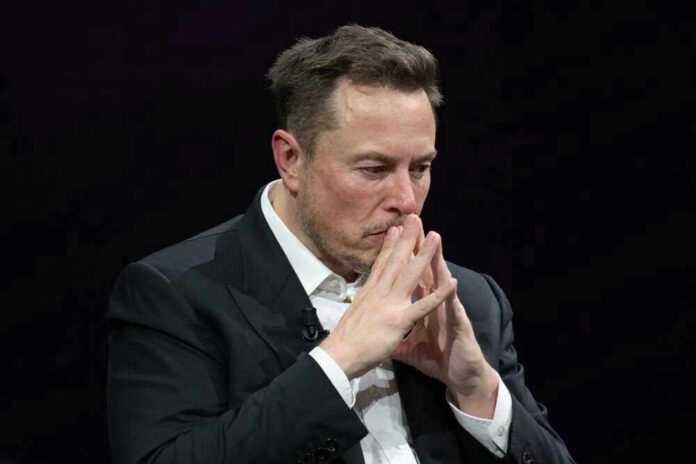
Tech billionaire Elon Musk is now championing government checks for everyone as artificial intelligence threatens to eliminate tens of millions of American jobs, raising critical questions about whether taxpayers will fund prosperity or dependency.
Story Snapshot
- Musk proposes “universal high income” via federal checks to address AI-driven job losses affecting 17-25 million U.S. workers
- Claims AI abundance will prevent inflation despite government wealth redistribution, countering critics who warn of fiscal collapse
- Boston Consulting Group forecasts 10-15% of U.S. jobs will be eliminated within five years as AI adoption accelerates
- Proposal aligns Musk with former rival Sam Altman and progressive Andrew Yang, sparking debate over retraining versus handouts
Musk’s Vision for AI-Funded Prosperity
Elon Musk posted on his X platform this week advocating for “universal high income” as the answer to widespread unemployment caused by artificial intelligence and robotics. The Tesla and SpaceX CEO argues AI will produce goods and services far exceeding money supply growth, eliminating inflation concerns that typically accompany government spending programs.
This marks an evolution from his previous support for universal basic income, now rebranded to suggest higher living standards rather than mere subsistence. Musk’s statement remains pinned to his profile, amplifying its visibility as the debate over AI’s economic impact intensifies across policy circles.
Elon Musk says Universal High Income from the Federal government is the best way to deal with AI-driven unemployment.
"AI/robotics will produce goods & services far in excess of the increase in the money supply, so there will not be inflation." pic.twitter.com/TAmw5QlWM1
— The Crypto Times (@CryptoTimes_io) April 17, 2026
Massive Job Displacement Forecast
Boston Consulting Group projects artificial intelligence will eliminate 10 to 15 percent of U.S. jobs within the next five years, putting 17 to 25 million Americans at risk of unemployment. This forecast arrives as companies rapidly integrate AI technologies to cut labor costs and boost efficiency.
The displacement extends beyond routine manufacturing roles to white-collar positions previously considered safe from automation. Musk’s proposal emerges against this backdrop, positioning government payments as inevitable rather than optional.
Critics question whether federal resources should subsidize joblessness or fund retraining programs that maintain workforce participation and dignity through productive employment.
Strange Bedfellows in Policy Alignment
Musk’s universal high income concept closely mirrors policy proposals from OpenAI’s Sam Altman, despite their ongoing rivalry in the AI sector. Former presidential candidate Andrew Yang publicly endorsed Musk’s vision, tweeting that AI will fund universal income and urging immediate implementation.
This convergence between tech moguls and progressive politicians raises concerns about an emerging elite consensus favoring wealth redistribution over market solutions.
Peter Diamandis frames the concept differently, arguing abundance means falling costs for essentials like food, energy, and healthcare rather than larger government checks. The alignment suggests a coordinated push among influential figures toward fundamentally restructuring America’s economic system regardless of public consent.
Economic Reality Versus Utopian Claims
Musk insists AI-generated abundance will avoid inflation because production exceeds monetary expansion, but economists note past productivity gains failed to eliminate poverty or prevent price increases. Karl Widerquist from Georgetown University-Qatar supports Musk’s feasibility claims, noting declining GDP costs for basic income programs.
However, critics warn the proposal could bankrupt governments already drowning in debt, with one economist calling it fiscally reckless. University College London’s Ransom advocates prioritizing worker retraining to capture productivity windfalls rather than creating permanent dependency.
The debate reflects deeper divides over whether government should enable self-sufficiency or manage economic outcomes through perpetual payments funded by productive citizens.
The universal high income discussion reveals troubling comfort among tech elites with government-managed economies, bypassing questions about individual liberty and fiscal sustainability.
While 17 to 25 million displaced workers represent genuine suffering deserving solutions, the rush toward permanent redistribution schemes sidesteps proven alternatives like vocational training, apprenticeships, and removing regulatory barriers to entrepreneurship.
Both parties share responsibility for neglecting workforce development as automation advanced, leaving Americans vulnerable to proposals trading independence for checks.
Whether Musk’s vision materializes as abundance or dependency hinges on implementation details conspicuously absent from current advocacy, suggesting elites expect citizens to trust their benevolence rather than demand accountability for consequences affecting millions of families and future generations.
Sources:
Elon Musk backs ‘universal high income’ to combat AI job losses
Elon Musk says ‘universal high income’ from the government is the best way to handle AI taking jobs