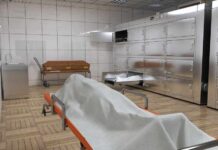

An 18‑month‑old Arizona boy was declared dead after a pool accident, then found breathing in a hospital morgue nearly six hours later, forcing everyone to ask how a child with a pulse ended up in the “cold room” in the first place.
Story Snapshot
- An 18‑month‑old was pronounced dead after a near-drowning, then found alive in the morgue hours later.
- Police and nurses say they saw signs of life and a pulse before the doctor stopped efforts and called time of death.
- The case has sparked a criminal review of the parents and intense scrutiny of the hospital and its death‑call protocols.
- The boy survived and went home, but will likely need therapy and long‑term care after severe medical complications.
A Super Bowl party turns into a nightmare
On February 8, during a Super Bowl gathering in Gilbert, a Phoenix suburb, family and friends thought a toddler was safely inside while the game played on. At some point that evening, 18‑month‑old Vincent Lorenzo Fiordilino slipped away and ended up in the backyard in‑ground pool.
Police records say he was found floating face down and unresponsive, and witnesses told investigators he may have been in the water for 10 to 15 minutes before anyone noticed.
Arizona Toddler Discovered Alive in Hospital Morgue Hours After Being Pronounced Dead: Reports https://t.co/bgQ38fyJVK
— People (@people) July 3, 2026
Adults at the home pulled Vincent from the pool and tried to save him while panicked 911 calls went out. Gilbert police and emergency medical crews arrived and continued efforts. At the scene and later at Mercy Gilbert Medical Center, people reported that the child seemed to gasp for air and show possible signs of life.
Despite those reports, the focus quickly shifted from rescue to declaring death as medical staff judged how long he had been submerged and how damaged his brain might be from lack of oxygen.
Inside the emergency room: a disputed death call
Vincent reached Mercy Gilbert Medical Center, where emergency room staff worked to revive him. According to the Gilbert police report and body camera footage reviewed by local reporters, at least one nurse checked the child and said, “I have a pulse,” suggesting some circulation remained.
Two police officers later told investigators they saw “possible signs of life multiple times” and believed the child was not completely gone.
The attending doctor, identified in the police report as Dr. A. Toosi, rejected those concerns and ordered staff to stop life‑saving measures.
When a Gilbert officer questioned why the child was being pronounced while still gasping, the doctor reportedly replied, “Please do your thing and let me do my thing. I went to medical school for a reason.”
At 6:20 p.m., the doctor called time of death and the boy was tagged as deceased, despite the nurse’s earlier pulse report and the officers’ observations.
From cold room to helicopter: the boy breathes again
Once pronounced dead, Vincent’s body was prepared for transfer to the county medical examiner. Hospital staff moved him to the “cold room,” the area the facility also describes as its morgue.
The Gilbert police report says this happened around 7:23 p.m., roughly an hour after the death call. There, the toddler lay for hours, treated as a corpse while paperwork and transport logistics played out behind the scenes.
At about 11:52 p.m., more than five hours after the 6:20 p.m. pronouncement, personnel from the Maricopa County Medical Examiner’s Office arrived to pick up the body. When they checked Vincent, they saw something no one expects in a morgue: the child was breathing.
Hospital staff was alerted, and the emergency response suddenly restarted. Vincent was rushed out of the cold room, placed on advanced support, and airlifted to Phoenix Children’s Hospital for specialized care.
Survival, damage, and a hard look at everyone’s choices
Doctors at Phoenix Children’s Hospital ran scans and tests to see what damage the near drowning and long downtime had done. One report said an early MRI showed serious brain injury that would likely require lifelong care.
Later updates from a family fundraiser were more hopeful, claiming follow‑up imaging did not find severe brain damage, but noted that Vincent needed a ventilator at first and still faces long‑term therapy and close medical monitoring to recover.
Gilbert police did not stop with the hospital. Their report also focused on the parents’ actions that night. Investigators wrote that the mother and father admitted to using marijuana and may have been too impaired to track the toddler while the party went on.
Police recommended felony child abuse charges to the Maricopa County Attorney’s Office, which is now reviewing both the pool incident and the stunning morgue discovery. No charges have been filed yet, but the recommendation signals serious concern about basic responsibility and supervision.
Hospitals, death, and the rare cases that shake public trust
The hospital called the case “heartbreaking” and said it is running an internal investigation into how a child with a pulse ended up declared dead and stored in its cold room. A police officer’s report already states bluntly that the baby was pronounced dead “in error” by the Mercy Gilbert doctor.
That phrase matters. It runs counter to the natural instinct of big institutions to defend their staff and protocols, and aligns with what police and nurses say they saw at the bedside.
Medical experts point out that mistaken death calls happen more often in frail, elderly patients, not toddlers, which should have made staff extra cautious.
At the same time, modern medicine has documented rare “Lazarus phenomenon” cases, in which people show signs of life minutes or even hours after circulation appears to stop and resuscitation ends.
Those cases prove one thing most Americans grasp at a gut level: when in doubt, you keep fighting for life, especially for a child, and you do not let arrogance silence a nurse who feels a pulse.
Sources:
abcnews.com, news4jax.com, youtube.com, facebook.com, reddit.com, instagram.com, pabst-science-publishers.com, nyulangone.org