Three major news outlets say President Trump locked them out of the White House for writing stories he did not like, and now they are suing to get back in.
Quick Take
- CNN, MS NOW, and Politico filed an emergency lawsuit against the Trump administration over lost White House access.
- President Trump said he banned the outlets for “fake news” and “fiction or lies” in their coverage of him.
- Reporters say their press passes were physically confiscated Saturday morning, cutting off real-time coverage.
- The case leans on a 1977 court ruling that bars the White House from denying access based on viewpoint.
What Happened Over The Weekend
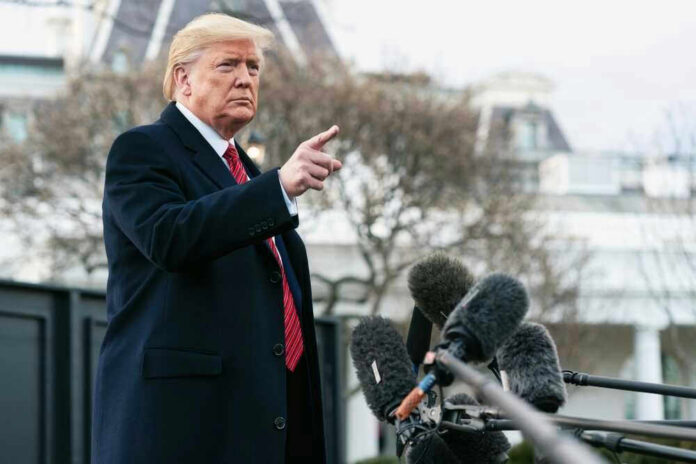
President Trump announced he was barring CNN, MS NOW, and Politico from the White House, calling their coverage “fake news” and accusing them of writing “fiction or lies” about his administration.
The ban took effect immediately. By Saturday morning, reporters from all three outlets say the White House denied them entry and took back their press passes.
Trump also singled out Politico, calling a government subscription arrangement with the outlet “illegal and ridiculous” and suggesting it “seems like corruption to me.”
He signaled the list of banned outlets could grow, saying “other outlets” might face the same treatment. That comment worried press advocates who saw it as proof the move was about punishing coverage, not managing security.
Reporters from CNN, MS NOW and Politico have been denied access to the White House. https://t.co/qCof726o1L
— The Associated Press (@AP) September 19, 2026
The Lawsuit’s Core Argument
The three outlets filed a joint emergency request in federal court in Washington, D.C., asking a judge to act fast and restore their access.
Their joint statement was direct: the lawsuit exists “to protect our First Amendment rights and defend the principle that the government does not decide what the press reports or publishes.”
The complaint reportedly raises both First Amendment and due process claims, arguing the ban was targeted, viewpoint-based punishment rather than a neutral security decision.
The practical damage was immediate. CNN reported its scheduled pool coverage during President Trump’s trip to the United Nations General Assembly got pulled. That is not a symbolic slight.
Pool reporters feed real-time details to the entire press corps, so losing that slot cuts off a direct information pipeline the public relies on, regardless of which network holds the microphone that day.
Why This Isn’t A New Legal Question
This fight did not start from scratch. In 1977, a federal appeals court ruled in Sherrill v. Knight that once the White House opens its doors to reporters, it cannot yank a press pass arbitrarily.
Officials must give due process, especially when there is no real national security reason. That precedent carried real weight in 2018, when a judge ordered the White House to restore CNN reporter Jim Acosta’s credentials after a similar standoff during Trump’s first term.
The legal principle is simple enough for anyone to grasp: government officials can control security and space, but they cannot use credentialing as a weapon against reporters whose stories they dislike.
Courts have said content-based or viewpoint-based restrictions on access are different from neutral security rules, and only the latter tend to survive a challenge.
The President’s Side Of The Story
Fairness requires stating Trump’s own reasoning plainly, since he said it publicly and repeatedly. He argues the outlets have spent years distorting coverage of him and his administration, and he believes he has the right to decide who gets special access to his own workplace.
That is not a fringe opinion among his supporters, many of whom view these three outlets as consistently hostile rather than neutral.
🚨 JUST IN: CNN, MSNOW and Politico are filing a LAWSUIT against President Trump — furious after their reporters were denied White House access
Then they had to report from the sidewalk 🤣
“We are filing a lawsuit today to protect our 1st Amendment rights.”
“Without notice or… pic.twitter.com/s5Ah7fd6Is
— John Fitzgerald Kennedy Jr (@J_F_K_Jr_Q) September 21, 2026
Still, wanting tougher coverage is different from removing a credential because of it. If the White House truly had a neutral, content-free reason for these specific revocations, that rationale has not been made public in any written policy or memo.
Until it is, the outlets’ claim that this was retaliation for their reporting is the most complete explanation currently on the record.
What Comes Next In Court
A federal judge in Washington will need to decide quickly whether to grant emergency relief while the case proceeds. Speed matters here because news cycles do not wait for court calendars.
Every week these outlets stay locked out is a week of lost pool rotations, lost briefing room seats, and lost direct access during breaking news, even if they eventually win on the merits.
The bigger picture stretches beyond three newsrooms. If a president can remove any outlet’s access simply by calling its coverage “fake news,” that standard could apply to any administration, of either party, against any press outlet it finds inconvenient.
That is precisely the scenario the 1977 court ruling was written to prevent, and it is why this case is being watched well beyond media circles.
Sources:
abcnews.com, bbc.com, yahoo.com, npr.org, nbcnews.com, france24.com