

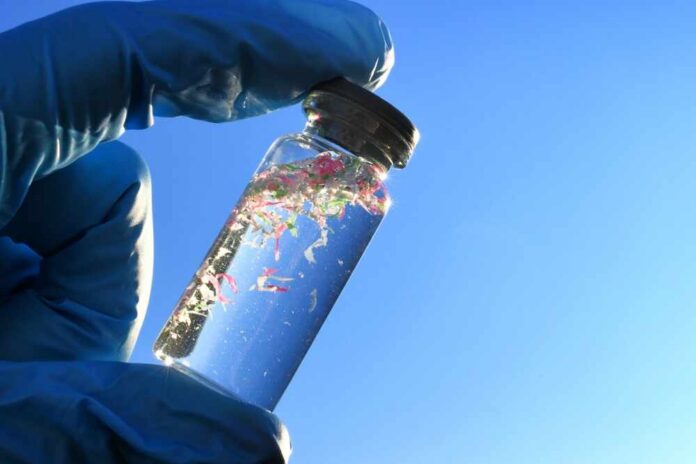
The federal government just committed $144 million to investigate the alarming presence of microplastics in American bodies—a reality that should have been addressed years ago, rather than prioritizing trendy environmental policies while toxic particles infiltrated our blood, organs, and placentas.
Story Snapshot
- HHS launches first-ever $144 million STOMP program to detect and remove microplastics from human bodies
- EPA adds microplastics to contaminant candidate list, opening pathway for future drinking water regulations
- Research confirms microplastics in human organs, blood, and placentas with clinical study linking them to 450% higher cardiovascular risk
- Program targets vulnerable populations including pregnant women, children, and workers with high exposure levels
Federal Response to Growing Public Health Crisis
The Department of Health and Human Services announced the Systemic Targeting of MicroPlastics program, marking the first comprehensive federal initiative addressing microplastic contamination in human bodies.
HHS Secretary Robert F. Kennedy Jr. characterized microplastics as a measurable, growing presence inside Americans rather than a theoretical risk, citing detection in human organs, blood, and placentas.
The Advanced Research Projects Agency for Health will administer the program while the Centers for Disease Control and Prevention independently validates testing methods to ensure scientific reliability.
Two-Phase Approach Addresses Knowledge Gaps
The STOMP program operates through distinct phases, focusing first on measurement and mapping, then removal strategies.
Phase One develops gold-standard measurement methods to understand microplastic distribution within the human body and to create clinical tests that quantify individual microplastic burden.
Phase Two explores medical and biological methods helping the body safely eliminate certain microplastics.
ARPA-H acknowledged that stakeholders disagree on the extent of accumulation because current measurement techniques produce inconsistent results across laboratories, preventing a comprehensive understanding of health impacts.
This lack of standardization represents a fundamental failure to establish basic scientific protocols for emerging threats.
The Department of Health and Human Services is introducing a first-of-its-kind program to study microplastics and the effect they have on the human body, HHS Secretary Robert F. Kennedy Jr. announced.https://t.co/MBFsgKN3tv
— WJZ | CBS Baltimore (@wjz) April 2, 2026
Cardiovascular Risks and Vulnerable Populations
Research documenting microplastics in multiple human tissues, including lungs, arteries, brain, blood, livers, kidneys, and placentas, reveals widespread contamination affecting every American.
A clinical study linked microplastics in arterial plaque to a 450 percent higher risk of heart attack, stroke, or death within three years, indicating serious cardiovascular consequences.
The program prioritizes pregnant women, children, workers with occupational exposure, and people with chronic diseases who face disproportionate risks.
These particles originate from the breakdown of larger plastic items that enter water supplies through littering and storm runoff, with the World Health Organization confirming that traditional filtration methods cannot fully remove microplastics.
Coordinated EPA Action Creates Regulatory Pathway
EPA Administrator Lee Zeldin announced the agency added microplastics to its contaminant candidate list for the first time, alongside pharmaceuticals, characterizing the action as a direct response to millions of Americans demanding answers about their drinking water.
While this addition does not immediately regulate or limit microplastic use, it opens pathways for future drinking water regulations and prioritizes funding and research.
Kennedy emphasized Americans deserve clear answers about how microplastics affect their health, reflecting widespread frustration that government agencies allowed contamination to spread unchecked for years.
The water treatment industry may need to develop new filtration technologies, while the food and beverage sectors could face new labeling or safety requirements once research establishes definitive health impacts.
The program brings together toxicologists, data scientists, engineers, and other experts to develop standardized tools for detecting, quantifying, and removing microplastics from the human body.
Reliable testing methods could enable public health authorities and regulators to guide policy and monitor interventions for decades, finally addressing contamination affecting every American who consumes water and food.
Success depends on establishing accurate measurement protocols before developing removal therapies, though critics question why federal agencies waited until 2026 to launch comprehensive research into pollutants already documented in human tissues years earlier.
Sources:
HHS announces $144 million program to study effect of microplastics on the human body – WWAY TV
The microplastics inside the human body: U.S. launches $144 million research effort – WABC Radio
HHS to study effects of microplastics on the human body – iHeart Radio KHOW
EPA adds microplastics to drinking water contaminant list – CBS News
Microplastics, nanoplastics tools removal human health – Nutrition Insight
HHS to examine health effects of tiny plastic particles that leach into water – KFF Health News