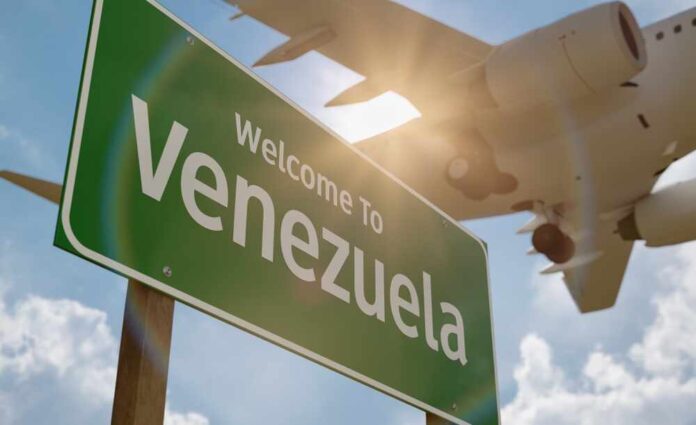
Trump’s decisive military action against Venezuelan dictator Nicolás Maduro has triggered a historic shift as US officials urge over 600,000 Venezuelans to return home and rebuild their liberated nation.
Story Highlights
- The US captured Venezuelan dictator Maduro, prompting calls for the Venezuelan diaspora to return home
- Over 600,000 Venezuelans lost TPS protection under Trump’s immigration enforcement policies
- DHS Secretary Kristi Noem declares Venezuela “more free today than yesterday” after regime change
- Venezuelan communities celebrate across South Florida and Mexico following the successful US intervention
Trump Administration Delivers on Promise to Remove Socialist Dictator
President Trump’s administration achieved what decades of diplomatic efforts could not accomplish by capturing Venezuelan dictator Nicolás Maduro in Caracas over the weekend.
The successful military operation removed what USCIS officials described as a “Narco Terrorist dictator” who had plunged Venezuela into economic collapse and forced nearly 8 million citizens to flee their homeland. DHS Secretary Kristi Noem praised the operation, stating Venezuela is “more free today than it was yesterday” following Maduro’s removal from power.
DHS encourages Venezuelans in the US to go home "to the country they love" now that Maduro is gonehttps://t.co/M6EbGqe7Cm
— The Post Millennial (@TPostMillennial) January 5, 2026
The capture represents a turning point for Venezuela after years of socialist mismanagement under Maduro’s illegitimate regime. Venezuelan opposition leader Maria Teresa Moreno, director of Vente Miami, celebrated the liberation and expressed hope that it would inspire similar freedom movements across the region, including Nicaragua, Cuba, and Colombia.
This decisive action demonstrates Trump’s commitment to confronting authoritarian regimes that threaten American interests and regional stability.
Immigration Policy Shift Encourages Voluntary Repatriation
Following Maduro’s capture, US immigration officials moved swiftly to encourage Venezuelan nationals to return home voluntarily. USCIS spokesperson Matthew Tragesser described the situation as a “turning point” that creates opportunities for Venezuelans to help rebuild their country.
The Trump administration had previously terminated Temporary Protected Status for approximately 348,000 Venezuelans in April 2026 and another 268,000 in November 2026, actions that now appear strategically timed with the liberation efforts.
Secretary Noem suggested that Venezuelans could apply for refugee status if they chose to remain in the United States, though DHS later clarified this does not guarantee admission.
Current asylum and refugee processing remains paused due to national security reviews, while Venezuela maintains a travel ban. This approach prioritizes voluntary return over forced deportation while maintaining strong immigration enforcement standards that protect American citizens first.
Venezuelan Communities Celebrate Liberation Across Americas
Celebrations erupted among Venezuelan diaspora communities in South Florida and Mexico as news of Maduro’s capture spread. The joy reflects years of suffering under socialist oppression that destroyed Venezuela’s economy and forced families to abandon their homeland.
Jose Parra, a Venezuelan exile living in Mexico for 17 years, expressed cautious optimism while emphasizing the need to dismantle the criminal networks that supported Maduro’s regime completely.
However, the celebrations also revealed regional tensions as left-wing protesters in Mexico condemned the US intervention as “imperialism.” These protests, led by supporters of Mexico’s ruling Morena party, included clashes and vandalism at US and Venezuelan embassies.
The stark contrast between Venezuelan celebration and socialist protest highlights the ideological divide between those who support freedom and those who defend failed authoritarian regimes regardless of human suffering.