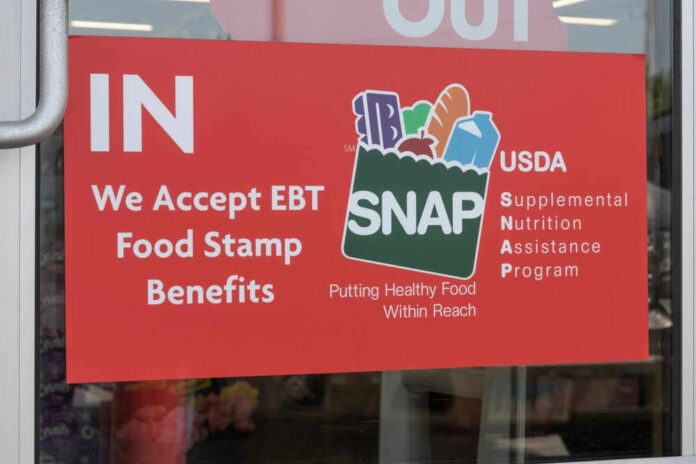
The Trump administration is demanding that states reverse already distributed SNAP benefits amid a government shutdown, creating unprecedented chaos for 42 million Americans relying on food assistance.
Story Snapshot
- USDA threatens financial penalties against states that issued full November SNAP benefits.
- States ordered to “undo” payments and distribute only 65% of monthly benefits.
- Federal court battle erupts over $8 billion in food stamp funding during shutdown.
- Supreme Court Justice temporarily blocks order requiring full benefit payments.
Late-Night USDA Directive Creates Administrative Nightmare
Deputy Under Secretary Patrick Penn signed a memo Saturday evening, November 8, 2025, warning states that full SNAP benefit payments for November were “unauthorized.”
The directive threatens to cancel federal administrative cost-sharing or hold states financially liable for “overissuances” if they fail to comply with the clawback demand. The memo provides no clear mechanism for how states can practically reverse payments already distributed to recipients.
Trump administration demands states ‘undo’ full SNAP payouts as states warn of ‘catastrophic impact’ https://t.co/XbvwkXeP1d
— Hartford Courant (@hartfordcourant) November 9, 2025
Federal Court Orders Clash With Administrative Priorities
The administration’s demand directly contradicts a Thursday federal court ruling from Rhode Island District Judge Jack McConnell, who ordered full SNAP benefits paid despite the government shutdown.
More than half a dozen states had already confirmed issuing full November payments on Friday before the Saturday reversal memo. The 1st Circuit Court of Appeals denied the administration’s emergency injunction request, escalating the matter to the Supreme Court level.
Constitutional Concerns Over Executive Overreach
The administration’s refusal to utilize $4.65 billion in available contingency funds raises questions about prioritizing fiscal ideology over constitutional obligations to existing programs.
Judge McConnell specifically directed the use of these funds on October 31, yet the administration ruled out accessing so-called Section 32 emergency resources. This represents a departure from historical precedent, as past administrations maintained SNAP benefits during government shutdowns without creating recipient uncertainty.
Supreme Court Justice Ketanji Brown Jackson’s temporary pause of the lower court order adds another layer of legal complexity. The 1st Circuit must now quickly rule on imposing an indefinite stay while 42 million Americans face potential benefit disruptions.
Senator Amy Klobuchar criticized the administration’s approach as deliberately cruel, highlighting the political weaponization of essential food assistance programs.
Shutdown Politics Threaten Program Stability
The current crisis stems from Congress’s failure to pass spending legislation before the October 1 deadline, leaving SNAP and other federal programs without appropriated funding.
The monthly cost of full SNAP benefits totals approximately $8 billion, a fraction of typical federal expenditures that previous administrations managed through contingency mechanisms.
The administration’s 65% partial payment proposal creates artificial scarcity despite available emergency funds specifically designated for such circumstances.
This unprecedented demand for benefit reversals creates administrative chaos at the state level while potentially violating due process rights of recipients who relied on lawfully distributed payments.
The situation demonstrates how shutdown politics can be leveraged to advance ideological agendas at the expense of established federal obligations and vulnerable populations who depend on consistent program administration.