President Trump secured nine new drug-pricing agreements that tie U.S. prices to the lowest paid in wealthy nations, expanding a policy now covering most of the branded drug market.
Story Highlights
- White House says 26 drugmakers now participate after nine midsized firms joined.
- Deals aim to match U.S. prices to the lowest in comparable developed countries.
- Coverage spans therapies for cancers, Parkinson’s, glaucoma, hemophilia, and more.
- Administration projects over $600 billion in savings over 10 years.
Nine More Companies Join Price-Cut Framework
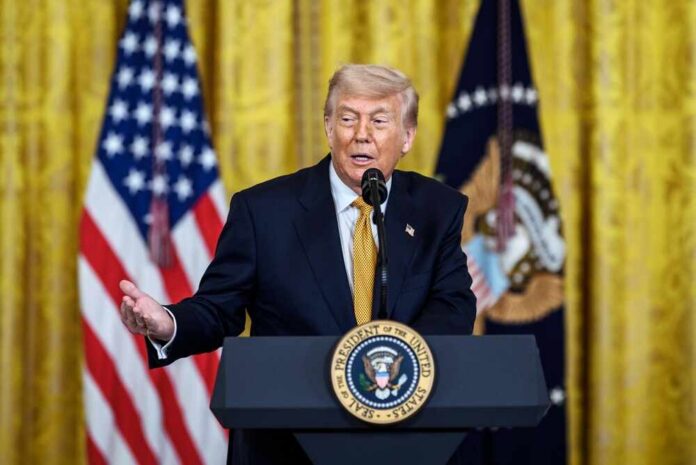
On August 31, the White House announced nine additional drugmakers signed on to President Trump’s Most-Favored-Nation drug pricing plan.
The new group includes Alcon, Astellas Pharma, BeOne Medicines, BridgeBio, CSL, Kyowa Kirin, Sun Pharma, Teva Pharmaceuticals, and UCB, according to multiple same-day reports.
The administration said these join agreements reached earlier this year, bringing total participating companies to 26. Officials framed the expansion as a direct move to lower out-of-pocket costs for American patients.
The White House reiterated that this policy pegs U.S. prices to the lowest paid in comparable developed nations. Officials said that structure is designed to stop the longtime practice of Americans paying more than patients abroad for the same branded drugs.
Reuters reporting earlier detailed related deal terms used with large manufacturers, such as tariff relief and a direct-to-consumer sales channel through TrumpRx.gov, signaling a defined policy architecture before the August expansion.
Therapies Covered and Market Reach
Coverage described on August 31 spans treatments for hemophilia, Parkinson’s disease, glaucoma, liver disease, cancers, transplants, and infectious diseases, showing the expansion reaches critical areas of care. The administration previously said earlier company agreements represented about 86 percent of the branded market.
With the nine additions, coverage now approaches roughly nine-tenths of branded sales, according to White House materials and contemporaneous coverage. That breadth matters for seniors and families who face high list prices at the pharmacy counter.
The company list adds to prior agreements announced throughout the spring and summer. Reuters documented several global manufacturers publicly acknowledging their inclusion in Trump’s pricing framework months before this latest round.
That history explains why the August step builds on an existing base rather than starting from scratch. It also supports the White House claim that the government had standing leverage to press for deeper reductions across additional product lines as more firms opted in.
Projected Savings and Notable Price Points
President Trump has cited a projection of more than $600 billion in savings over a decade tied to Most-Favored-Nation pricing and related measures, reflecting the administration’s public modeling and framing of the initiative.
In adjacent actions, officials and industry groups pointed to documented monthly prices for popular diabetes and weight-loss medicines under Medicare at about $245, offering a concrete example of targeted reductions within the broader framework.
These figures illustrate the scale of the administration’s affordability push across high-spend drug categories.
Earlier White House communications said the United States would match the lowest price paid in comparable developed countries for covered medicines.
That benchmark approach draws on an idea long debated in health policy: link American prices to peer nations to force discipline on brand-name drugs that have faced limited competition for years.
Academic and policy literature has described how international reference pricing can reduce differentials that once saw Americans paying several times more than patients abroad for the same therapies.
What It Means for Patients and Taxpayers
For patients, lower negotiated prices can mean smaller monthly bills at the pharmacy and better adherence to needed medicines.
For taxpayers, aligning federal program spending with the lowest peer-country prices promises relief from years of budget strain tied to specialty and biologic drugs.
Administration statements say consumers will see relief across multiple conditions, not just a handful of headline products, as more manufacturers participate and update their catalogs under the new terms.
One caveat: some individual company deals reported earlier carry three-year terms, which could require renewals to maintain long-run savings.
President Donald Trump announced an expansion of his Most Favored Nation drug pricing initiative on Monday afternoon from the White House.#WGXA #TNND #NationalHeadlineshttps://t.co/BOICmD5EeH
— WGXA (@WGXAnews) September 1, 2026
The takeaway is simple: the government under President Trump is pressing multinational firms to stop charging Americans more than people in other rich countries for the same medicines.
This is a pocketbook issue that hits seniors and working families hardest. The latest nine-company round shows momentum. With 26 firms now in, and with coverage spanning major disease areas, the push aims to put American patients first while respecting choice, competition, and accountability.
Sources:
washingtontimes.com, whitehouse.gov, npr.org, amcp.org, statnews.com, thegatewaypundit.com, pmc.ncbi.nlm.nih.gov