

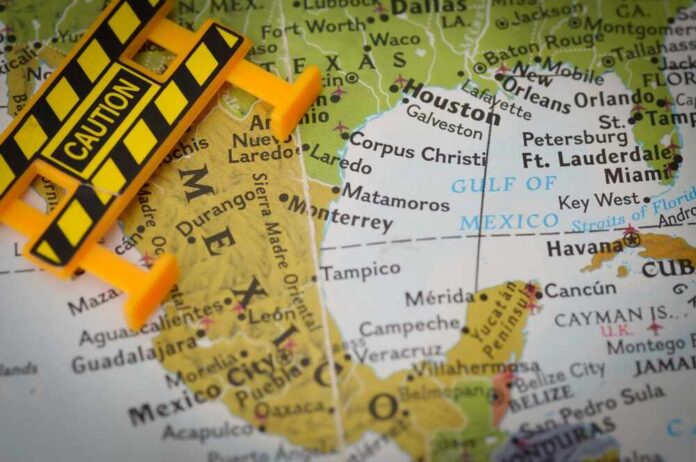
Families booking a Mexico cruise now need more than sunscreen and swimsuits packed for the kids — they need paperwork proving who those kids belong to.
Quick Take
- Mexico now requires adults traveling with minors to prove their relationship, parental authority, guardianship, or custody through official documents.
- Accepted proof includes passports, long-form birth certificates, custody papers, and notarized parental-consent letters.
- Cruise lines like Celebrity already require notarized authorization letters when a child travels with a non-parent or non-guardian adult.
- Mexican authorities have not published one official checklist, so travel companies and cruise blogs are filling the gap with their own guidance.
What The New Rule Actually Requires
The rule is straightforward in concept. Any adult traveling with a child in Mexico must be ready to show documents proving their relationship to that child, or proving they have legal authority over them. That means passports, long-form birth certificates listing both parents, custody orders, or guardianship papers. For a single parent or grandparent traveling without the other parent, a notarized consent letter becomes the key document.
🚨 URGENT warning for cruise passengers stopping in Mexico:
New law (in effect since Nov. 14) requires adults traveling with minors to prove their relationship, passports, long form birth certificates, custody/guardianship papers, or notarized consent, or face denial of service… pic.twitter.com/0gWpopHtbq— Gina Beana Fofina (@Ginasassyass) November 23, 2026
This is not some random idea cooked up by a travel blogger. Celebrity Cruises already tells passengers that if a child boards with someone who is not their parent or legal guardian, that adult must bring the child’s passport or birth certificate plus an original notarized letter. That letter must authorize the specific cruise, give permission for supervision, and cover emergency medical treatment.
Why Mexico Is Doing This
The stated goal lines up with safeguards used around the world. Notarized consent letters are a standard tool meant to stop one parent, or a stranger, from taking a child across an international border without the other parent’s knowledge. The United States already recommends similar letters for children traveling abroad with just one parent or a guardian, since border agents treat these documents as a basic anti-abduction check.
That broader pattern matters here. Governments have leaned on parental-consent paperwork for decades to separate normal family vacations from custody disputes, abductions, and trafficking risks. Mexico’s approach fits squarely into that tradition rather than inventing something new. The core idea — prove you have the right to travel with this child — mirrors rules already common at airports and border crossings worldwide.
Where The Confusion Creeps In
Here is where parents need to pay close attention. Mexican officials have not released one unified, government-published checklist spelling out exactly which documents satisfy the rule for cruise passengers specifically. Instead, the requirement is described more broadly as applying to hotels, resorts, tour operators, and transportation providers, not just cruise lines boarding passengers at port. That leaves room for different businesses to ask for different things.
Add in the separate question of U.S. passport rules for closed-loop cruises — those that leave from and return to the same American port — and the picture gets messier. Under those rules, American children under 16 can sometimes travel with just a certified birth certificate instead of a passport. So a family might meet U.S. re-entry requirements with a birth certificate, yet still need extra documents to satisfy Mexican providers on the ground. Two different rulebooks, two different agencies, one confused family standing at a counter.
What Families Should Actually Do
Common sense says over-prepare rather than gamble on enforcement being loose. Bring passports for every child if at all possible, since that single document answers almost every question a border agent, hotel clerk, or ship’s crew member might ask. If one parent cannot travel, get a notarized consent letter before leaving home — notaries are far easier to find in your hometown than in a foreign port.
Grandparents, aunts, uncles, or family friends traveling with kids should treat this as non-negotiable. Pack the long-form birth certificate, any custody or guardianship paperwork, and a notarized letter spelling out exactly what the traveling adult is authorized to do, including emergency medical decisions. A few minutes at a notary’s office beats a canceled hotel reservation or a denied boarding at the cruise terminal.
This is ultimately a rule built on a reasonable premise: protecting children from being moved across borders by people who have no legal right to do so. Parents who value both their family’s safety and their vacation plans would be wise to treat the paperwork with the same seriousness they’d give a passport renewal — handled early, not scrambled together at the airport gate.
Sources:
foxnews.com, caballerosvacations.com, royalcaribbeanblog.com, thetravel.com, yourtravelplanning.com, celebritycruises.com, apostille.us, travel.state.gov, cadataapi.state.gov