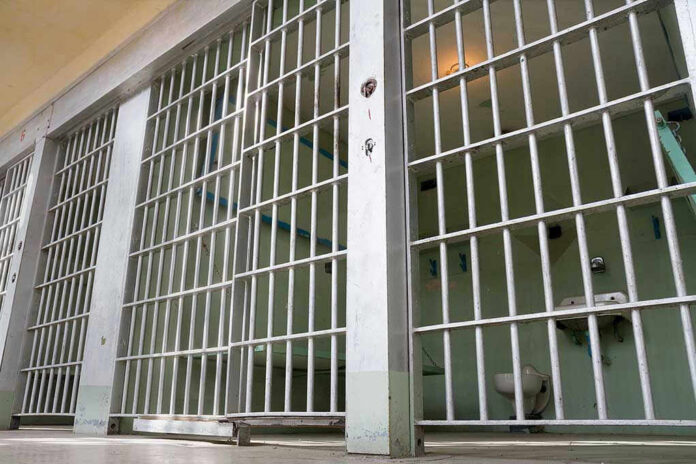
A 41-year-old father from El Salvador entered a New Jersey immigration jail alive and left it on a stretcher, declared dead after what officials call a “medical emergency.”
Story Snapshot
- Federal immigration officials say Edwin Lopez-Cornejo died after a sudden medical emergency inside Delaney Hall in Newark.
- Family members and advocates claim he begged for medicine and help for weeks before he collapsed.
- His death is the second reported at the same facility in less than a year, raising questions about medical care in custody.
- National data shows people keep dying in immigration detention, putting pressure on leaders to demand real oversight.
A detainee’s final day inside Delaney Hall
Federal immigration authorities say the story is simple and tragic. Edwin Jeovanny Lopez-Cornejo, a 41-year-old Salvadoran man, was held at the Delaney Hall detention facility in Newark, New Jersey, after a June arrest in Plainfield.
Officials say he suffered a medical emergency while in custody, was taken to a nearby hospital, and was pronounced dead there on Saturday. They add that he was seen by medical professionals and received proper medical care, and that the official cause of death is still pending.
That short, tidy account clashes with what his mother and advocates describe. Family members say Lopez-Cornejo lived in the United States for many years, worked, and supported loved ones.
They claim he had diabetes, high blood pressure, and a seizure disorder, and that guards and medical staff did not give him needed medication for weeks. They say staff ignored his worsening condition until he collapsed, then rushed him out only when it was too late.
Who Edwin was before he became a case file
Lopez-Cornejo’s life did not start with a detainee number. He was a Plainfield, New Jersey resident, a son and a father, and by all public accounts a man with deep ties to his community.
Immigration and Customs Enforcement officials say he had been removed from the United States before and re-entered illegally, which is why he was back in detention and facing removal again.
Supporters counter that whatever his immigration record, he did not have a criminal conviction and posed no threat that justified harsh conditions.
A Salvadoran migrant who was in Immigration and Customs Enforcement custody in New Jersey died following a "medical emergency" over the weekend, federal officials said Monday.https://t.co/rMUlsHdSGX pic.twitter.com/M8kSAkdkC9
— Eyewitness News (@ABC7NY) August 4, 2026
For many Americans, this mix of facts cuts to a hard question. The government must enforce immigration laws, and that includes holding people while their cases move. At the same time, Americans prize human dignity, personal responsibility, and limited but competent government.
When a detainee dies after seven weeks in custody, the system must show that it handled basic duties: safe housing, steady medication, and fast response when someone shows signs of distress.
A facility already under a cloud
Delaney Hall is not a random building in Newark. It is a privately run detention center that became a flashpoint as President Trump increased immigration enforcement, with more arrests and more people held while they awaited removal or hearings.
Lopez-Cornejo’s death is the second reported at this facility since it reopened, which has fueled anger among local leaders who already doubted its oversight and standards.
Newark’s mayor called the new death a heartbreaking reminder of a facility that has operated too long without adequate oversight.
Members of New Jersey’s congressional delegation and state officials quickly demanded answers. Some highlighted that most people held at Delaney Hall, like Lopez-Cornejo, do not have criminal convictions but are locked in a jail-like setting while their immigration cases play out.
Civil rights groups, including the American Civil Liberties Union of New Jersey, argued that his death fits a pattern of “inhumane conditions” and routine denial of proper health care in immigration detention. Their claim is strong enough to merit serious attention because it echoes findings from national reports on detainee deaths.
A wider pattern of deaths in immigration custody
Lopez-Cornejo’s story is not an isolated headline. When someone dies in custody, federal agencies usually describe it as a medical emergency, natural causes, or a similar medical phrase.
Advocates and families often respond with detailed accounts of delayed care, ignored complaints, or missing medication, long before any medical examiner report becomes public.
The government and its contractors control the key records, so early coverage becomes a contest between short official language and raw grief from loved ones who feel the system failed them.
A Salvadoran migrant who was in Immigration and Customs Enforcement custody in New Jersey died following a "medical emergency" over the weekend, federal officials said Monday.
The official cause of death is pending, ICE said.
Read more: https://t.co/GS7Cup6kMz pic.twitter.com/8TdX5yEdwb
— ABC News (@ABC) August 4, 2026
National data supports the idea that the stakes are not small. The American Civil Liberties Union’s 2024 report on immigration detention deaths found that Immigration and Customs Enforcement recorded 17 detainee deaths between January 2022 and May 2024, and that earlier years under Trump also saw dozens of deaths in custody.
A separate tally of adult detention deaths shows similar numbers across facilities, with cases often linked to chronic health issues and alleged lapses in care. Those facts do not prove neglect in any single case, but they make each new death harder to shrug off.
Accountability, transparency, and the conservative test
For a reader who values order, borders, and the rule of law, Lopez-Cornejo’s death becomes a test of whether government power stays within moral bounds.
Immigration and Customs Enforcement insists he received proper medical care, yet family accounts and advocacy reports describe a man who begged for medicine while guards brushed him off.
Until a medical examiner releases a full autopsy, the exact medical cause remains unknown, but the surrounding questions about response time and daily care fall squarely in the government’s lap.
In this case, three points stand out. First, if the facility and its contractors did everything right, they should welcome full transparency: release medical files, medication logs, and emergency response timelines, with appropriate privacy safeguards.
Second, if leaders want public trust while enforcing tough immigration rules, they cannot tolerate jails where people die twice in a year under clouds of doubt. Third, real oversight means consequences; if standards were broken, contracts and policies must change.
Sources:
abcnews.com, koco.com, assets.aclu.org, aila.org, thegrio.com, facebook.com, insidernj.com, aclu-nj.org, patch.com, foxnews.com, aol.com