
Police say the Idaho fast-food gunman ended the massacre by turning the gun on himself, but the public is being asked to accept that on trust, not proof.
Story Snapshot
- Police say 24-year-old Chad Williams killed three people and then himself at an Idaho In-N-Out Burger.
- Off-duty law enforcement and an armed citizen fired back and likely kept the death toll from climbing.
- Officials insist Williams acted alone, yet have not released forensic records to back that up.
- The motive is still unknown, even as the “case closed” narrative spreads across national media.
A Saturday afternoon turns into a mass shooting scene
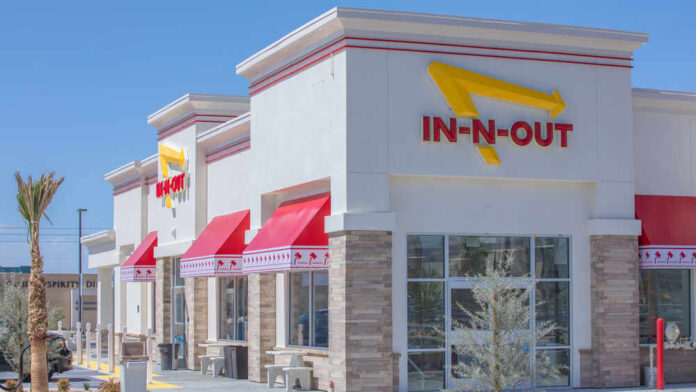
Families showed up at a new In-N-Out Burger in Twin Falls, Idaho, on a Saturday afternoon expecting burgers and milkshakes, not gunfire. Police say 24-year-old Chad Williams opened fire on the restaurant and nearby areas, killing three people and injuring at least seven more before the shooting stopped.
Some victims were treated and released, others went into surgery, and two reportedly remained in critical condition. A day that looked like normal life turned into a crime scene in minutes.
Authorities have released more details about the 24-year-old suspect in a Twin Falls, Idaho, mass shooting who died by a self-inflicted gunshot wound. https://t.co/Q3VetuwVEv
— ABC10 (@ABC10) August 3, 2026
Responding officers and other first responders moved in quickly as witnesses fled and called 911. A Twin Falls city spokesman later said three people were dead and seven injured, confirming an early casualty count that spread across national outlets.
In a moment like this, confusion is normal. Numbers shift. People fear a second shooter or a larger plot. That is why the first official story matters so much. It sets the tone for what the country believes happened that day.
How police say the gunman died and why that matters
By Sunday, police were ready to say not only what happened, but how it ended. At a news conference, Twin Falls Police Chief Matthew Hicks identified the suspect as Chad Williams, age 24, and said Williams was “deceased from a self-inflicted gunshot wound.”
Media clips echoed that line: the gunman killed himself. That detail matters because it closes the loop. It tells the public the shooter is not out there somewhere, and it signals that no one else shot him.
Reporters repeated that claim across television, radio, social media and wire stories, citing the chief and other officials. Coverage framed the self-inflicted wound as settled fact, not a working theory.
Yet in the reporting so far, there is no public autopsy, no medical examiner’s ruling, and no ballistics report shown to the public to prove he shot himself. The story rests on what police say they saw and concluded at the scene, without the kind of documentation that usually seals a case.
One gunman, two armed citizens, and unanswered questions
Police did not just describe the suspect’s death. They also praised two armed people who shot back. An off-duty officer and a citizen fired at Williams, and officials say their actions diverted him away from the crowded restaurant.
That fits a pattern many recognize and support: lawful citizens and trained officers using firearms to stop a killer before he can stack up a higher body count. Their quick response almost certainly saved lives.
At the same time, police say they are “confident” Williams acted alone and that there was no other gunman involved. Confidence is important, but it is not the same as proof. When an off-duty officer and a citizen are firing in a chaotic scene, it is fair to ask for clear evidence showing who fired which shots and how the suspect finally died.
That does not question the heroism of the interveners. It simply treats cause of death as a matter of fact, not faith. Americans should expect solid documentation when government asks them to trust a story.
Preliminary narratives and the need for proof
Police and first responders in Twin Falls faced a terrifying situation and moved fast to protect lives. That deserves respect. But early statements after a mass shooting are usually preliminary, even when delivered with confidence.
In this case, officials say the threat to the community is over, the suspect is dead, and he killed himself. They also admit the motive is still unknown and the investigation is ongoing. Those two ideas sit in tension: case closed on how he died, case open on why any of it happened.
#worldnews#news Idaho Fast-Food Restaurant Shooting Suspect Died By Suicide, Police Say https://t.co/eUw2PxGJBl pic.twitter.com/Gw6f7bda10
— Abolarinw Precious (@AbolarinwP16235) August 2, 2026
Americans place a high premium on truth, which means backing law enforcement when they protect the public, while also demanding transparency once the dust settles.
Basic records would help close the gap between official confidence and public certainty: an autopsy showing a self-inflicted wound, a ballistics map of shots fired, 911 audio and dispatch logs, and clear statements from the off-duty officer and citizen who engaged the shooter.
Sources:
apnews.com, youtube.com, ctvnews.ca, foxnews.com, facebook.com