
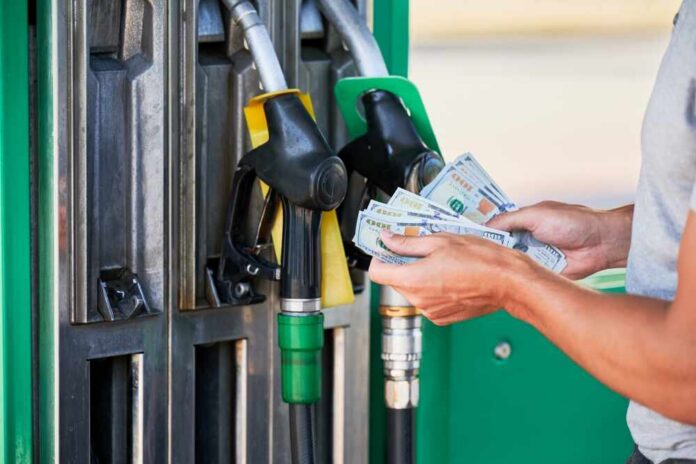
Iran just raised the price of gasoline for its biggest fuel users for the first time since deadly protests rocked the country in 2019.
Quick Take
- Iran rolled out a new three-tier gasoline pricing system starting December 13, 2025.
- Heavy users who burn through more than 160 liters a month now pay a much higher rate, while everyday drivers keep cheaper subsidized fuel.
- Government spokesperson Fatemeh Mohajerani confirmed the change on state television.
- The move comes as Iran’s economy buckles under sanctions, fuel shortages, and smuggling losses.
What Changed At The Pump This Week
Starting at midnight Friday, Iran began charging a steep new rate for gasoline once drivers pass 160 liters a month. State television confirmed the new price sits near 50,000 rials per liter, or about 4 cents based on the free-market exchange rate.
That may sound cheap by American standards, but it marks a major jump from what heavy users paid before, and it lands squarely on drivers who burn through fuel fastest.
Iran still has some of the world’s lowest gasoline prices, but the price increase adds to daily pressures for many of the country’s more than 90 million people.https://t.co/cXwg6EKJZB
— FOX5 Las Vegas (@FOX5Vegas) September 8, 2026
Government spokesperson Fatemeh Mohajerani laid out the details on state television, saying the elevated rate applies only above that 160-liter threshold.
Nearly every vehicle on the road falls under the new rule, with one notable exception: ambulances stay exempt, a small nod to keeping emergency services running smoothly no matter what happens at the pump.
A Three-Tier System Built To Protect Ordinary Drivers
Iran didn’t just slap a flat price hike on everyone. Officials built a three-tier structure instead. The first 60 liters a month still cost just 15,000 rials per liter, about 1.3 cents. The next 100 liters cost 30,000 rials per liter.
Only fuel beyond that 160-liter combined total triggers the new, higher charge. Officials designed it this way to shield average commuters from sticker shock.
The tiered approach reflects lessons learned the hard way. In 2019, Iran hiked gasoline prices by 300 percent overnight, with no cushion for ordinary buyers.
Protests erupted in more than 100 cities, and reports say over 300 people died in the government crackdown that followed. This time, officials clearly tried to avoid repeating that disaster by leaving most household fuel use untouched.
Why Tehran Needed The Money
Iran’s government has bled cash on gasoline subsidies for years. President Masoud Pezeshkian has openly called the old pricing system irrational, noting Iran buys gasoline with far more valuable resources than what it charges citizens.
Subsidized fuel also fuels a smuggling problem, as cheap Iranian gasoline gets hauled across borders and sold at a markup elsewhere, draining resources the government badly needs right now.
Fresh United States sanctions have only tightened the squeeze. Rudaw reported that Pezeshkian announced plans to double the price of gasoline bought beyond the subsidized quota, specifically as Tehran faces fuel shortages and renewed American economic pressure.
World Bank research backs up why subsidy reform tempted officials in the first place: the richest households benefit roughly ten times more from cheap fuel than the poorest, making the old system remarkably unfair to average Iranians.
Iran doubled gasoline prices for heavy users from Tuesday, as wartime shortages and U.S. sanctions strain the economy. Motorists using more than 110 litres a month now pay 100,000 rials (about 4–7 U.S. cents) per litre — twice the previous top-tier rate. The first 60 litres…
— The Geo-Political Arena (@GPoliticalArena) September 8, 2026
The Political Risk Behind Every Rial
Gasoline pricing in Iran carries weight far beyond economics. It’s one of the few issues that reliably pulls ordinary Iranians into the streets, and the government knows it.
Economists have repeatedly warned that any fuel price increase ripples through the cost of everyday goods, quickly stoking public anger. That’s precisely why this rollout targeted only heavy users instead of the general public.
Whether the careful tiering holds up against public frustration remains to be seen, but the strategy itself signals a government trying to fix a broken subsidy system without triggering another 2019.
For an economy already strained by sanctions and shortages, that balancing act may be the only path forward Tehran has left.
Sources:
nbcnews.com, reuters.com, halifax.citynews.ca, niacouncil.org, business-standard.com, jeedev.nri.ac.ir, economics.ihcs.ac.ir, imf.org