

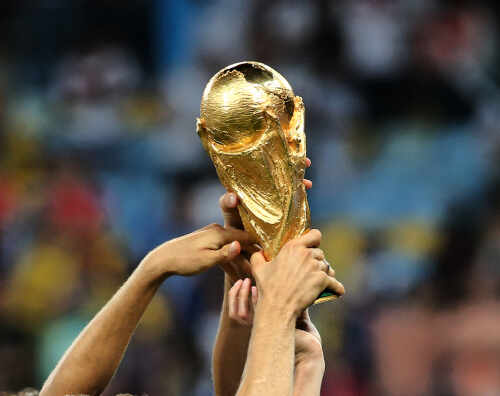
FIFA just shattered nearly a century of World Cup tradition by announcing the first-ever halftime show for the 2026 Final, importing America’s Super Bowl spectacle into the sacred temple of global football.
Story Snapshot
- Madonna, Shakira, and BTS will perform at the 2026 World Cup Final halftime show on July 19 at MetLife Stadium in New Jersey
- This marks the first halftime entertainment in World Cup Final history, breaking with 96 years of football-only tradition
- Coldplay’s Chris Martin curated the lineup, with Global Citizen producing to raise funds for children’s education worldwide
- The event capitalizes on the tournament’s U.S. hosting and expansion to 48 teams across North America
- Shakira releases the official World Cup song “Dai Dai” to coincide with the announcement
Breaking Sacred Ground for Commercial Gain
FIFA President Gianni Infantino’s organization crossed a line that purists hoped would never be breached. Since Uruguay hosted the inaugural tournament in 1930, the World Cup Final remained a purely athletic affair, with opening ceremonies reserved for artists like Ricky Martin or J Balvin but nothing interrupting the championship match itself.
The decision to mimic the NFL’s entertainment formula represents FIFA’s most aggressive American-style commercialization yet, trading football’s global integrity for projected billions in television rights and a chance to court viewers who care more about celebrity performances than penalty kicks.
Madonna, Shakira and BTS are set to co-headline the first ever FIFA World Cup halftime show. https://t.co/rLUGkOB2R1
— Variety (@Variety) May 14, 2026
The Celebrity Trinity Targeting Three Continents
The performer selection reveals calculated global marketing rather than artistic inspiration. Madonna brings American pop royalty and her Super Bowl XLVI pedigree from 2012.
Shakira leverages her World Cup history, having performed “Waka Waka” in 2010 and the 2020 Super Bowl alongside Jennifer Lopez, while simultaneously releasing “Dai Dai” as the tournament’s official anthem.
BTS delivers the youth demographic and K-pop’s billion-strong fanbase, building on their 2022 World Cup collaboration with “Dreamers.” This isn’t curation, it’s demographic targeting with surgical precision across North America, Latin America, and Asia.
Global Citizen’s Philanthropic Cover
Chris Martin announced the lineup via a social media post featuring Sesame Street’s Elmo, framing the spectacle around the FIFA Global Citizen Education Fund.
Global Citizen, which produced the Kenya-inspired Super Bowl LVIII halftime show in 2024, positions the event as raising millions for children’s education and access to football in underserved areas.
The philanthropy angle provides convenient insulation against criticism about corrupting the sport’s purity. Whether fans prioritize helping children or preserving football tradition will determine if this justification holds water.
Global Citizen’s track record suggests real impact, but the timing feels suspiciously convenient for deflecting backlash.
The Economics of Americanization
MetLife Stadium in East Rutherford seats 82,500 fans and previously hosted the 2014 Super Bowl, making it perfectly equipped for hybrid sports-entertainment productions.
The 2026 tournament marks FIFA’s first 48-team format, with 104 matches across 16 North American cities, and U.S. Soccer projects over $ 500 million in economic impact for the region.
The halftime show production alone could exceed 100 million dollars, while the global television audience may reach 1.5 billion viewers based on 2022 numbers.
FIFA seeks over 4 billion dollars in total revenue, and importing American entertainment infrastructure serves those financial ambitions far better than respecting century-old traditions.
Purists Versus Profits
Fox News Outkick Sports offered cautious optimism with “doesn’t sound half bad,” acknowledging the entertainment value while sidestepping the philosophical debate.
Football purists across Europe, South America, and Africa will likely view this as American cultural imperialism infecting the world’s game.
The Super Bowl comparison cuts both ways: Michael Jackson’s 1993 halftime performance transformed that event into a cultural phenomenon, boosting viewership permanently, but the World Cup Final already commands massive global audiences without celebrity gimmicks.
The real question is whether FIFA believes football alone isn’t enough anymore, or whether chasing American casual viewers matters more than respecting the sport’s existing billion-plus devoted fans worldwide.
FIFA announces Super Bowl-style World Cup final halftime show featuring Madonna, Shakira and BTS https://t.co/ImgCpHt9Xz pic.twitter.com/KxuOtWlz7W
— Eyewitness News (@ABC7NY) May 14, 2026
The July 19, 2026, final will answer whether this precedent-shattering experiment elevates the tournament or diminishes it. FIFA’s willingness to fundamentally alter the championship experience for commercial gain reveals how thoroughly American business models now dominate international sports governance.
Future World Cups in 2030 and 2034 will either continue this entertainment-first trajectory or witness a backlash demanding a return to football purity. The decision ultimately reflects whether sports exist to serve fans who love the game or investors who love the revenue streams.
Sources:
Fox News Outkick Sports – FIFA Announces First Ever World Cup Final Halftime Show