

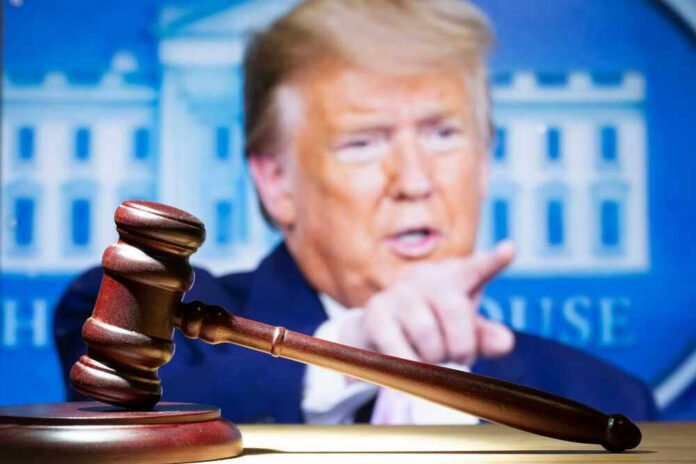
A federal appeals court just cracked open a door Donald Trump has been pounding on for two years straight.
Quick Take
- The Second Circuit Court of Appeals ruled a federal officer can still move a state criminal case to federal court even after conviction.
- The panel vacated a lower court order and told the judge to let Trump file a new removal notice in his hush-money case.
- The 34 felony convictions from the New York trial still stand for now, with no verdict thrown out.
- Manhattan prosecutors say the underlying conduct was personal, not presidential, so immunity should never apply.
What The Appeals Court Actually Decided
The Second Circuit panel threw out a key legal rule the district court had relied on. That rule said removal to federal court becomes impossible once a state conviction is already final. The appeals court rejected that idea outright, ruling that removal stays available even after a verdict, as long as a federal officer defendant shows good reason for trying again.
Judges found Trump’s team had shown “good cause” to file a second removal notice, even though it came late in the process. That matters because timing rules usually sink these kinds of motions fast. Instead of shutting the door, the panel sent the case back to the lower court with orders to grant Trump’s request, giving his lawyers a fresh shot at a federal hearing.
None of this touches the jury’s actual findings. The order deals with which courthouse hears the fight next, not whether Trump’s 34 felony counts for falsifying business records were rightly decided. That distinction matters enormously, even though headlines keep blurring it.
Why Trump Wants A Federal Courtroom So Badly
Getting into federal court opens a path Trump couldn’t use in state court. He can argue the Supreme Court’s 2024 presidential immunity ruling should wipe out evidence used against him, or even the whole verdict. That immunity decision gave presidents broad protection for official acts taken in office, and at least presumed protection for many other official duties.
Trump’s lawyers argue testimony from aide Hope Hicks, former fixer Michael Cohen, and even Trump’s own tweets touched on official presidential business and should have stayed out of his trial. The theory is straightforward: if those pieces were improperly allowed in, the whole conviction could be unstable, and a federal judge is the one positioned to make that call.
The Fight Prosecutors Haven’t Given Up
Manhattan prosecutors aren’t backing down quietly. Alvin Bragg’s office argues the hush money payoff to an adult film star and the cover-up that followed were personal, not presidential business of any kind. The district attorney’s filing calls it “unofficial, nonpresidential conduct,” arguing immunity was never designed to shield that kind of private scandal management.
A New York trial judge already waded into this fight before the appeal hit federal court. He flatly rejected the immunity shield for this testimony, writing that no legal doctrine supports excluding it from trial. Prosecutors go further, insisting that even if some evidence shouldn’t have been admitted, the error was harmless, since a mountain of untouched evidence still proves guilt on its own.
A federal appeals court on Monday gave President Trump another chance to move his New York hush money case to federal court.
In a two-page order, a three-judge 2nd Circuit panel said U.S. District Judge Alvin Hellerstein "erred" when he ruled Trump waited too long to raise a…
— Patrick Hacker (@HackerPdhacker) November 24, 2026
That harmless-error argument is the prosecution’s insurance policy. Even if Trump wins the immunity argument on some evidence, prosecutors say the remaining proof was overwhelming enough that the verdict should survive anyway. It’s a fallback built for exactly this moment, when the forum shifts but the facts don’t disappear.
What Actually Changes Next And What Doesn’t
The conviction remains on the books today. Nothing in this ruling vacates a single count or orders a new trial. What changes is where the immunity argument gets decided, moving the fight from a state courtroom controlled by New York law to a federal judge weighing a presidential protection doctrine that barely existed in its current form before 2024.
This procedural route is rare enough that even legal experts have called full reversal unlikely, despite the broad immunity language from the Supreme Court. Conservatives watching this case should see it for what it is: a long-overdue acknowledgment that federal officers deserve a federal forum to raise federal defenses, not proof that the underlying conviction was wrongly decided.
Sources:
theguardian.com, itv.com, mercurynews.com, courthousenews.com, nbclosangeles.com, edition.cnn.com, abcnews.com, nycourts.gov