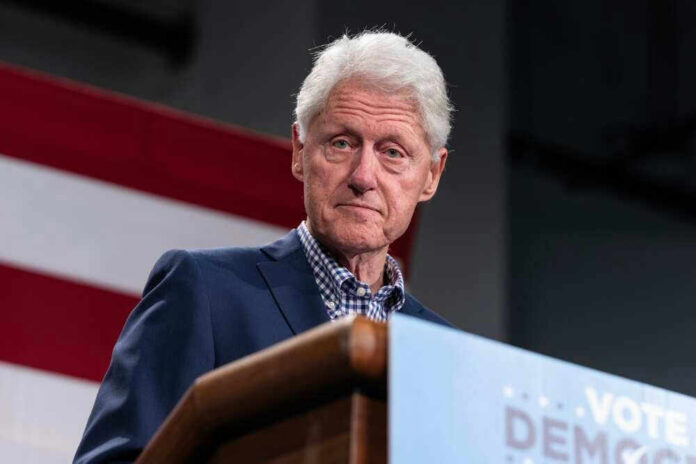
Bill Clinton’s “did nothing wrong” defense is colliding with newly released Epstein files in a moment many Americans see as a long-overdue test of whether the politically connected are ever held to the same standard as everyone else.
Story Snapshot
- Former President Bill Clinton testified Feb. 27, 2026, before the House Oversight Committee about his past relationship with Jeffrey Epstein and said he “saw nothing” and “did nothing wrong.”
- Recently released Epstein-related files say the FBI previously examined allegations involving Clinton, but characterized the claims as “not credible” or unverified.
- Public reporting lists multiple points of contact: Epstein’s White House visits during the Clinton years and Clinton’s later travel on Epstein’s jet for overseas trips.
- No Epstein survivor or associate has publicly accused Clinton of wrongdoing, leaving the hearing centered on judgment, transparency, and accountability rather than charges.
Clinton’s sworn message: “I saw nothing”
Former President Bill Clinton appeared before the U.S. House Oversight Committee on February 27, 2026, and stated he “saw nothing” and “did nothing wrong” in connection with Jeffrey Epstein, the financier later convicted as a sex offender.
The testimony followed fresh attention generated by newly released Epstein files and questions about what influential figures knew, and when. The hearing ended without new charges announced against Clinton.
Republicans on the committee, led by Chairman Rep. James Comer of Kentucky, framed the session around transparency and document release practices, arguing that the public deserves a complete accounting of Epstein’s access to powerful institutions.
Clinton’s position remained consistent with earlier denials: he says he had no knowledge of Epstein’s crimes during their association and did not witness abuse. The day’s flashpoint was credibility—how to weigh denials against documented proximity.
What the documented timeline shows—and what it doesn’t
Public timelines compiled from logs and reporting describe a relationship that began in the early 1990s. During Clinton’s presidency, Epstein visited the White House multiple times, and after Clinton left office, Clinton traveled on Epstein’s jet for several international trips, including travel connected to philanthropic work. Reporting also describes a broader orbit that included Ghislaine Maxwell, later convicted for her role in Epstein’s trafficking operation.
At the same time, the currently available public record described in the research stops short of direct criminal allegations against Clinton by Epstein survivors.
One widely cited point of tension is that Virginia Giuffre said she saw Clinton on Epstein’s private island, while Epstein, Maxwell, and Clinton have denied that Clinton visited the island. That unresolved factual dispute underscores why investigators focus on records and sworn testimony rather than rumor.
Bill Clinton tells lawmakers he ‘did nothing wrong’ and saw no signs of Epstein’s abuse: https://t.co/r94vPDt7Or
— The Virginian-Pilot (@virginianpilot) February 27, 2026
The newly released files: scrutiny, but “not credible” allegations
The January 2026 release of Epstein files added another layer: they indicate the FBI previously investigated allegations involving Clinton, but the claims were described as “not credible” or unverified.
Those details matter because they cut two ways. They confirm federal scrutiny existed, yet they also indicate investigators did not validate the underlying accusations based on what has been made public so far.
Another element resurfacing in the 2026 debate is Epstein’s reported 2016 decision to invoke the Fifth Amendment during a deposition when asked about Clinton-related questions.
Invoking the Fifth is not proof of guilt, but it often fuels public skepticism—especially in high-profile scandals where normal Americans have watched elites use lawyers, NDAs, and influence to avoid full transparency for years.
Donations, access, and the accountability question
Records in the research also highlight money and access. Epstein reportedly donated to Clinton political efforts and later gave to the Clinton Foundation, and Clinton’s travel on Epstein’s plane intersected with Clinton Foundation-related trips.
Sky News reporting referenced in the research says review of photos and timelines from certain trips did not, on its own, imply wrongdoing. Still, the overall picture—donor, access, flights, and proximity—keeps the core oversight question alive.
Why this matters now: restoring equal justice expectations
For many Americans who are tired of two-tiered outcomes, the Oversight hearing is less about internet speculation and more about whether government institutions apply consistent standards.
The research indicates no public accusations by survivors against Clinton and no new charges after the testimony, which limits what can be responsibly concluded. But the release of files, documented access, and congressional questioning reflect a broader push to test elite narratives against primary records.
Going forward, the most productive measure of accountability will be continued lawful disclosure: verified travel records, visitor logs, contemporaneous communications, and clear explanations of what agencies did or did not substantiate.
Conservatives have long argued that sunlight is the best disinfectant, especially when powerful networks hide behind “nothing to see here” messaging. This hearing did not settle every dispute, but it did put key claims on the record and forced renewed scrutiny of the Epstein pipeline into elite circles.
Sources:
Relationship of Bill Clinton and Jeffrey Epstein
Timeline: Bill Clinton’s interactions with Jeffrey Epstein
What Sky News has uncovered about Bill Clinton and Jeffrey Epstein’s relationship