
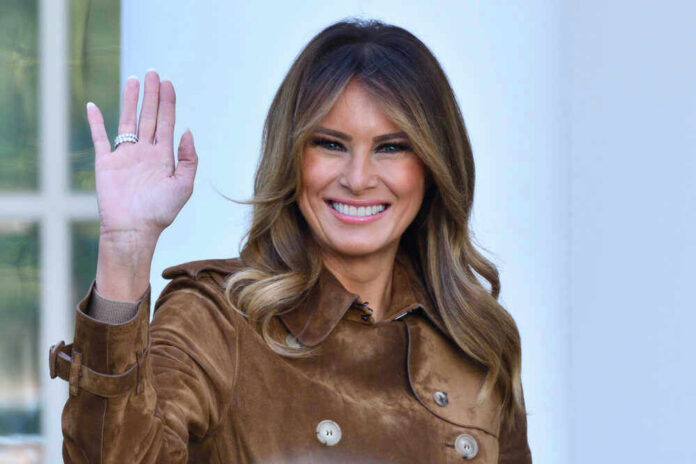
The White House just added a White House-shaped beehive to its South Lawn, and it’s about to sweeten the nation’s most famous residence in ways that extend far beyond the honeycomb.
Quick Take
- First Lady Melania Trump unveiled a custom-designed White House replica beehive on April 25, 2026, expanding the presidential honey program with two new bee colonies
- The expansion boosts annual honey production by an estimated 30 pounds, pushing peak output from 200-225 pounds to a projected 230-255 pounds or more
- The hand-crafted hive, funded by the Trust for the National Mall, supports pollination of White House gardens while providing honey for culinary use, diplomatic gifts, and charitable donations to local food kitchens
- The program represents bipartisan stewardship, originating under the Obama administration in 2009 and continuing through successive administrations
- The new hive serves an educational purpose, allowing South Lawn visitors to observe working bee colonies and learn about pollination and food production
A Buzzing Tradition Expands at 1600 Pennsylvania Avenue
The White House beekeeping program traces its roots to an unlikely source: Charlie Brandt, a White House carpenter who began keeping bees as a personal hobby years before 2009.
When the Obama administration formalized the program alongside Michelle Obama’s Kitchen Garden initiative, beekeeping transformed from a quirky pastime into an integral part of presidential operations.
Today, that legacy continues to grow, literally and figuratively, with Melania Trump’s announcement of a major expansion.
.@FLOTUS @MELANIATRUMP announced the expansion of the @WhiteHouse honey program with the addition of a newly installed and fully functioning beehive on the South Lawn.
Hand-crafted by a local artisan in the image of the White House, the beautiful, new hive will add two new bee… pic.twitter.com/5lJpdzXcRY
— Office of the First Lady (@FirstLadyOffice) April 24, 2026
The Hive That Mirrors the House
What sets this expansion apart is its striking design. Rather than a standard industrial beehive, the White House Executive Residence staff collaborated with a local Virginia artisan to craft a miniature replica of the White House itself.
This isn’t merely decorative—the fully functioning hive houses two new bee colonies that will join the existing two already thriving on the South Lawn.
During the peak summer months, the existing colonies reach approximately 70,000 bees and produce 200 to 225 pounds of honey annually. The new installation is expected to increase the total to 230 to 255 pounds, adding roughly 30 pounds of production capacity.
Honey’s Many Purposes at the White House
White House honey isn’t simply a pantry staple. The clover honey, with its distinctive basswood and citrus notes, appears in White House culinary creations ranging from salad dressings to desserts and teas.
Beyond the kitchen, the honey serves diplomatic purposes as official gifts from the President and First Lady. Perhaps most meaningfully, significant quantities are donated to local food kitchens, supporting charitable efforts to provide healthy foods to underserved communities.
Pollination and Environmental Stewardship
The expansion carries environmental significance that extends beyond honey production. The new colonies will support pollination efforts for the White House Kitchen Garden, the Flower Cutting Garden, and vegetation across the National Mall.
White House Chief Horticulturist Dale Haney and local apiarists oversee the program’s operations, ensuring the bees contribute meaningfully to the health of these iconic landscapes.
The Trust for the National Mall, a National Park Service nonprofit, funded the installation, reflecting a collaborative approach to environmental stewardship.
Education Meets Tradition
The Office of the First Lady emphasizes the educational component of this expansion. By placing a visually distinctive, fully functioning beehive on the South Lawn, the White House creates opportunities for visitors to observe working colonies firsthand and learn about the critical role bees play in food production and pollination.
This educational mission aligns with broader efforts to increase public awareness about environmental sustainability and the interconnectedness of nature and agriculture.
What’s all the buzz about? Melania Trump is growing the White House honey program with a new beehive: https://t.co/RvvWEMJ7dG
— Daily Press (@Daily_Press) April 25, 2026
The timing of this announcement, coinciding with a high-profile state visit from King Charles III and Queen Camilla, underscores the honey program’s significance in White House operations.
Whether served at state dinners or presented as gifts to distinguished guests, the honey represents American ingenuity, environmental responsibility, and the kind of bipartisan continuity that keeps institutional traditions alive across administrations.
What began as one carpenter’s hobby has blossomed into a symbol of how even the nation’s highest office can embrace sustainability, education, and service to its community.
Sources:
Melania Trump unveils a White House replica beehive buzzing with new colonies on the South Lawn
First Lady Melania Trump Unveils New Beehive on South Lawn