
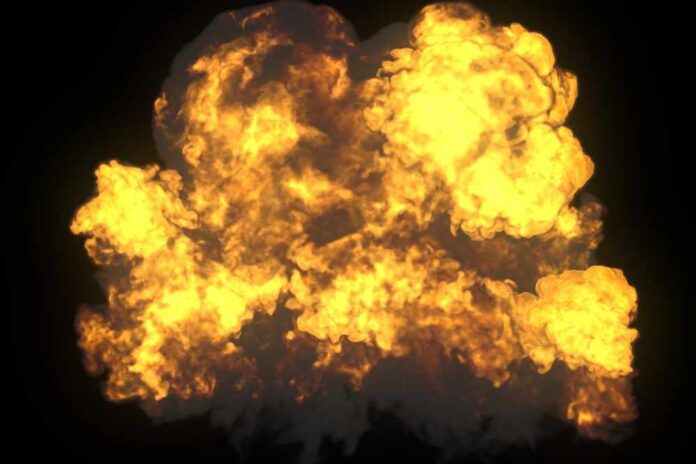
A backyard celebration turned into a firestorm in seconds, and now one man faces an involuntary manslaughter booking while a young woman is dead.
Story Snapshot
- Police booked 28-year-old Darian James Junior on suspicion of involuntary manslaughter after a Chino fireworks blast killed a woman in her 20s.
- A large amount of fireworks ignited at a Fourth of July party, causing a sudden explosion and fire, police said.
- Four people were hospitalized, including a child; two adults were expected to survive, according to early reports.
- Investigators turned the case over to county prosecutors and called in a bomb squad to secure the scene.
Police say party fireworks ignited, then a deadly blast followed
Chino police reported that a large cache of fireworks ignited during a Fourth of July gathering, triggering a violent explosion that killed a woman in her 20s.
Officers detained and booked Darian James Junior, 28, on suspicion of involuntary manslaughter as part of the investigation. Authorities said four people went to the hospital, including a child.
Two other adults were expected to survive, according to initial assessments shared with local media. Detectives are building the case and sending it to the San Bernardino County District Attorney’s Office for review.
Fourth of July horror as woman killed, three injured as firework explosion creates huge car blaze https://t.co/PUpQEQ3e5o pic.twitter.com/XIHLLb9qd2
— New York Post (@nypost) July 5, 2026
Witness accounts described panic as flames spread within moments. One neighbor, Stephanie Moreno, said a car trunk exploded after fireworks were set off too close to it, and the vehicle was “engulfed” almost at once. Police and fire crews flooded the block.
The Ontario Fire Department Bomb Squad swept the area to ensure no live explosives remained before allowing residents to return, underscoring the high risk from leftover devices and debris. Officials have not released the victim’s name pending notification of family.
Booking on manslaughter, but open questions on direct actions
Police booking on involuntary manslaughter signals a serious case and a belief that reckless conduct led to a preventable death. Reports so far do not state who lit the fireworks, who stored them, or who owned the vehicle. No public court filings spell out the evidence behind the suspicion either.
That gap should close as detectives pull video, canvass the neighborhood, and review forensic findings. The process matters; the rule of law demands facts tie the accused to the acts that caused the death.
Americans say celebration cannot excuse reckless actions with explosive devices. When a person’s choices create deadly risk to neighbors and kids on a residential street, accountability follows. But fairness also requires that prosecutors show who did what, and how those actions caused the fatal chain reaction.
That balance—swift accountability grounded in proof—protects both community safety and due process. If police findings confirm that control or ignition was by a specific individual, the legal path becomes clearer under California law.
Why fireworks cases now draw criminal charges more often
California has seen a rising number of fireworks deaths and large seizures of illegal stockpiles. That trend has pushed more prosecutors toward involuntary manslaughter in holiday blasts tied to unsafe or illegal pyrotechnics.
Authorities reported recent statewide hauls of hundreds of thousands of pounds of illegal fireworks, and national data show dozens of deaths and thousands of injuries each year from misuse or malfunction.
These numbers explain why bomb squads now respond to neighborhood scenes and why charges can follow even outside formal shows.
A man has been arrested for involuntary manslaughter after a woman died and three people were injured from a fireworks explosion in Southern California over the weekend, authorities said. https://t.co/GBcabr1iIj
— ABC News (@ABC) July 6, 2026
The message from law enforcement is plain: high-powered fireworks are explosives. Treat them like gasoline and matches in a crowded room. Police in Chino escalated the response, brought in a bomb unit, and moved fast to secure evidence.
That posture aligns with recent cases where investigators linked ignition, storage, or illegal possession to deadly outcomes. It is the same shift communities ask for every July—stop the carnage on the block, protect kids on the sidewalk, and make reckless actors face real consequences.
What comes next in the Chino case
Detectives will likely track cell phone video, doorbell footage, and fragments of devices to map the blast. Prosecutors will look for who bought the fireworks, how many were present, and where they were stored. They will also weigh whether the accused exercised control over the devices or the scene.
A strong case will connect those dots. A weak one will not. Either way, the standard is the same: prove that a person’s reckless conduct caused a death. The victim and the community deserve nothing less.
Sources:
abcnews.com, youtube.com, facebook.com, instagram.com