
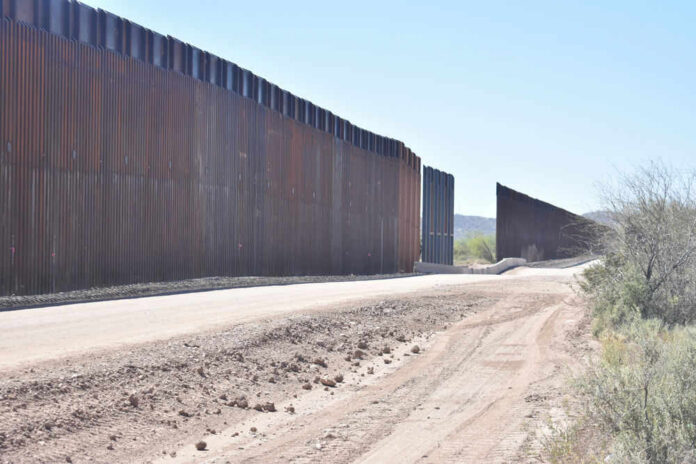
Washington moved past speeches and into the legal red zone, asking the Supreme Court to restart Big Bend border wall work now.
Story Snapshot
- The Justice Department filed an emergency request to lift a sweeping injunction.
- The order froze all barriers and groundwork across the Big Bend Sector’s 500-plus miles.
- Homeland Security relied on a statute that lets it waive laws to speed construction.
- Landowners and conservation groups say the waivers and route go too far.
What the administration asked the Supreme Court to do
The Justice Department asked the Supreme Court to stay, or lift, a district court order that halted border barrier construction and any groundwork across the Big Bend Sector of Texas. The filing also sought summary reversal, calling the injunction baseless and too broad for the record, according to reporting on the application. The government said national security and operations outweigh the claimed harms, and it warned that a freeze this wide blocks urgent work beyond a single fence line.
Judge Kathleen Cardone issued the preliminary injunction on October 2, stopping barriers, support roads, lighting, and any earthmoving across the sector while the case proceeds. The order’s reach matters. Big Bend Sector covers more than 500 miles and 77 counties, so a blanket pause affects far more than a discrete stretch near a river bend or a park access point. The administration argues that such breadth hamstrings on-the-ground control in a remote, high-demand area.
The legal lever: Congress’s fast-track waiver
The Department of Homeland Security invoked Section 102(c) of the Illegal Immigration Reform and Immigrant Responsibility Act on February 17, 2026, to waive environmental and historic-preservation laws for the Big Bend projects, according to the case filings summary in Friends of the Ruidosa Church v. Mullin. Courts have described that statute as empowering the secretary to waive “all legal requirements” needed to speed border infrastructure, while largely limiting lawsuits to constitutional claims. That design sets the stage for fast builds and fast fights, often at the same time.
Plaintiffs in the Friends of the Ruidosa Church suit argue those waivers were unconstitutional and procedurally defective. They want the court to hold the line on bedrock laws and to reject what they view as an overreach. The preliminary injunction signals the judge saw enough merit and risk to halt the work for now. The public record does not yet show every factual finding the government disputes, which explains the rush to the Supreme Court for relief.
Why the Big Bend scope became the fight
The government’s case leans on operational urgency. It says the harms of delay are real and outweigh the aesthetic, recreational, and cultural injuries plaintiffs claim. That argument aligns with common sense and a core conservative view: a sovereign border needs clear, durable control, and elected branches set that policy. But the district court order sweeps across an area larger than some states, raising questions about tailoring. A court can pause a project, yet a sector-wide freeze is rare and invites higher-court review.
Opponents counter with ground-level facts. Local landowners and groups say the terrain already slows illegal crossings, so new walls do little beyond cutting ranch roads, blocking river access, and disrupting tourism that keeps towns alive. They warn of wildlife migration disruption, flooding risks, and damage to archaeological or religious sites. They also argue the government’s own immigration figures do not justify building here, which, if right, would undercut the urgency claim. Those are serious assertions, though they do not, on their own, negate Congress’s express grant of waiver power.
What to watch for in the Supreme Court’s response
The justices will weigh four things: likelihood of the government’s success, irreparable harm, the equities, and the public interest. The statutory backdrop favors the government, because Congress gave Homeland Security unusual speed tools for border work and narrowed the paths to sue. The sticking point is scope. The Court could trim the injunction to defined sites, allow time-limited work, or restore construction fully pending appeal. A narrow, practical order would respect both security needs and pending claims.
🚨 NEW: The Trump administration has asked the SUPREME COURT to intervene and allow construction of the southern border wall to resume in West Texas.
The Justice Department filed an emergency application Wednesday seeking to overturn a federal judge's order blocking construction… pic.twitter.com/CfLVuhHugm
— Unmask The SYS (@UnmaskTheSys) October 22, 2026
One line the Court is likely to draw bright and early is about who controls border operations day to day. Federal law places that duty on the executive. Courts can check unconstitutional acts, but they do not run field operations. Expect a ruling that restores room for targeted builds while the lower court vets the constitutional challenge.
Sources:
cbsnews.com, reuters.com, mrt.com, tpr.org, clearinghouse.net