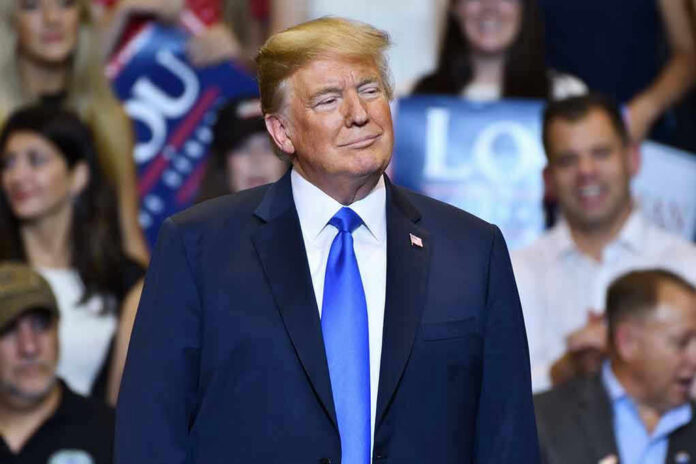
President Trump’s four-word verdict on Flock cameras — “I like them” — just raised the stakes in America’s biggest street-level surveillance fight.
Story Snapshot
- Trump signaled support for Flock Safety’s license plate cameras as cities wage bitter fights over them.
- Police and Flock cite quick arrests and missing-person rescues; privacy critics cite stalking and mass tracking risks.
- Flock now touts seven-day default data retention and stricter audit tools after backlash and lawsuits.
- City councils from California to Wisconsin are canceling contracts over trust, access, and data control concerns.
Trump’s Nod Collides With A Local Rebellion
Trump’s support lands as city councils yank Flock contracts after heated hearings. Oshkosh leaders rescinded their agreement after their police chief said the company misrepresented access and trust issues, and the council voted unanimously to pull the plug.
Santa Cruz cut ties after data access concerns and community pushback. These moves do not end the technology nationwide, but they do show a growing red line: if leaders cannot fully explain who sees the data and when, the cameras come down.
Law-and-order voters want tools that catch criminals fast, and many chiefs say Flock delivers. Miami County reported 53 investigations in one year using Flock and 21 arrests tied to its alerts, and the sheriff called the system “invaluable” for both crime and endangered missing persons.
Burbank Police describe license plate readers as a force multiplier for finding stolen cars, confirming or ruling out leads, and helping locate at-risk people; they also argue visible cameras can deter crime. That practical case resonates with Trump’s posture.
Trump on Flock cameras: "I like them" https://t.co/yoq9pkR3tZ pic.twitter.com/tXpc6q5c5i
— FactPost (@factpostnews) September 14, 2026
Backlash Fueled By Misuse And Overreach Fears
Critics say the same features that help find a getaway car can also map your life. An investigation described a lawsuit in Virginia where a driver said police tracked his movements 526 times in four months through Flock cameras, with lawyers arguing this was a warrantless search under the Fourth Amendment.
Privacy groups warn that even if one scan seems harmless, billions of scans can reveal where people worship, get medical care, or attend a rally—all without a judge’s sign-off.
Cities cite trust and control gaps, not just theory. Local officials in multiple places terminated contracts, paused rollouts, or refused renewals after residents demanded strict limits on retention, sharing, and personal lookups by officers.
News reports list communities from California beach towns to Midwestern cities stepping back as they press for guardrails, audit logs that actually get used, and firm bans on out-of-policy searches tied to personal grudges or curiosity.
Flock’s Guardrails: Shorter Retention, Case Ties, And Audits
Flock moved to blunt the backlash. The company says it cut most data retention defaults from 30 days to seven, with an “Evidence Mode” to hold data longer only for an active case. It also says every search is logged and must tie to a specific investigation, and that customers control sharing and access.
The chief executive said agencies will be required to use auditing systems that flag unusual searches and can lock out users when needed. The company also says it does not sell customer data.
My take: Dozens of cities canceled Flock ALPR contracts. The cameras may still be up. The data almost certainly is. Many contracts let Flock retain the historical record long after the jurisdiction walks away. Officials got the political exit. Flock kept the asset. The public got… pic.twitter.com/7NCXASp8bm
— Deep Thought (@DeepThoughtAR) September 14, 2026
Those steps help, but they are promises that live or die in practice. If a city never checks the audit trail or ignores red flags, the system can drift into casual dragnet use. That is why some councils walked away: they did not just want features, they wanted proof that features get enforced.
What Comes Next: A Deal The Public Can See
Trump’s support gives cover to departments that want to keep or expand these cameras. The smarter path is not blind expansion. Demand a public contract that spells out a seven-day default retention by law, clear case-based extensions, and a ban on fishing expeditions.
Require quarterly public audit reports that show how many plate searches happened, how many were tied to case numbers, and what discipline followed misuse. Post the sharing map so people can see where their city’s data goes.
Courts have often upheld targeted license plate reader use, but rulings hinge on limited facts, not vast, networked tracking. Policy has to close that gap. A narrow, accountable tool can help stop a carjacker and find a missing teen.
A sprawling, opaque grid can chill speech and faith. Trump says he likes the cameras. Voters will like them too if leaders prove, in daylight, that the system serves the people and not the other way around.
Sources:
youtube.com, thenorthwestern.com, lynnwoodtimes.com, flockscanner.com, collegian.com, santacruzsentinel.com, king5.com, nbcnews.com