
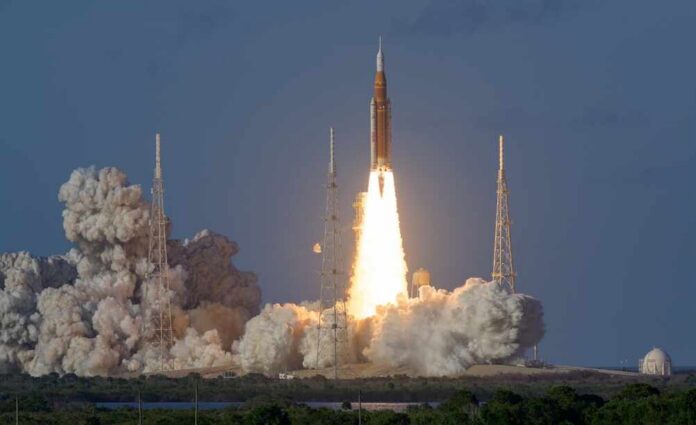
SpaceX and Louisiana officials just mapped out a $100 billion spaceport on the Gulf—big enough to aim for thousands of rocket flights a year.
Story Snapshot
- SpaceX unveiled “Starbase Louisiana,” planned for Vermilion Parish marshlands.
- The state says the site will support thousands of launches per year.
- Officials cited former ExxonMobil land as the campus footprint.
- First Starship launch target sits near the decade’s end, after build-out.
A $100 Billion Bet On America’s Next Launch Hub
SpaceX and Louisiana Economic Development announced plans for a new Starship complex, Starbase Louisiana, in Vermilion Parish. It was described as the company’s largest rocket launch site to date and was put at a $100 billion price tag.
The state’s own release framed the campus as a commercial space hub designed for thousands of annual launches, a scale that shifts spaceflight from a rare spectacle to a routine service. The vision sets a bold standard for cadence and capacity.
The plan calls for more than launch pads. Reports describe an integrated campus with propellant production, power generation, manufacturing, vehicle processing, and even worker housing. That approach mirrors how SpaceX scaled operations in South Texas.
Building the whole stack—fuel, power, parts, people—in one place cuts turnaround time and bottlenecks. If Louisiana can match that rhythm, it could anchor multiple flights per day rather than per month.
Why Vermilion Parish And Why Now
Officials placed the site on coastal acreage once owned by ExxonMobil and later transferred to the state, with reports citing a footprint of roughly 125,000 to 130,000 acres along an 18-mile stretch.
Coastal proximity reduces overflight risks and simplifies sea-based logistics for large hardware. SpaceX also benefits from deepwater access for heavy components.
Louisiana gains a new industrial base, tying energy know-how to high-growth aerospace. That combination fits the state’s push for advanced manufacturing.
Named leaders joined the rollout. Outlets reported Louisiana Governor Jeff Landry, federal lawmakers, and state legislative leaders at the event, and press briefings described a joint announcement with Louisiana Economic Development. The presence of senior officials signals political priority.
When governors and agency heads show up together, they usually intend to move dirt, not just make news. That level of buy-in tends to speed roads, power lines, and workforce programs that such projects need.
Elon Musk and Louisiana Governor Jeff Landry at the site of Starbase, Louisiana. pic.twitter.com/nPqdugTucw
— DogeDesigner (@cb_doge) August 25, 2026
Cadence, Timeline, And The Stakes
Reports said the construction would begin as early as next year, with a first Starship launch targeted around 2029, while other outlets placed the initial build in 2027 and early operations near the decade’s end. Timelines vary at this stage, but the direction is clear: site work first, then pad systems, then flight.
For a project touting thousands of launches per year, design choices on deluge systems, methane and oxygen production, and pad hardening will decide whether daily flights are real or hype.
Louisiana’s statement that Starbase Louisiana is designed for thousands of launches annually sets a clear metric for success. The figure implies rapid vehicle reuse, fast pad turnarounds, and resilient supply.
SpaceX has already shown steady gains at its Texas Starbase, where the Federal Aviation Administration completed a programmatic environmental review and later approved higher annual launch rates after added mitigations. That playbook—prove it, then scale—points to how cadence could climb in Louisiana as systems mature.
The Texas Playbook, Applied To The Gulf Coast
The Federal Aviation Administration’s process at Boca Chica offers a likely model for Louisiana: environmental assessments, safety reviews, and license actions tied to specific launch rates and configurations.
In Texas, the agency completed a major environmental review in 2022 and later allowed more launches per year after additional conditions and local permitting steps were met. Expect similar sequencing on the Gulf Coast: start with a defined rate, earn trust with safe operations, then step up.
SpaceX Brings $100B Spaceport to Louisiana
SpaceX announced a $100 billion Starbase Louisiana project expected to become the world’s largest spaceport, creating thousands of jobs. Gov. Jeff Landry praised the investment.#WashingtonEye pic.twitter.com/vMAlr7GymN
— Washington Eye (@washington_EY) August 26, 2026
In this case, if SpaceX hits its marks—jobs on-site, parts made local, hardware turning fast—this becomes the rare project that pays for itself in growth.
Louisiana gets skilled work and a new tax base. America gets a second super-heavy launch hub on home soil. The caveat is standard for any megaproject: schedules can shift as approvals and engineering line up. The prize, though, is worth the push.
Sources:
cbsnews.com, ndtv.com, cnbc.com, reuters.com, nytimes.com, faa.gov, permits.performance.gov