

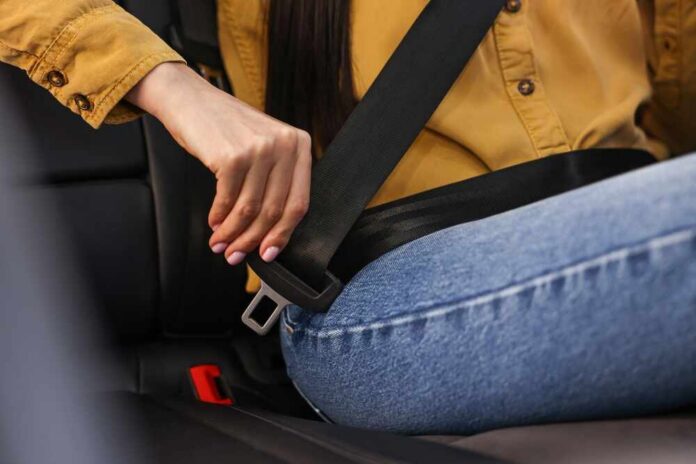
Nearly 50,000 Chrysler-branded vehicles are being recalled because rear seat belts can twist and stop working as designed.
Quick Take
- The recall covers 48,777 Dodge Hornet and Alfa Romeo Tonale vehicles built for model years 2023 through 2026.
- NHTSA says the rear outboard seat belts may become twisted during use and fail to retract properly.
- The safety risk is simple and serious: a belt that does not hold tension can raise injury risk in a crash.
- Stellantis says dealers will replace the rear outboard seat belt retractors at no cost.
A Safety Flaw Caught Before a Crash
Stellantis is recalling 48,777 vehicles after federal regulators identified a seat belt defect in certain Dodge Hornet and Alfa Romeo Tonale models. The recall is preventive, not crash-driven, and the company says it knows of no injuries tied to the problem.
The affected vehicles include 2023 to 2025 Dodge Hornets and 2023 to 2026 Alfa Romeo Tonales. NHTSA says the rear outboard seat belts may twist during normal use, which can keep them from retracting and maintaining the right tension.
Nearly 50,000 Chrysler vehicles recalled over seat belt safety defect https://t.co/K67uKeOBcR
— FOX Business (@FoxBusiness) August 11, 2026
Why the Defect Matters
Seat belts only work well when they move freely and stay snug against the body. NHTSA says belts that do not freely retract or maintain tension do not provide their designed restraint function, and that can increase injury risk in certain crashes.
The official recall record also shows that Stellantis Europe’s Vehicle Regulations Committee made a formal defect determination on July 30, 2026. The filing says FCA US had already reported 484 warranty claims before the recall decision, which shows the issue had been building inside the company for some time.
What Owners Need to Know
Dealers will replace the rear outboard seat belt retractors free of charge. Owner notification letters are scheduled to begin on September 24, and the recall applies only to vehicles that fall inside the listed production window.
#RecallRoundup Chrysler (FCA US, LLC) #Dodge Hornet (2023-2025); #AlfaRomeo Tonale (2023-2026): seat belt may twist and fail to retract properly. 48,777 vehicles potentially affected. https://t.co/FuQUDmnz7r pic.twitter.com/xTrA5fgPQO
— Center for Auto Safety (@Ctr4AutoSafety) August 11, 2026
The public record does not spell out the full engineering chain behind the failure, but the recall filing is clear on the defect, the risk, and the fix. That matters because many modern recalls start the same way: a company spots a pattern in claims data, files with NHTSA, and moves to fix the problem before a crash forces the issue into the open.
What Makes This Recall Stand Out
This recall is large enough to get attention, but it is not built on a pileup or injury report. That can make it easy to shrug off, yet the logic of safety recalls is often the opposite: fix the weak point before it turns into a headline with worse consequences.
The wording “potentially involved” also matters. It means the recall casts a wide net to protect owners while engineers and dealers sort out which vehicles truly carry the defect, which is standard practice in federal safety campaigns.
Sources:
foxbusiness.com, data.transportation.gov, static.nhtsa.gov