

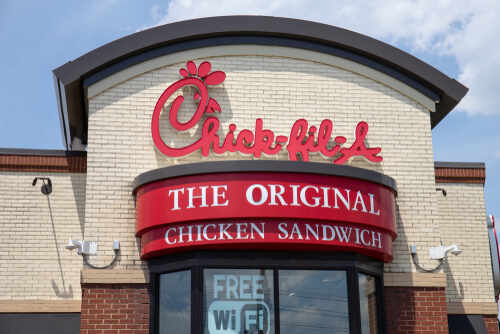
A Sabbath observance dispute turned a familiar American workplace issue into a brand-name controversy with unusual moral weight.
Quick Take
- The Equal Employment Opportunity Commission alleges the employee asked for Saturdays off to observe the Sabbath, was initially accommodated, and was later scheduled anyway.
- The reported sequence ends with an alleged choice between a lower-paid job change and keeping the Sabbath, followed by termination after refusal.
- The case matters because it tests how religious accommodation works when staffing pressure collides with a worker’s stated faith practice.
- The Chick-fil-A name adds irony, but the legal question still comes down to records, timing, and whether accommodation was truly feasible.
The Alleged Sequence That Drove the Lawsuit
The complaint described by multiple outlets says the employee disclosed Saturday Sabbath observance during the hiring process, requested Saturdays off, and initially received that accommodation [1][2].
The friction began later, when management allegedly told her she would need to work Saturdays despite that earlier understanding [1].
Reports say she then faced an option that looked less like a solution and more like pressure: accept a lower-level delivery driver role with reduced pay and benefits, or keep fighting the Saturday schedule [1].
That sequence is why the case draws attention beyond a single restaurant. Title VII religious-accommodation claims often hinge on a simple but brutal question: did the employer honor the request long enough to make the later reversal look retaliatory, or did changing staffing needs create a real operational problem?
Here, the public record available in the reports leans heavily toward the employee’s version because the Equal Employment Opportunity Commission brought the case in federal court after settlement efforts failed [1].
Why This Looks Stronger Than a Routine Scheduling Dispute
The legal significance lies in the alleged progression from notice to accommodation to reversal to termination [2].
That pattern matters because courts usually care less about abstract sincerity and more about whether the employer had actual notice, whether a workable alternative existed, and whether the employer can show undue hardship under current law. A one-time scheduling conflict is ordinary. A promise followed by a reversal and then a firing is what gives this matter its edge [1][2].
Contemporaneous local coverage from multiple outlets repeats the same core narrative: the worker asked for Saturdays off because of Sabbath observance, the request was allegedly initially granted, and the conflict escalated when Saturday shifts were reinstated [2].
That repetition does not prove the facts, but it does show that early reporting centered on the same account rather than on competing versions. The weakness is obvious, too. The available reports do not include the employer’s answer, internal scheduling records, or sworn rebuttal [1][2].
Why the Chick-fil-A Name Changes the Public Reaction
Chick-fil-A carries a ready-made public image because of its well-known Sunday closing policy, and that reputation makes a Sabbath lawsuit feel symbolically loaded before the evidence is tested.
The irony is irresistible to headline writers, but irony is not evidence. It should resist the temptation to treat brand identity as proof of bad intent. A company’s public values do not settle a specific employment dispute, and a plaintiff still has to prove the facts [1][2].
CHICK-FIL-A FRANCHISEE SUED OVER SABBATH FIRING CLAIM
A Texas Chick-fil-A operator is facing a federal lawsuit after allegedly firing an employee who refused to work Saturdays for religious reasons.
The EEOC says the company initially accommodated her Sabbath observance before… pic.twitter.com/nDtg1VpMPn
— NewsForce (@Newsforce) May 20, 2026
The silence from the franchisee and corporate side also matters because vacuum invites narrative capture. When the employer does not respond promptly, the first account to be made public is usually the one attached to the government complaint.
That does not make the complaint false. It does make the public conversation lopsided until the defense produces schedules, emails, or testimony explaining why the Saturday accommodation changed and why the job offer allegedly shifted downward [1][2][3].
What Will Decide the Case if It Moves Forward
The real battle will likely center on documents, not slogans. If the employee’s request was clear, if the accommodation existed for a meaningful period, and if the later schedule change lacked a documented business reason, the case strengthens.
If the franchisee can show a staffing shortage, a neutral restructuring, or another nonreligious explanation supported by records, the picture changes fast. In disputes like this, the paper trail usually tells the story long before the courtroom arguments do [1][2].
That is why this case deserves attention without exaggeration. The allegation is serious, but the record now visible is still one-sided, built mostly from summaries of the federal complaint [1][2].
Americans who value religious liberty should care about that. They should also care about due process because a fair system does not convict based on brand association or social media outrage. It waits for the evidence, then decides whether the employer crossed the line or merely stumbled through a difficult staffing problem.
Sources:
[1] Web – Texas Chick-fil-A franchisee sued over alleged Sabbath discrimination
[2] YouTube – EEOC sues Austin Chick-fil-A operator over Saturday Sabbath …
[3] Web – Feds sue Texas Chick-fil-A franchisee for religious discriminatio