

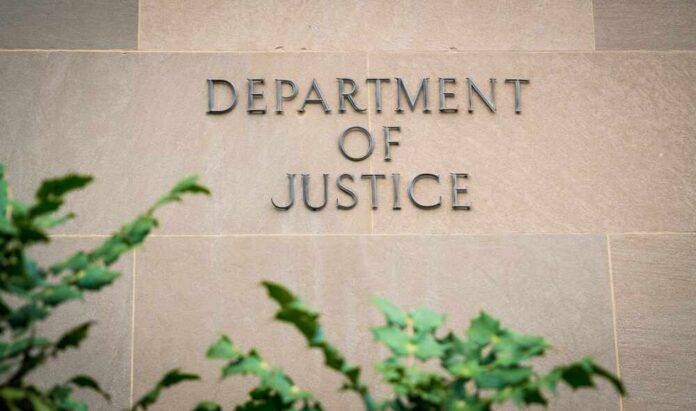
President Trump’s sudden firing of Attorney General Pam Bondi puts a spotlight on a question every voter should care about: who controls federal law enforcement—elected leadership or an unaccountable internal machine.
Story Snapshot
- President Donald Trump removed Pam Bondi as U.S. attorney general on April 2, 2026, and elevated Deputy Attorney General Todd Blanche as acting AG.
- Reporting described the decision as driven by Bondi’s inability to deliver criminal cases tied to Trump’s stated priorities, despite personal loyalty.
- Bondi’s 14-month tenure included high-profile organizational shifts at the DOJ, including the shutdown of certain task forces focused on foreign influence and kleptocracy.
- Coverage highlighted internal friction and institutional barriers—judges, grand juries, and career staff—complicating efforts to move politically sensitive cases.
Trump’s April 2 Decision and the Immediate Leadership Shift
President Donald Trump announced on April 2, 2026, that Pam Bondi was out as attorney general, ending a tenure that began with her swearing-in on February 5, 2025. Reporting described the firing as unusually blunt for a cabinet change, emphasizing performance and outcomes rather than ideology or personal loyalty.
Deputy Attorney General Todd Blanche, known publicly for his work as Trump’s former defense attorney, was tapped to serve as acting attorney general.
Bondi’s departure leaves unanswered operational questions inside the Justice Department. Public reporting has not described a confirmation timeline or a clear path for whether Blanche will be nominated permanently.
What is clear is the pace: the announcement came first, while the department’s forward plan and staffing posture remain less defined in public. Even DOJ’s own online attorney general profile page lagged behind events, reflecting the real-time turbulence around the transition.
What Bondi Changed at DOJ—and Why It Became Politically Explosive
Bondi entered office with a long Republican résumé, including two terms as Florida attorney general, and years in Trump-aligned roles leading into the 2024 election cycle. During her time running DOJ, she oversaw structural changes that signaled a shift away from certain prior enforcement priorities.
Public accounts cited moves such as shutting down the FBI’s Foreign Influence Task Force and the Justice Department’s Task Force KleptoCapture, steps that were framed as aligning DOJ with Trump-era priorities.
Trump says Pam Bondi, loyalist who oversaw Justice Department upheaval, out as attorney generalhttps://t.co/7R6qbxfeZU pic.twitter.com/SbWuXcF8j6
— FOX19 NOW (@FOX19) April 2, 2026
Those policy moves matter because they represent the levers an attorney general can pull without a vote in Congress—reorganizing units, shifting resources, and redefining emphasis. Conservative voters who watched years of politicized federal power under prior administrations tend to favor refocusing DOJ on core public safety and constitutional boundaries.
At the same time, any perception that DOJ is being repurposed for political combat can trigger legal obstacles that slow cases down and invite wider institutional resistance.
The Reported Breakpoint: Cases That Didn’t Materialize
News coverage described Trump’s frustration as centered on Bondi’s inability to produce criminal cases against figures he views as political adversaries. That framing matters because it distinguishes a loyalty dispute from an execution dispute: the reporting emphasized that Bondi was a loyal ally, but results did not follow.
Some reporting pointed to expectations around politically sensitive matters, including Epstein-related scrutiny, while also noting that the record does not include detailed public evidence of what specific prosecutorial steps were attempted.
The available sourcing also underscored why “just indict them” is rarely as simple as cable-news rhetoric makes it sound. Accounts referenced constraints and resistance involving judges, grand juries, and DOJ personnel—guardrails that, when functioning properly, prevent prosecutions from becoming political weapons.
That reality creates a tension for any administration: voters demand accountability and equal justice, but the Constitution and criminal procedure demand evidentiary standards, due process, and independence from raw political pressure.
Todd Blanche’s Acting Role and the Larger Question of DOJ Independence
Todd Blanche stepping in as acting attorney general signals that Trump wants a leader he trusts to execute the administration’s priorities, and quickly. Blanche’s prominence comes from his role as Trump’s former attorney, which makes him a lightning rod for critics who argue the department is being politicized.
Supporters counter that elected presidents are supposed to set executive-branch direction—and that unelected bureaucracy should not be allowed to nullify lawful policy through slow-walking or internal obstruction.
What the public record does not yet show is whether changing the person at the top changes outcomes. Even AP coverage emphasized there is no guarantee a successor can produce better prosecutorial results given the same institutional constraints.
For conservative readers concerned about government overreach, the key test is whether DOJ can enforce laws evenly—without turning into a tool for targeting opponents and without allowing politically connected actors to evade scrutiny because the system refuses to move.