

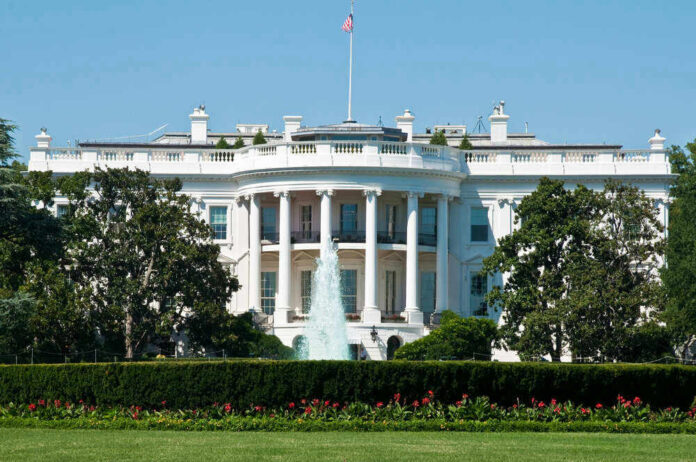
The ongoing construction of a lavish White House ballroom, spearheaded by President Trump, is facing legal challenges but promises to deliver grand enhancements without dipping into taxpayer funds.
Story Highlights
- Trump’s White House renovation project, a new ballroom, is funded entirely by private donations.
- A lawsuit by the National Trust for Historic Preservation questions the project’s legality and seeks to halt construction.
- President Trump claims the lawsuit is baseless and emphasizes that no taxpayer money is used.
- The project is part of Trump’s broader efforts to beautify the White House, reflecting his opulent style.
Trump’s Defense of the Ballroom Project
President Donald Trump has staunchly defended the construction of a new 90,000-square-foot ballroom within the East Wing of the White House. The project, initiated in late July, is uniquely funded through $300-400 million in private donations, circumventing traditional taxpayer funding.
Trump describes the ballroom as a “gift” to the American people, enhancing the “People’s House” without a financial burden to citizens. The construction, which began in late October, has drawn legal challenges from preservationists.
President Donald Trump on Sunday defended his plan to build a new White House ballroom, casting the project as a privately funded "GIFT" and blasting the preservation group suing to halt construction. MORE: https://t.co/C5K09lwPTH pic.twitter.com/WIisfWr8uy
— NEWSMAX (@NEWSMAX) January 25, 2026
The lawsuit by the National Trust for Historic Preservation seeks to halt the project, arguing it bypasses necessary federal reviews and public comment. The Trust maintains that the East Wing is a national icon deserving of protection and that any alterations should be subject to rigorous scrutiny.
Despite these claims, Trump argues the lawsuit was filed too late and is baseless, given that the East Wing has undergone numerous alterations over the years.
Legal Challenges and Judicial Skepticism
Recently, a federal judge convened a hearing on the lawsuit, expressing skepticism about the project’s legality. Judge Richard Leon, appointed by President George W. Bush, criticized the private funding mechanism, likening it to a “Rube Goldberg contraption” designed to evade oversight.
No ruling was issued at the hearing, but a decision is anticipated in February, with appeals expected regardless of the outcome. The administration warns that halting construction could pose security risks, as the project includes essential structural upgrades.
White House Press Secretary Karoline Leavitt and spokesman Davis Ingle have both reiterated the administration’s stance that the ballroom and other renovations are necessary enhancements, executed at no cost to taxpayers.
They emphasize the project’s significance as part of broader beautification efforts aligned with national celebrations, such as the United States’ 250th anniversary.
Implications for Presidential Authority and Historic Preservation
The ballroom construction represents a significant test of presidential authority and the use of private funding for federal projects. It sets a precedent for future executive-led White House renovations, potentially benefiting successors with enhanced facilities.
However, it also raises concerns about bypassing traditional oversight processes and about the preservation of historic integrity.
The case has drawn attention to the balance of power between the executive branch and legislative oversight, as Congress has not been approached for approval despite its Republican control.
While the White House continues its renovations, public and legal scrutiny remain high. The outcome of this legal battle could have lasting implications on how federal buildings are modified, influencing both historic preservation laws and the future use of private funding for government projects.
Sources:
Trump says it ‘is too late’ to stop the White House ballroom construction amid lawsuit
White House ballroom judge signals skepticism about Trump administration