

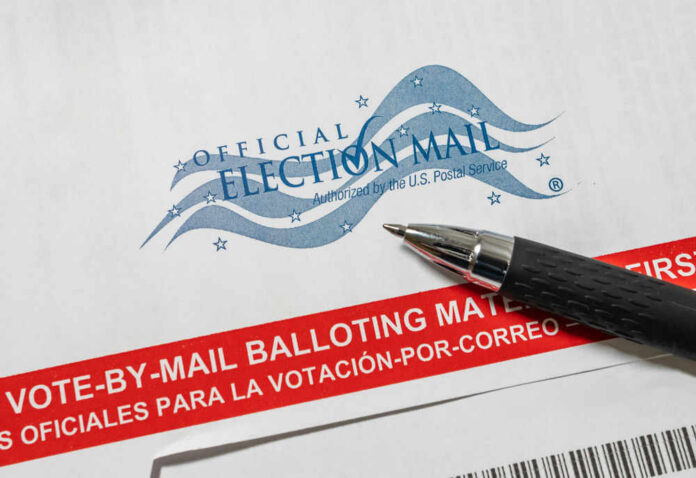
A locked thumb drive from the Justice Department landed in Los Angeles County with names the federal government says likely got mail ballots despite not being citizens, and a 48-hour clock started ticking.
Story Snapshot
- The Justice Department sent a password-protected list of suspected noncitizens who were mailed ballots.
- Officials were told to hold, not count, those ballots while they checked citizenship.
- Los Angeles County confirmed receiving the thumb drive and a handwritten password note.
- California officials questioned the data’s security and said eligibility changes need verified proof.
What The Justice Department Demanded And Why It Matters
Acting Deputy Attorney General R. Trent McCotter sent letters on October 13, 2026 to California Secretary of State Shirley Weber and Los Angeles County Registrar-Recorder Dean Logan. The letters said the federal government had a list of people it believed were likely noncitizens who were sent vote-by-mail ballots. The Justice Department asked officials to segregate, not cancel, those ballots. At the same time, it confirmed each person’s citizenship status and warned that litigation could follow if officials did not act within 48 hours.
The demand was narrow in form and urgent in tone. It did not accuse the listed people of voting. It focused on verifying citizenship before any tally. From a conservative rule-of-law view, that approach threads a needle: protect legal votes, set aside questionable ballots, and check before counting. That is basic election hygiene. The hook is the clock. Two days is fast in any bureaucracy, and errors can creep in when identity checks get rushed.
What California Officials Said And Did Next
Secretary Weber said her office did not receive the list, which limited the state’s ability to validate or respond. Dean Logan confirmed receipt in Los Angeles County of the physical letter, a thumb drive, and a handwritten password. He said the county had not accessed the device, calling a loose USB drive “not a secure medium” and citing data-privacy rules. He also noted the letter did not say how many people were on the list or describe the underlying records.
Logan added that removing or changing a voter’s status must rely on verifiable information, not unconfirmed data matches. That stance reflects best practice in voter list maintenance and mirrors long-standing concerns about false matches. Most big “noncitizen voter” scares in the past have evaporated under scrutiny, often caused by stale records or weak matching. Documented noncitizen voting exists but is rare in closely checked data.
The Knowns, The Unknowns, And The Stakes
Three facts are clear. First, the Justice Department put a concrete list into local hands with instructions to segregate flagged ballots. Second, Los Angeles County has the device and the password but has not accessed it due to security policies. Third, the public does not know the list’s size or the methodology that produced it, which prevents judging scope or accuracy today. That gap invites loud claims on both sides and weakens trust until a neutral review happens.
JUST IN: California just got 48 hours.
The Justice Department wants election officials to review suspected noncitizen voters and set aside their mail ballots until citizenship is confirmed.
If the prescribed course of action wasn’t followed by Oct. 15 at noon ET, the letter…
— The Epoch Times (@EpochTimes) October 15, 2026
Process is policy here. A clean chain of custody, a secure data transfer, and a transparent match method would speed checks and calm doubts. Counties can set up a safe intake path, open the file, and audit each name against authoritative records. The Justice Department can disclose the fields used, the source agencies, and the match rules. If the list holds, segregating before counting protects everyone. If it misfires, rapid correction protects eligible voters and the final tally.
How This Should Be Resolved To Protect Confidence
Officials should agree to an immediate, secure data handoff and a joint audit plan with written steps. Officials should check each flagged person’s record against naturalization data, voter registration files, and ballot logs. Two timelines should run at once: fast triage before canvassing to hold or release ballots, and a post-election lessons-learned report on match precision, false positives, and any confirmed ineligible registrations or votes. Sunlight after safeguards is common sense and supports confidence.
The legal posture also matters. The Justice Department should cite its statutory authority for demanding ballot segregation on a two-day clock, and California should show how its processes meet federal standards while protecting due process. Courts can sort any conflict. Voters deserve both speed and accuracy. Counting every lawful ballot and only lawful ballots is not a partisan goal; it is the floor for a trusted election. The path there is verification first, volume claims later.
Sources:
cbsnews.com, yahoo.com, nbcnews.com, cnn.com, axios.com