

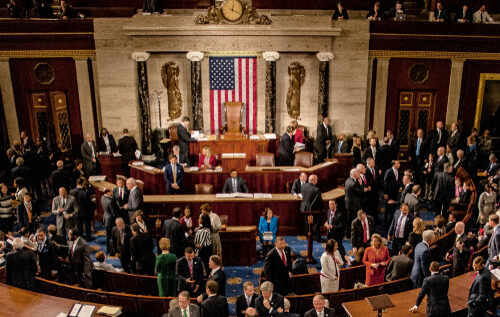
Senate Republicans successfully blocked Democrats’ attempt to extend Obamacare subsidies, exposing the true costs of the failed healthcare law as millions face premium spikes starting January 1, 2026.
Story Highlights
- Senate rejected Democrat bill to extend ACA tax credits in a 51-48 vote, ensuring subsidies expire January 1
- Republicans proposed alternative health savings accounts, giving money directly to consumers instead of insurance companies
- Democrats forceda 43-day government shutdown over the issu,e but failed to secure extension
- GOP leaders argue that the move exposes Obamacare’s spiraling costs and unsustainable structure
Senate Delivers Long-Awaited Reality Check on Obamacare Costs
The Senate delivered a decisive blow to Democrat efforts to extend Affordable Care Act subsidies, with a 51-48 vote that ensures COVID-era tax credits expire on January 1, 2026. Senate Majority Leader John Thune accurately characterized the Democrat extension as “an attempt to disguise the real impact of Obamacare’s spiraling health care costs.”
This vote represents a crucial step toward exposing the actual price tag of Obama’s signature healthcare law, which has burdened taxpayers for over a decade while failing to deliver promised affordability.
Let the crying and moaning begin!
Senate rejects extension of health care subsidies as costs are set to rise for millions of Americanshttps://t.co/nvGjWVUtX0
— Bo Snerdley (@BoSnerdley) December 11, 2025
Republicans Offer Market-Based Alternative to Government Dependency
Rather than simply extending failed subsidies, Republicans proposed a sensible alternative featuring health savings accounts that would give money directly to consumers instead of funneling it through insurance companies.
This approach, which aligns with President Trump’s healthcare vision, empowers individual Americans to make their own healthcare decisions rather than increasing dependence on government.
The GOP plan faced the same 60-vote threshold and was blocked 51-48, demonstrating Democrats’ unwillingness to consider meaningful healthcare reform that reduces government control over personal medical choices.
Democrat Shutdown Tactics Backfire Spectacularly
Democrats’ desperate 43-day government shutdown over healthcare subsidies proved to be a costly political miscalculation that accomplished nothing except inconveniencing American families and workers. Despite forcing this unnecessary crisis, Democrats failed to secure meaningful negotiations or compromise, with Senate Democrat Leader Chuck Schumer openly admitting in November that Democrats would not seek bipartisan solutions.
The shutdown exposed Democrats’ willingness to harm Americans’ daily lives to preserve their unsustainable big-government healthcare scheme rather than working toward genuine healthcare affordability.
Obamacare’s Inevitable Collapse Becomes Undeniable
The subsidy expiration reveals the fundamental unsustainability of Obamacare, which has required continuous government bailouts since its COVID-era expansion to maintain artificial affordability. Republicans have consistently argued that healthcare remains too expensive under the ACA, and the need for perpetual subsidies proves this point conclusively.
While some moderate GOP members, like Lisa Murkowski and Susan Collins, voted with Democrats, the majority rightly recognized that extending these subsidies merely delays the necessary reckoning with Obamacare’s structural failures and escalating costs that burden both consumers and taxpayers.
House Republicans Position for Real Healthcare Reform
House Speaker Mike Johnson has promised action next week on healthcare legislation, providing an opportunity for meaningful reform rather than perpetual government dependency. While some moderate Republicans face pressure to extend subsidies, conservative members correctly push for a comprehensive overhaul of the failed system.
Senator Katie Britt’s observation that “Real Americans are paying the price for this body not working together” highlights the need for genuine bipartisan solutions that reduce costs through market competition rather than endless taxpayer-funded bailouts of an inherently flawed healthcare system.