
President Trump says he will issue “tremendous numbers” of pardons before his term ends, and his track record shows he means it.
Story Snapshot
- Trump vowed on national television to grant many pardons in the second half of his term.
- He cited a desire to shield people from what he called political prosecutions.
- His first-day action pardoned or eased sentences for about 1,500 related to January 6, showing will and power.
- History shows presidents use clemency most in times of conflict and strain.
What Trump Said And Why It Matters
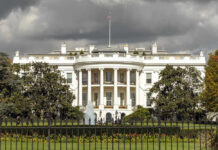
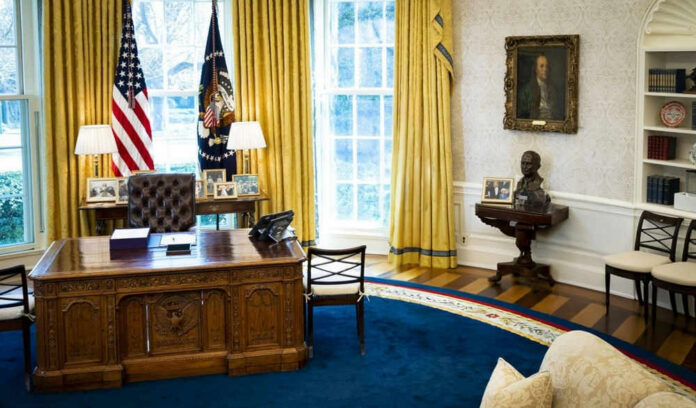
President Trump told a national audience he plans “tremendous numbers” of pardons in the coming months. He linked the plan to protecting people who served in his orbit from what he framed as political cases. He even joked about covering “within a thousand miles” of the Oval Office, which set off headlines because it implies a very wide circle. The pledge came from the sitting president in a named interview, not a leak, which makes it a clear marker of intent.
“I intend to issue tremendous numbers of pardons, in fact, I say oftentimes: anybody that got within a thousand miles of the Oval Office,” says President Trump.
Watch the extended interview: https://t.co/3opay4LR9R pic.twitter.com/E5jiQfR7eN
— 60 Minutes (@60Minutes) November 9, 2026
The statement rides on a proven point: Trump will use clemency at scale. On his first day back in office, he issued broad relief for people tied to the January 6 events, including full pardons and sentence cuts. Reports placed the impact at roughly 1,500 people, which is a startling number for one action. That move created a baseline. When he now promises “tremendous numbers,” audiences have a real example to measure the phrase against.
How The Pardon Power Works And Why Scale Is Unusual
The Constitution gives a president wide power to pardon federal offenses, and presidents have used it in waves during hard national moments. George Washington granted amnesty after the Whiskey Rebellion. Thomas Jefferson used it to undo convictions from the Alien and Sedition Acts. Abraham Lincoln and later presidents used clemency during and after war to cool conflict and settle the country. That tradition links mercy with politics, and it explains why volume spikes in tense eras.
Modern numbers vary a lot. The Department of Justice tracks petitions and outcomes through the Office of the Pardon Attorney, but presidents can also act outside the usual petition line. That mix makes averages tricky and makes any pledge of mass action stand out. Trump’s vow signals not a precise target, but a plan to lean on the power more than most recent leaders. That is the core takeaway for policy watchers and anyone trying to predict the second-half agenda.
Who Might Benefit And What Standards Could Apply
Trump framed the goal as protecting people who supported him and, in his view, faced unfair legal heat after doing their jobs. He has also floated ideas about helping staff or allies in advance if needed, which would be preemptive relief rather than a post-conviction pardon. The January 6 action mixed full pardons and commutations, so future moves may blend forms of clemency as well as recipients. Exact criteria remain undefined in his public comments.
Conservatives will judge this by two tests: fairness and deterrence. If cases look politicized or stacked, mercy looks like justice. If clemency shields clear crimes, it looks like favoritism. The facts so far show intent, authority, and one large act already done. The rest hinges on case selection and transparency about why each grant serves the public good instead of a political circle.
The Political And Institutional Stakes
The promise lands in a polarized environment shaped by the January 6 relief. Supporters see overdue balance against a justice system they view as two-tiered. Critics see an incentive for bad behavior. History shows both risks exist with every presidency that stretches the power. But the design of the pardon is blunt by nature: the president decides, and the country reacts. That cycle has repeated from Washington to today.
Scale is the new frontier. Mass clemency can reset priorities fast. It can also create pressure on courts, Congress, and the Department of Justice to clarify norms. Congress cannot override a valid pardon, but it can fund, study, and sunshine the process around it. The Department of Justice’s own data and historical reviews give a yardstick to compare any second-half surge with past eras of heavy use.
What To Watch Next
Watch the scope of categories Trump names in speeches and orders. Track whether the White House routes cases through the Office of the Pardon Attorney or runs a separate lane. Note whether the next wave targets defined groups, like officials facing process crimes, or a broader set of nonviolent offenders. The exact number does not matter as much as the pattern: who gets relief, why the case merits mercy, and how that matches the promise he put on national television.
Sources:
abcnews.com, thehill.com, people.com