
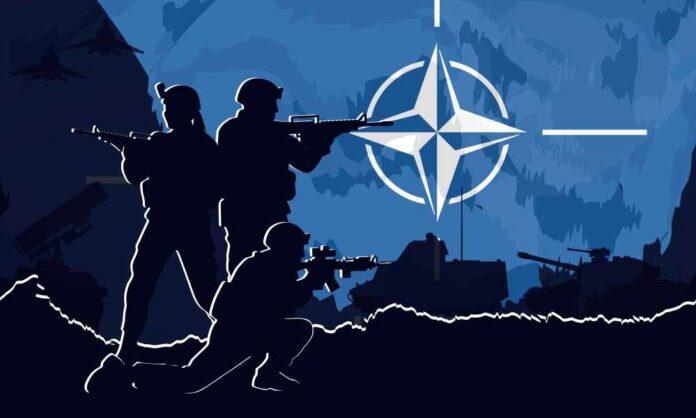
President Trump boldly warns NATO allies that their failure to support the U.S. in securing the Strait of Hormuz threatens the alliance’s very future, exposing decades of freeloading on American strength.
Story Highlights
- Trump demands NATO send warships to police the Strait of Hormuz after U.S. decimated Iran militarily on day 17 of the war.
- U.S. and Israel struck first on February 28, 2026, killing Iran’s Supreme Leader and hitting thousands of targets.
- Iran’s blockade of the Strait—20% of global oil—drives prices up $3-5 per barrel daily, risking $150 oil and recession.
- Trump claims victory but threatens Iran with hits “twenty times harder” and slams UK, Canada for weak responses.
- America leads alone, as allies hesitate, validating Trump’s long push for fair burden-sharing.
Trump’s Direct Challenge to NATO Allies
President Donald Trump issued stark warnings to NATO allies on March 15-16, 2026, as the Iran war hit day 17. He posted on Truth Social that America has “beaten and completely decimated Iran” militarily and economically.
Yet countries benefiting from oil through the Strait of Hormuz must now secure it, with U.S. help. Trump demanded allies police the strait, calling them direct beneficiaries who ought to assist. This stance echoes his consistent America First policy, rejecting endless U.S. subsidization of global security.
President Trump lashed out at NATO countries and US allies for not joining the Iran War effort as the Strait of Hormuz remains all but impassable for commercial shipping.
“This was a great test because we don’t need them, but they should have been there” https://t.co/CRYyC1ED1A pic.twitter.com/H7CGHvlI3Q
— Bloomberg (@business) March 17, 2026
Campaign Origins and Iran’s Retaliation
U.S. and Israel launched strikes on February 28, 2026, targeting Iran’s nuclear threat. Early operations killed Supreme Leader Ayatollah Ali Khamenei and hit thousands of sites. Iran retaliated with drones and rockets across Gulf nations around March 10-12. Israel countered by striking Hezbollah finances in Lebanon.
By mid-March, Iran restricted the Strait of Hormuz, vital for 20% of world oil and gas. Foreign Minister Abbas Araghchi declared it open but closed to U.S. enemies, spiking global oil prices and exposing allied dependence on American protection.
Economic Crisis from Strait Blockade
Iran’s threats and assets have effectively closed the strait to U.S. and allied ships. Atlantic Council CEO Fred Kempe warns each closure day adds $3-5 to oil prices per barrel. Six weeks could push oil to $150, triggering global recession.
China and Europe suffer most, reliant on Persian Gulf oil, while U.S. energy independence shields Americans. Tanker attacks raise rerouting costs and insurance, amplifying pain from years of globalist overreliance on unstable regions.
Experts estimate clearing missiles, drones, fast attack craft, and mines requires a four-week campaign. Sina Azodi notes Iran’s 20-year preparations leverage geography effectively, creating chaos without full closure.
Allied Reluctance and Trump’s Mixed Signals
Trump criticized UK Prime Minister Keir Starmer, America’s “number one ally,” for delaying help. Canada offers assistance but refuses offensive action. Trump claims numerous countries are en route, yet allies issue de-escalation calls.
His messaging mixes victory claims—at a Kentucky rally, he said America already won—with calls for “ultimate victory” in Miami and hints the war is nearly over on CBS. Institute for the Study of War sees positive trajectory but urges patience for full objectives.
Strategic Implications for America First
Trump threatened NATO’s future if allies refuse: a negative response would be “very bad.” He warned Iran of hits “twenty times harder” for disruptions. This leverages crisis to enforce burden-sharing, strained by past freeloading.
ISW notes U.S. steadily destroys Iran’s drone and missile abilities, but time is needed to prevent further pain. Allied hesitation underscores Trump’s point: America protects the world but gets little in return, validating demands for self-reliance and fair contributions.
Sources:
Military.com: Donald Trump Warns NATO, China and the Press as Iran War Hits Day 17
OPB: Trump gives mixed messages about war’s end