
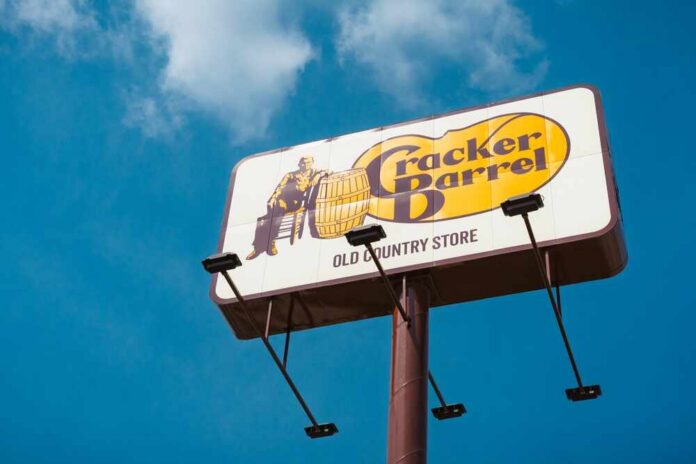
Cracker Barrel just sold the Maple Street Biscuit Company, closed 16 remaining locations, and quietly admitted the cute biscuit experiment was not worth the debt it carried.
Story Snapshot
- Cracker Barrel sold the Maple Street Biscuit Company brand and 35 restaurants to Biscuit Belly.
- Sixteen Maple Street locations are shutting down for good as part of the exit.
- The company paired the sale with a $77 million real estate deal to pay down debt and refocus on its core chain.
- Maple Street once looked like a big growth bet, but ended up a tiny, underperforming slice of the business.
Cracker Barrel walks away from its biscuit side bet
Cracker Barrel Old Country Store spent years trying to turn Maple Street Biscuit Company into its modern, fast-casual cousin. Now that bet is over.
The company has sold the Maple Street brand and assets tied to 35 restaurants to Louisville-based Biscuit Belly, a biscuit sandwich concept that plans to rebrand those locations under its own name. The remaining 16 Maple Street stores will not be sold or saved. They are closing.
Cracker Barrel is saying goodbye to one of its brands https://t.co/noZBlJE4Nm
— IndyStar (@indystar) July 22, 2026
Corporate leaders framed the move as a way to sharpen focus on the main Cracker Barrel brand and cut debt, not as a panic sale. That framing fits the numbers. Maple Street made up less than 2 percent of Cracker Barrel’s annual revenue.
For a company with hundreds of roadside restaurants, this “extra” brand had become more of a distraction than an engine. Investors responded by pushing the stock up after the announcement, betting the cleanup will help profits.
Debt, real estate, and why those 16 stores went dark
The Maple Street sale is only half the story. On the same day, Cracker Barrel also completed a sale-leaseback deal on 26 of its own restaurant properties, bringing in about $77 million in net cash.
Instead of owning those buildings, Cracker Barrel will now pay rent to a real estate investor, but it gets something Wall Street values right now: a quick lump of cash to pay down debt and strengthen the balance sheet.
That new cash does not erase the cost of getting out of Maple Street. Cracker Barrel expects to record between $37 million and $39 million in non-cash charges from the Maple Street exit, plus another $6 million to $8 million in real cash costs tied to the closures and transition.
Those hits hurt in the short run but are easier to swallow when tied to a clean exit from a brand that never grew into a real profit driver.
From $36 million dream to “didn’t meet expectations”
Maple Street did not start as a problem child. Cracker Barrel bought the chain in 2019 for $36 million in cash, gaining 28 company-owned and five franchised locations across seven states.
At the time, leaders praised the breakfast-and-lunch fast-casual niche as an attractive growth space that could reach younger, urban customers without touching the core Cracker Barrel image. On paper, it looked like a smart way to buy time instead of building a new brand from scratch.
Reality looked different. By 2025, Cracker Barrel had already shut down 14 Maple Street restaurants that “simply didn’t meet our financial expectations,” as the company told USA Today. After those closures, a little more than 50 locations remained.
When a chain has to close more than a dozen stores inside a few years, it says unit economics are weak, or the concept is not connecting in enough markets. An investor would call that a warning sign, not a one-off tweak.
What Biscuit Belly gains and what Cracker Barrel signals
Biscuit Belly, the buyer, sees Maple Street as a shortcut to growth. The company said the 35 acquired locations will help it expand across the Southeast and reach more than 60 units by the end of 2028.
The plan is simple: convert Maple Street stores into Biscuit Belly restaurants over the next 18 to 24 months, turning someone else’s failed side bet into its own growth runway. It is the classic story of one company’s “non-core asset” becoming another’s main prize.
Cracker Barrel Completes $77 Million Sale-Leaseback And Divests Maple Street Biscuit Company: Cracker Barrel has completed a sale-leaseback transaction involving 26 company-owned restaurant properties and divested certain assets of its Maple Street… https://t.co/DusNIiDK8b pic.twitter.com/UwcMlABcPH
— Pulse 2.0 (@pulse2news) July 21, 2026
For Cracker Barrel, the message is different but clear. Management has raised its profit outlook for fiscal 2026 after the Maple Street sale and the sale-leaseback, telling investors the moves will improve earnings in the coming years.
Stripping away the corporate language, that means they are choosing discipline over chasing every trendy breakfast concept. For many conservative-leaning customers and shareholders, that sounds like overdue housecleaning: stick to what you do best, live within your means, and stop pouring good money after bad.
Sources:
foxbusiness.com, restaurantdive.com, wsj.com, qz.com, independent.co.uk, prnewswire.com, firstcoastnews.com