

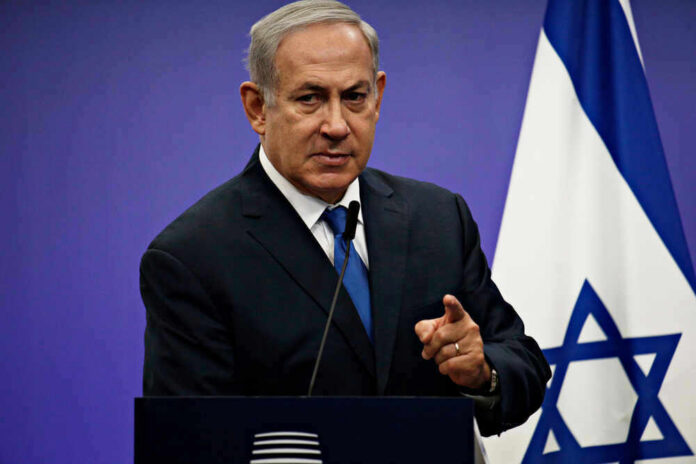
Zohran Mamdani promised to arrest Benjamin Netanyahu in New York, then had to admit the law makes that fantasy impossible.
Story Snapshot
- Mamdani built a national profile by vowing to have New York police arrest Netanyahu on an International Criminal Court warrant.
- Legal experts, the governor, and even Mamdani’s own lawyers say New York City has no authority to detain a visiting foreign leader on that basis.
- Federal law, diplomatic immunity, and the fact that America rejects the court’s jurisdiction block any local arrest plan.
- Mamdani now concedes the city lacks “independent legal authority,” but still urges Washington to do what he cannot.
How a Mayor Turned an Arrest Promise into a National Flashpoint
Zohran Mamdani did not rise to national attention by filling potholes or fixing subway delays. He stepped into the spotlight by saying that, if elected mayor, he would direct the New York Police Department to arrest Israeli Prime Minister Benjamin Netanyahu if he came to the city, pointing to an International Criminal Court warrant for alleged war crimes.
For supporters, this sounded like moral courage. For many others, it sounded like a local official trying to play global sheriff.
The pledge was clear and blunt. Mamdani said New York’s values “are in line with international law” and that it was time for the city’s actions to match that claim. That language framed his promise as more than symbolism. It implied he believed the city could actually grab a sitting foreign leader on American soil.
That is where the clash began. Conservative commentators saw a mayor stretching his office far beyond its limits in service of a radical foreign policy agenda.
What the Law Really Says About Mayors and Foreign Leaders
Once lawyers started weighing in, the mood shifted from drama to hard reality. Legal scholars noted that the American Servicemembers’ Protection Act bars United States officials and agencies from cooperating with the International Criminal Court in ways that would help arrests.
New York Governor Kathy Hochul said flatly that the New York City mayor “does not have the power” to arrest Netanyahu and that the court has no jurisdiction in the United States. That echo came from professors who called Mamdani’s pledge an “unenforceable campaign promise.”
New York City Mayor Zohran Mamdani conceded late Tuesday that the city does not have the authority to arrest Israeli Prime Minister Benjamin Netanyahu. https://t.co/g1VYPTvTlx
— CBS News (@CBSNews) July 22, 2026
Experts also pointed to diplomatic rules that protect foreign leaders when they visit for United Nations events. Heads of government who travel to New York for the United Nations General Assembly are covered by immunity that shields them from local criminal processes tied to foreign disputes. Under the United States Constitution, foreign policy belongs to the federal government, not to city mayors.
Common sense thinking matches that view: you cannot have every mayor freelancing his own foreign agenda and arresting world leaders on the sidewalk.
ICC Warrants, State Power, and the Limits of Local Authority
The deeper problem for Mamdani is structural. The International Criminal Court itself admits it has no police force and relies on states to carry out arrest warrants. Its own materials say the “powers to execute the ICC’s arrest warrants are vested in States.”
The United States never joined the Rome Statute that created the court and has gone out of its way to reject its authority over American territory. That means an ICC warrant is not self-executing here. It does not magically become a local arrest order for New York police.
The Constitution gives the federal government control over foreign affairs, including how or whether to work with international tribunals. Federal law already forbids local governments from honoring International Criminal Court warrants without express federal approval.
A separate federal statute protects foreign officials from being imprisoned or obstructed by local authorities acting on their own. These rules exist to prevent chaos and to keep diplomacy in federal hands. A city that tried to ignore them would invite a constitutional crisis it could not win.
From Threat to Climbdown: Mamdani Says He “Won”
As the legal reality closed in, Mamdani’s language started to change. He told interviewers he was in “an active conversation” with the New York City Law Department about whether he had any legal basis at all to order an arrest.
He stressed that he would do “whatever the law allows me to do in New York City” and that he would not be “writing our own laws to that end.” That was an important shift. It moved him from claiming power to admitting he was still hunting for any lawful tool.
Mamdani Says NYC Cannot Arrest Netanyahu During UN Visit https://t.co/oOmf2VH8kO
— NFN – News Facts Network (@FactsNfn) July 22, 2026
The hunt ended badly for the big promise. In a later video address, Mamdani said his administration had reviewed “every avenue available under applicable law” and found the city lacked “independent legal authority to enforce this warrant.”
Yet he cast that as a kind of victory, saying he had forced the country to confront the issue and now called on the federal government to arrest Netanyahu instead. This is spin. When you vow to do something, then concede you legally cannot, you did not win; the law simply stopped you.
Why This Fight Matters Beyond One Mayor and One Prime Minister
This episode shows a pattern that will likely repeat. International courts urge arrests on moral grounds, but they depend on national governments with real power and real accountability to act. Local politicians may try to ride those headlines with grand gestures.
The risk is that they confuse voters about what they can actually do, then blame “the system” when reality pushes back. For citizens who care about ordered liberty and clear limits on government, Mamdani’s climbdown is a useful reminder: loud rhetoric cannot override the rule of law.
Sources:
cbsnews.com, moneycontrol.com, capitalisminstitute.org, legalaiinsights.com, foxnews.com, middleeastmonitor.com, youtube.com, timesofisrael.com, americantribune.com, instagram.com, facebook.com, icc-cpi.int, international-and-comparative-law-review.law.miami.edu, ibanet.org, hrlr.law.columbia.edu