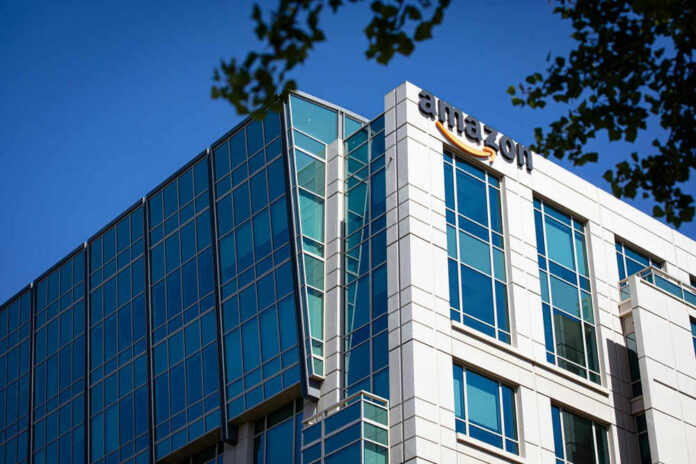
After years of hyped-up “store of the future” promises, Amazon is abruptly pulling the plug on Amazon Go and Amazon Fresh—proof that flashy experiments don’t beat a business model that actually works.
Story Snapshot
- Amazon announced it will close all 72 Amazon Go and Amazon Fresh stores nationwide, ending a decade-long push into new physical retail formats.
- Most locations are slated to stop operating by Feb. 1, with California stores reportedly getting an additional 45 days for compliance.
- Amazon is pivoting to expand Whole Foods and scale online grocery delivery through Amazon.com, with some sites potentially converting to Whole Foods.
- Amazon has not disclosed how many employees will be affected, even as the company has discussed broader workforce reductions.
Amazon’s Sudden Exit From Go and Fresh
Amazon said Jan. 27, 2026, that it will close every Amazon Go convenience store and every Amazon Fresh grocery store in the United States, totaling 72 locations. Reporting across outlets places the count at 57 Fresh stores and 15 Go stores, including the original Seattle Amazon Go that showcased the “Just Walk Out” cashierless concept. For most regions, the final day of operation is expected to be Feb. 1.
Amazon framed the move as a shift toward areas with stronger customer demand and clearer economics. Coverage of the company’s statements points to a central conclusion: Amazon saw “encouraging signals” in parts of the Go and Fresh experiments but didn’t find a distinctive, scalable customer experience or an economic model that justified broad expansion.
Amazon said it plans to keep building in grocery—just through Whole Foods and delivery, not the Fresh and Go banners.
#BREAKING: Amazon is closing all of its Amazon Go and Amazon Fresh grocery stores while ramping up online grocery delivery — a sweeping shift that could reshape how millions of Americans shop for food. Details: https://t.co/OlnFcGmVlB pic.twitter.com/NlBKffft17
— KTLA (@KTLA) January 27, 2026
Why Whole Foods Survives While Fresh and Go Don’t
Amazon’s grocery footprint is now consolidating around Whole Foods, the established chain it bought in 2017 for $13.7 billion. Since that acquisition, Whole Foods has expanded to more than 550 stores and reportedly grew sales significantly, giving Amazon a proven physical platform.
Amazon has also committed to opening more than 100 additional Whole Foods locations, signaling the company is betting on a brand that already has loyal customers and a clearer identity.
Amazon Fresh and Amazon Go were built to test new formats—ranging from full grocery stores to small cashierless outlets—and those tests came with growing pains. Amazon recorded major impairments tied to these projects in 2022 and later reworked some Fresh stores with redesigns and alternative checkout approaches.
Even with those changes, Amazon ultimately decided the concepts weren’t delivering the durable advantage needed to compete at national scale against entrenched grocery players.
Delivery First: Convenience, But Not Equal Access
Amazon is positioning online grocery delivery as the growth engine, leaning into a post-pandemic shopping pattern that prioritizes convenience and home drop-off. The company already offers grocery delivery in thousands of U.S. cities, and multiple reports indicate it intends to accelerate that effort.
For many families, delivery can save time and reduce errands—especially for household staples and routine orders where brand switching is minimal.
Still, shifting from storefronts to delivery can create uneven outcomes depending on where people live. Communities that relied on nearby Fresh or Go locations may lose a convenient walk-in option, while customers outside robust delivery zones could see fewer choices.
The available reporting also leaves an important practical question unanswered: which, if any, of these closing sites will be converted into Whole Foods locations, and on what timeline.
Jobs, Communities, and the Cost of Corporate “Experimentation”
Amazon has not provided specific figures for how many store employees will be affected by the closures or what reassignment options might look like. That uncertainty lands at a tense moment, since reporting also points to broader job reductions at the company. Local coverage highlights the direct community impact in places that are losing multiple locations at once, including areas with several Fresh stores slated to close.
From a conservative, common-sense standpoint, the story is less about ideology and more about reality: consumers ultimately decide what survives. Amazon tried to engineer a new kind of grocery experience using automation, new store layouts, and brand experimentation.
The company is now acknowledging that the numbers and customer behavior didn’t support scaling it nationwide. The remaining questions—worker impacts, local reuse of sites, and how quickly Whole Foods expands—will determine how painful or orderly this pivot becomes.
Sources:
Amazon Shutting Down Amazon Fresh and Amazon Go Locations Nationwide, Including All Maryland Stores
Amazon to close Amazon Go, Amazon Fresh grocery stores, expand Whole Foods Market
Amazon closing Amazon Go, Amazon Fresh stores
Amazon closes Go, Fresh stores; focuses on Whole Foods
Amazon Closing Fresh and Go Store Chains
Amazon closing all Amazon Fresh and Go stores to focus on Whole Foods and grocery delivery