
Chuck Schumer says President Trump was warned about a spy risk tied to Nvidia’s CEO and did nothing—now Washington wants receipts.
Story Snapshot
- Schumer accused Trump of “dereliction of duty” over reported spy warnings.
- Reports say Marco Rubio briefed Trump on Jensen Huang before a China trip.
- Trump denies knowing then, says he believes Huang’s denial now.
- The fight hits national security, export rules, and America’s chip strategy.
Schumer’s Charge And The Core Timeline
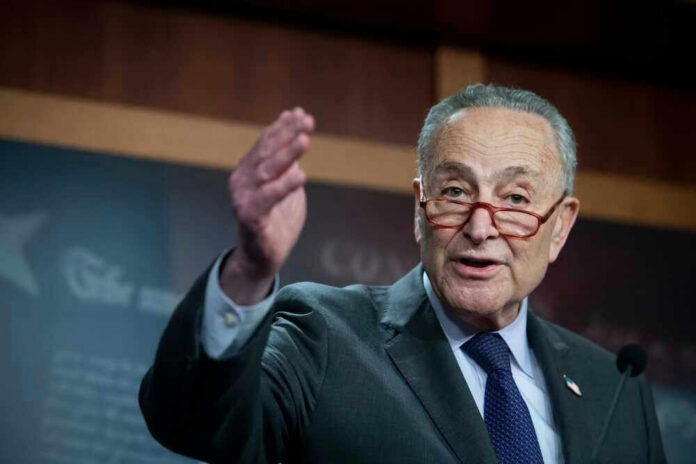
Senate Democratic Leader Chuck Schumer said Trump knew of intelligence about Nvidia chief Jensen Huang’s relationship with a suspected Chinese spy and failed to act. He called it “a dereliction of duty” on the Senate floor and demanded answers on what the White House did after receiving the warning. The reported intelligence briefing came before Trump’s May China trip. Reports attribute that briefing to Secretary of State Marco Rubio, delivered aboard Air Force One.
Trump publicly denied he knew about the allegation during the trip. He said he heard about it “not too long ago.” He also said Huang told him he did not know the woman was a spy and that he believes Huang. Trump described Huang as a “high quality person” after their conversation. Schumer’s criticism hinges on the reported briefing and the lack of visible action then, not on what Trump said later.
What The Briefing Would Mean—And What It Would Not
Intelligence briefings inform; they do not command. Analysts present risks and confidence levels. The president decides policy. That is why a statement that “the president was briefed” does not by itself prove negligence. It does raise a standard: hear the risk, then mitigate it. If Rubio delivered a memo and an in-person warning, as reported, Congress will want a record of follow-up steps, such as security guidance, travel vetting, or limits on access.
From a common-sense and conservative view, the bar is simple: protect the country first, especially where China and critical chips intersect. That means verify the briefing, document the response, and close gaps fast. If the briefing was thin or uncertain, say so. If it was clear and urgent, show the action trail. A transparent timeline beats a political food fight.
Why This Fight Lands In America’s Chip War
Nvidia sits at the heart of United States artificial intelligence and national defense supply chains. The company’s chips power data centers, weapons testing, and secure networks. Congress and the White House have tightened and tweaked export rules to keep advanced processors away from China while still steering a lawful trade policy. The Congressional Research Service notes revenue-linked licensing arrangements for some China-bound products, which fuels debate over security versus commerce.
The most valuable chip company in the world is now at the centre of a national security storm — and the Senate's top Democrat says the White House knew for a year and did nothing.
Chuck Schumer posted on Tuesday: “Trump was briefed over A YEAR AGO on Nvidia's CEO having an… https://t.co/kbfqFZ7TJc
— Dem Daily Posts | Policy × Markets (@DemDailyPosts) November 10, 2026
Schumer’s push taps that tension. He wants tougher enforcement, fewer loopholes, and answers on any “influence” efforts tied to the company. Lawmakers will ask whether United States agencies offered a defensive briefing to Huang, a standard Federal Bureau of Investigation tool to warn Americans targeted by foreign services. They will also ask whether any travel or access controls failed. The chain from warning to mitigation is the whole ballgame.
Competing Claims: What Holds Up, What Needs Proof
Schumer’s claim rests on reports that Rubio twice warned Trump, including on Air Force One, and that a memo circulated among senior officials before the trip. Outlets cited sources familiar with the matter to back this timeline. Trump’s counter is direct and narrow: he says he did not know during the trip, learned later, asked Huang about it, and accepted his denial. He also said the Federal Bureau of Investigation is looking into it, signaling some level of engagement after the fact.
The strongest test is documentary. If the memo exists, if a readout shows a briefing, and if staff logged action items, that will define accountability. If records are thin, that weakens Schumer’s case from “dereliction” to “dispute.” Until then, one standard still applies: when a suspected spy risk touches the most sensitive chipmaker in America, move first, ask questions fast, and leave a paper trail. That is not partisan. That is national security 101.
Sources:
nbcnews.com, news.bloomberglaw.com, news8000.com, tovima.com, kansas.com, hawaiitribune-herald.com, politifact.com